Seeing clearly is the first step to treating well. Peridot Dental Care uses digital X-rays and an intraoral scanner to find problems early, plan treatment precisely and show you exactly what we see.
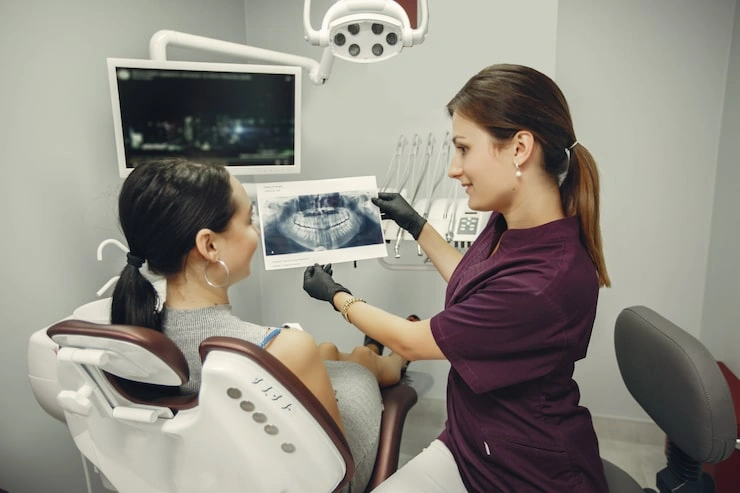
Digital dental X-rays capture detailed images of teeth, roots and bone with a very low radiation dose and display them instantly on screen. An intraoral scanner creates a 3D model of your teeth without messy impressions. Together they help detect decay, infection and bone loss early and make crowns, aligners and guards more accurate.
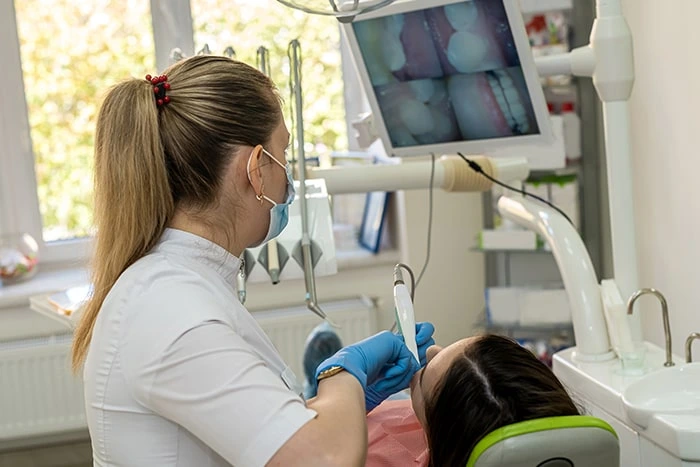
A small sensor captures images that appear on screen within seconds. We can zoom in, adjust contrast and compare images over time to spot changes early.
A slim wand captures thousands of images to build an accurate 3D model of your teeth and bite, with no putty and no gagging.
A visual exam shows the outside of your teeth. X-rays show what is happening between and below them, often years before you feel anything.
For a closer look at safety, read how safe dental X-rays are and how often you need them.
| Type | What it shows | When it is used |
|---|---|---|
| Bitewing | Upper and lower back teeth and the bone between them | Checking for cavities between teeth |
| Periapical | A whole tooth from crown to root tip | Toothache, infection, root canal planning |
| Panoramic | All teeth and both jaws in one image | Wisdom teeth, implants, orthodontics, new patients |
| 3D cone beam (CBCT) | Three-dimensional view of bone and nerves | Complex implants or surgery, arranged when needed |
We choose the fewest images that give a reliable diagnosis, following the ALARA principle of keeping radiation as low as reasonably achievable.
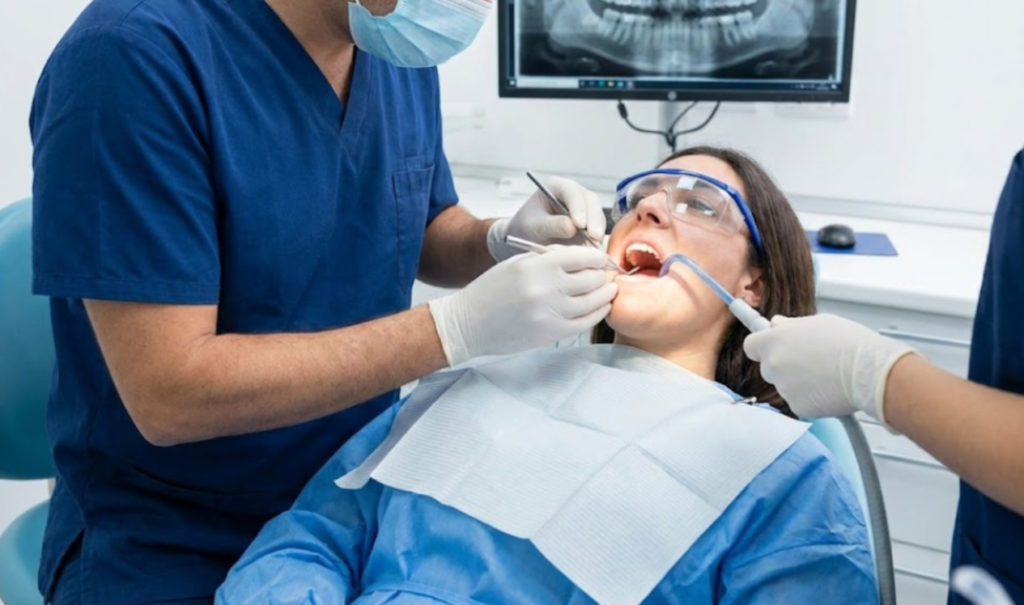
Traditional impressions mean biting into trays of thick putty for several minutes, which many people find uncomfortable. A digital scan takes only a few minutes and you can breathe and swallow normally throughout.
The 3D model is used to plan and make:
Because the file is digital, it can be sent to the lab instantly, which can shorten treatment times.
Digital X-rays already use a small fraction of the radiation of older film. On top of that, we only take X-rays when they will change your diagnosis or treatment, use modern sensors and positioning devices for accuracy so retakes are rare, and follow Ontario radiation safety requirements. If you are pregnant or think you might be, tell us before any X-ray.
For perspective, a set of dental bitewing X-rays is a very small dose compared with the natural background radiation we all receive from the environment over a few days.
Children’s teeth and jaws change quickly, so X-rays help us check for cavities between baby teeth and make sure adult teeth are developing in the right position. We use smaller sensors, the lowest settings needed and simple explanations so kids feel at ease. The scanner is also a hit with children, who love seeing their teeth in 3D. Learn more on our kids dentistry page. Families come to us from Woodbridge, Vaughan, Kleinburg, Maple and Concord.
Most dental problems are easiest, quickest and least costly to treat when they are small. A cavity between two back teeth is usually invisible in the mirror and painless at first, but on a bitewing X-ray it shows up as a small shadow. Treating it at that stage often needs only a small tooth-coloured filling. Left for a year or two, the same cavity can reach the nerve and need a root canal and crown. Gum disease follows the same pattern, with early bone changes visible on X-rays long before teeth feel loose. Regular imaging, matched to your personal risk, is one of the simplest ways to protect your teeth for life.
Yes. Digital dental X-rays use a very low dose of radiation, considerably less than traditional film. We only take X-rays when they are needed for diagnosis and use protective measures for every patient.
It depends on your age, risk of cavities and dental history. Many adults need bitewing X-rays every one to two years, while new patients and people with symptoms may need more. Your dentist will recommend what is right for you.
An intraoral scanner is a small handheld camera that takes thousands of images of your teeth to create an accurate 3D digital model. It replaces most messy putty impressions for crowns, aligners, night guards and other appliances.
Dental X-rays are considered low risk, but we postpone routine X-rays during pregnancy when possible. If an X-ray is needed to treat pain or infection, we take extra precautions. Always tell us if you are or might be pregnant.
X-rays reveal decay between teeth and under fillings, infection at the root tip, bone loss from gum disease, impacted or developing teeth, cysts and the condition of roots and old root canals.
Children may need X-rays to check for cavities between teeth and to monitor developing adult teeth. We use child-sized sensors and the lowest dose needed.
Yes. Digital images can be shared securely with you, your specialist or your new dentist on request.
Book a checkup at Peridot Dental Care, 6175 Highway 7 West, Unit 7, Woodbridge.
Reviewed by the clinical team at Peridot Dental Care. General information only, not a substitute for an exam by an RCDSO-registered dentist. Last updated October 2026.