Dental lasers let us treat gums and soft tissue with remarkable precision, often with less bleeding, less swelling and a quicker recovery than traditional instruments. At Peridot Dental Care, laser technology is one more way we make treatment calmer for patients of every age.
Laser dentistry uses focused light energy to treat gum tissue and some tooth problems precisely. It is used for gum disease treatment, gum contouring, tongue and lip tie release and some cavity work, and it often means less bleeding, less discomfort and faster healing than traditional methods.

Lasers are not a replacement for every dental tool, but for the right procedures they offer real advantages. Here are the most common ways we use them.
Lasers help remove inflamed tissue and reduce bacteria in gum pockets as part of periodontal care, alongside deep cleaning.
Reshapes a gummy smile or uneven gumline so teeth look balanced, often before veneers or crowns.
A quick, gentle release of a tight frenum that can affect feeding, speech or gum health in children and adults.
Low-level laser can reduce pain and speed up healing of painful mouth ulcers.
Gently moves gum tissue for accurate impressions of crowns and restorations.
Some lasers can prepare small cavities with less vibration, helpful for nervous patients and children.

A dental laser delivers energy in a tightly focused beam. Different wavelengths are absorbed by different tissues, which lets the clinician gently remove or reshape gum tissue while sealing small blood vessels and nerve endings at the same time. That is why bleeding is usually minimal and many patients report less soreness afterwards.
We examine your teeth and gums and confirm laser treatment is the right choice.
Local freezing is used when needed and everyone in the room wears protective glasses.
The laser tip is guided precisely around the area, usually in a short appointment.
You receive simple care instructions and a follow-up visit if required.
| Laser treatment | Traditional instruments | |
|---|---|---|
| Bleeding | Minimal, vessels are sealed | More, may need stitches |
| Swelling and soreness | Usually less | Usually more |
| Precision | Very high | High |
| Noise and vibration | Quiet, little vibration | Drill sounds for some procedures |
| Healing time | Often faster | Standard |
| Best for | Soft tissue and minor procedures | All procedures, including large fillings |
Learn more in how laser dentistry works and what it treats and laser gum treatment in Woodbridge.
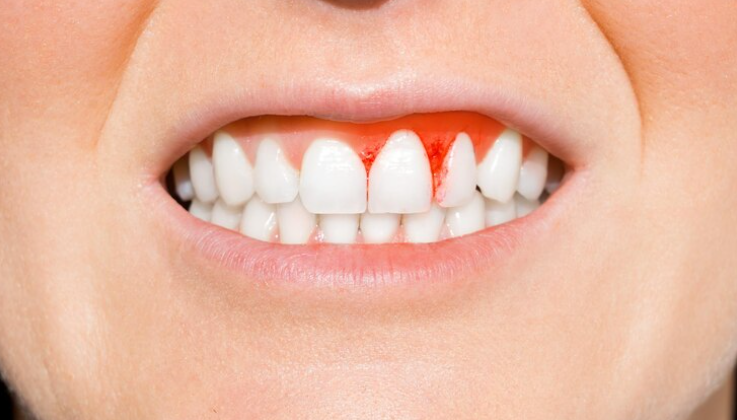
These can be signs of gum disease, which is very treatable when caught early. Book a check and a professional cleaning so we can measure your gum health.
Laser treatment suits many people, especially those who are nervous about bleeding or drills, people with gum disease, and children who need a frenectomy. It is not used for every procedure. Large fillings, crowns and most extractions still rely on traditional techniques, and some people with certain medical conditions may need a different approach.
During your visit we explain whether a laser offers a real benefit for your treatment, and what to expect before, during and after.
Most patients return to normal activities the same day. For a few days, choose soft, lukewarm foods and avoid spicy or crunchy foods near the treated area. Brush gently and rinse as directed. Mild tenderness usually fades quickly. Call us if you notice increasing pain, swelling or bleeding that does not settle with gentle pressure. Patients visit us from Woodbridge, Vaughan, Kleinburg, Maple, Concord and Bolton.
A laser is a tool, not a treatment plan on its own. For gum disease, the best results come from combining laser care with thorough scaling and root planing, good brushing and flossing at home, and regular maintenance visits every three to four months. For cosmetic gum contouring, we plan the new gumline around the shape of your teeth and lips, and often pair it with whitening, bonding or veneers. For tongue and lip ties, we may work alongside your child’s doctor, lactation consultant or speech therapist.
Whatever the reason for your visit, we will explain the options clearly, including when a traditional approach is the better choice for you.
Laser dentistry uses a focused beam of light energy to treat soft tissue such as gums, and in some cases tooth structure, with high precision. It is often used for gum treatment, gum contouring, frenectomies and some cavity preparation.
Many laser procedures cause less discomfort than traditional methods because the laser seals nerve endings and blood vessels as it works. Local anaesthetic is still used when needed, and many patients notice less soreness afterwards.
Yes. Dental lasers are approved for use in Canada and are safe when used by trained clinicians. You will wear protective glasses during treatment to shield your eyes from the light.
Common uses include treating gum disease, reshaping a gummy smile, removing excess gum tissue, releasing a tongue or lip tie, treating canker sores and cold sores, and some small cavity preparations.
Most minor laser gum procedures heal within a few days to two weeks, often with less swelling and bleeding than traditional surgery. Your dentist will give you specific aftercare instructions.
Laser treatment can be helpful for children because it is quiet, precise and often needs less freezing. It is commonly used for tongue tie releases and some soft tissue procedures.
Coverage depends on the procedure rather than the tool used. Gum treatment for health reasons is often covered, while cosmetic gum reshaping usually is not. We can send a predetermination to check.
Book a consultation at Peridot Dental Care, 6175 Highway 7 West, Unit 7, Woodbridge.
Reviewed by the clinical team at Peridot Dental Care. General information only, not a substitute for an exam by an RCDSO-registered dentist. Last updated October 2026.