
Orthodontist in Woodbridge
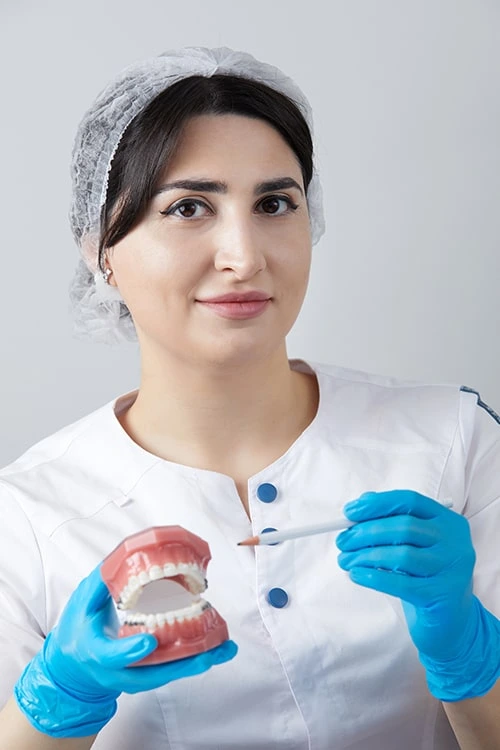

At Peridot Dental Care, we offer a holistic range of orthodontic services in Woodbridge within a warm and welcoming environment that signals a sense of family.
Orthodontic Services in Woodbridge
When it comes to achieving a healthy and radiant new smile for you and your family, you can rest assured that at Peridot Dental Care, we strive for nothing less than excellence through cutting-edge dental orthodontic services in Woodbridge. Visiting us equals achieving a set of healthy and straight teeth in the shortest time possible.
Additionally, we are among the best clinics in the area that proudly provide a full range of cosmetic dental treatments & emergency dental options under one roof. Teeth whitening, dental veneers, dental implants, wisdom tooth extraction, and endodontics are just a few examples of our beneficial services.
Feel free to contact us right away to visit our cosmetic dentist or emergency dentist in Woodbridge.
When Orthodontic Procedures Are Required?
Woodbridge orthodontist recommends new orthodontic treatments to those who decide to have them to improve the crooked appearance of their teeth significantly. These treatments address a variety of orthodontic concerns, including:
- Teeth crowding
- Cross bites
- Spacing issues
- Improper bites
- Impacted teeth
- Irregular tooth eruption
If you encounter any of the dental issues mentioned, we encourage you to visit us at Peridot Dental Care promptly. We are dedicated to assisting you in achieving the smile you truly deserve through our professional orthodontics in Woodbridge.
Key Benefits of Various Types of Orthodontic Treatments
Individuals who have decided to begin their orthodontic treatment journey in Woodbridge seek additional information regarding the different treatment options available. This enables them to make an informed choice and select the type of treatment that is expertly tailored to address their unique orthodontic concerns. Let’s explore different types of orthodontic dental services, their purposes, and the circumstances in which your highly skilled orthodontist in Woodbridge may recommend them.
Invisalign
Metal Braces
Traditional braces are a popular choice, particularly among children, due to their affordability. This type of orthodontic treatment involves the application of metal brackets directly onto the teeth. A metal wire is then threaded through these brackets, exerting consistent pressure on the teeth and guiding them into their desired positions. The effectiveness of metal braces lies in their ability to facilitate tooth movement and achieve optimal alignment.
At Peridot Dental Care, we firmly believe that everyone deserves a stunning and fully functional smile that fills them with pride. With our commitment to providing top-of-the-line Woodbridge orthodontics, you can rest assured that you are in capable hands.
Orthodontic Care FAQs
How Long Does It Take to Achieve Desirable Outcomes from Orthodontic Treatments?
The duration of orthodontic procedures can vary based on the complexity of the condition and the individual’s response to the treatment. On average, dental orthodontic treatment typically lasts between 15 and 36 months, although this timeframe may differ based on the unique needs and progress of each patient.
At our well-reputed orthodontic clinic, we combine our expertise with modern techniques and strategies to gift you a picture-perfect smile through orthodontic dental care in Woodbridge. Our goal is to deliver remarkable results in the shortest possible timeframe.
What Are the Recommended Oral Care Practices for Maintaining Healthy Teeth While Wearing Braces?
With the help of our Woodbridge orthodontist, we provide some essential guidelines to maintain optimal oral hygiene while wearing braces or a retainer:
- Brush your natural teeth thoroughly after each meal and floss at least once a day to remove any food particles and plaque buildup.
- Using toothpaste containing fluoride, consult your orthodontist in Woodbridge or family dentist to determine if a fluoride rinse is necessary to prevent cavities.
- Minimizing consumption of sugary foods as they promote bacterial growth and increase plaque formation, potentially leading to cavities.
- Avoiding sticky and chewy foods like caramel, chewing gum, and gummy bears, as well as hard foods such as candy, nuts, and ice cubes.
What is an orthodontic assessment, and who needs one?
Clinically reviewed by Dr. Elham Faghih Nasiri, dentist at Peridot Dental Care, registered with the Royal College of Dental Surgeons of Ontario (RCDSO). Last reviewed November 2026.
An orthodontic assessment checks how your teeth line up and how your jaws meet. It is recommended for children around age 7, and for teens and adults with crowded, gapped or crooked teeth, a deep overbite, an underbite, a crossbite, jaw discomfort or teeth that are hard to clean.
Straight teeth are easier to clean, wear more evenly and can make chewing and speaking more comfortable. At Peridot Dental Care, our dentists assess your bite, explain whether treatment is needed now, later or not at all, and outline the options. Many cases are treated in our Woodbridge clinic with dental braces or Invisalign clear aligners. Complex jaw or growth problems are referred to a certified orthodontist, and we stay involved in your regular care.
For children, an early check lets us spot problems such as a narrow upper jaw or crossbite while the jaw is still growing, when they are easier to guide. Learn more on our pediatric dentistry page.
Which bite problems can orthodontics correct?
Crowding
Not enough room for the teeth, which overlap or twist. Crowded teeth trap plaque and are harder to clean.
Spacing
Gaps between teeth, often from small teeth, missing teeth or tongue habits.
Overbite
Upper front teeth overlap the lower ones too much, which can wear the lower teeth or bite the gum.
Underbite
Lower teeth sit in front of the upper teeth, often related to jaw growth.
Crossbite
Some upper teeth sit inside the lower teeth, which can shift the jaw to one side.
Open bite
Front teeth do not meet when you bite, often linked to thumb sucking or tongue position.
Braces or clear aligners: which should you choose?
Both work well for many cases. The right choice depends on your bite, your lifestyle and how much you want treatment to show.
| Fixed braces | Clear aligners (Invisalign) | |
|---|---|---|
| Appearance | Metal or tooth-coloured brackets | Nearly invisible plastic trays |
| Removable | No | Yes, for eating and brushing |
| Wear time | Always on | 20 to 22 hours a day |
| Best for | Complex movements, all ages | Mild to moderate crowding and spacing, adults and teens |
| Food rules | Avoid hard and sticky foods | Remove trays to eat; brush before putting back in |
| Visits | About every 6 to 8 weeks | About every 6 to 10 weeks |
Read more on our dental braces and Invisalign pages.
What happens during orthodontic treatment?
Assessment
We examine your teeth, jaws and gums and discuss your goals.
Records
Photos, low-dose digital X-rays and a 3D intraoral scan map your teeth and bite.
Treatment plan
You receive a written plan with the options, expected length of treatment and what is involved.
Active treatment
Braces are placed or aligners are fitted. Regular visits check progress and adjust the plan.
Retention
Retainers hold teeth in their new position. Teeth naturally try to move back, so retainers are a long-term habit.
At what age should a child see someone about orthodontics?
The Canadian Association of Orthodontists recommends a first orthodontic check by about age 7. Most children do not need treatment at that age, but early checks can catch problems such as crossbites, severe crowding or habits like thumb sucking that affect jaw growth.
- Baby teeth lost very early or very late
- Difficulty chewing or biting
- Mouth breathing or snoring
- Thumb or finger sucking after age 5
- Teeth that meet abnormally or not at all
- A jaw that shifts or makes sounds
How do you look after your teeth during treatment?
- Brush after meals and use a fluoride toothpaste, focusing around brackets or the gumline.
- Clean between teeth daily with floss threaders, a water flosser or small interdental brushes.
- Keep regular cleanings and checkups during treatment to prevent white spots and gum swelling.
- Wear a mouth guard for contact sports.
- Wear retainers exactly as instructed once treatment ends.
Why do retainers matter so much?
Teeth are held in place by fibres in the gum and bone that keep a memory of where the teeth used to be. For months after braces or aligners, those fibres try to pull teeth back. Teeth also shift slowly throughout life, which is why many adults notice crowding in their 30s and 40s even if they never had orthodontic treatment.
Removable clear retainers
Thin trays made from a scan of your finished teeth. Easy to clean and nearly invisible. Usually worn every night.
Fixed bonded retainers
A thin wire bonded behind the front teeth. Works without you remembering to wear it, but needs careful flossing.
Retainer checks
Bring your retainer to checkups so we can confirm the fit and replace it if it cracks or loosens.
If your retainer no longer fits because teeth have moved, call us soon. Small changes can sometimes be corrected with a new retainer or a short course of clear aligners.
Can orthodontic treatment help with other dental problems?
Straightening teeth can make other treatment easier and longer lasting. Aligning teeth before veneers or crowns often means less tooth needs to be reshaped. Uprighting a tilted molar can make room for a dental implant or bridge. Correcting a deep bite can reduce wear on front teeth, and straighter teeth are easier to keep free of plaque, which supports healthier gums.
- Preparing space for implants or bridges
- Reducing uneven wear and chipping
- Making brushing and flossing easier
- Improving the result of cosmetic treatment
- Correcting crossbites that shift the jaw
What affects how long orthodontic treatment takes?
| Factor | How it affects treatment time |
|---|---|
| How far teeth need to move | Mild crowding or small gaps can take months; bite corrections take longer |
| Age and bone density | Children and teens often move faster; adults are still treatable but may need more time |
| Wearing elastics or aligners as directed | Skipping wear time is the most common reason treatment runs long |
| Broken brackets or lost aligners | Each repair or replacement can add weeks |
| Gum and bone health | Gum disease must be controlled first; healthy gums allow steady movement |
| Keeping appointments | Regular adjustments keep treatment on schedule |
Your treatment plan includes an estimated timeline. We review progress at every visit and tell you if anything changes. For care during treatment, keep your regular cleanings.
Where can you get orthodontic care in Woodbridge?
Orthodontic assessments, braces and clear aligners are provided at Peridot Dental Care, 6175 Highway 7 West, Unit 7, Woodbridge, with free parking and after-school, evening and Saturday appointments. Families visit from Vaughan, Kleinburg, Maple, Concord and Brampton.
Book an assessment online or call 647-313-4164. Bring any previous orthodontic records and your insurance details, since some plans include orthodontic coverage with age limits or lifetime maximums.
Does the Canadian Dental Care Plan cover orthodontics?
Coverage for braces and aligners under the Canadian Dental Care Plan (CDCP) is limited to cases that meet medical necessity criteria and usually needs approval before treatment starts. Private plans vary widely, often covering a percentage up to a lifetime maximum, sometimes only for dependants under a certain age. Bring your plan details to your assessment and we will check what applies to you.
Orthodontic questions
Am I too old for orthodontic treatment?
No. Healthy teeth can be moved at any age. Many adults choose clear aligners or tooth-coloured braces because they are less noticeable.
How long does orthodontic treatment take?
Many cases take 12 to 24 months. Mild cases can be shorter, and complex bite corrections can take longer.
Does orthodontic treatment hurt?
Teeth often feel tender for a few days after braces are placed or adjusted, or when a new set of aligners starts. Soft foods and over-the-counter pain relief help.
Do I need a referral?
No. You can book an assessment with us directly. If your case needs a certified orthodontist, we arrange the referral.
Will I need to wear a retainer?
Yes. Retainers keep teeth from drifting back. Most people wear them full-time at first, then at night long term.
Is orthodontic treatment covered by insurance?
Some plans include orthodontic coverage, often with a lifetime maximum and age limits. We check your plan and explain what it covers.
This page is general information and is not a diagnosis. Your dentist will recommend treatment after an examination. Reviewed by Dr. Elham Faghih Nasiri, November 2026.
Book a visit at Peridot Dental Care
6175 Highway 7 West, Unit 7, Woodbridge, ON L4H 0P6. New patients welcome. Read patient reviews.
Related dental care
Explore other treatments that are often planned alongside this one, or book a visit at 6175 Highway 7 West, Unit 7, Woodbridge. Call 647-313-4164.