
Dental Braces in Woodbridge
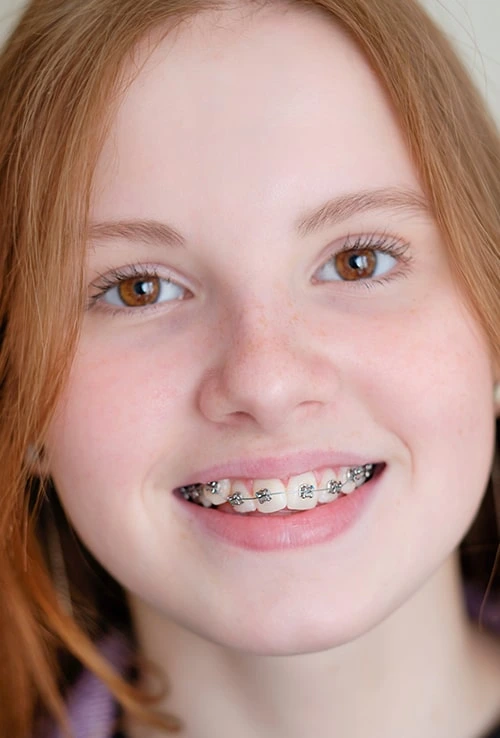

At Peridot Dental Care, we aim to provide you with the beautiful smile you have always wanted by effectively aligning your misaligned teeth using high-quality and cost-effective dental braces in Woodbridge.
Dental Brace Services in Woodbridge
Greetings and welcome to Peridot Dental Care, the leading choice for dental braces in Woodbridge. Our expertise lies in delivering highly effective orthodontic treatments aimed at helping you attain a healthier and more aligned smile. Here, we are dedicated to offering superior Woodbridge dental braces for both adults and children to promote optimal growth and development of the teeth skillfully. Our focus is on delivering high-quality braces in Woodbridge that yield effective results.
Our clinic is renowned for offering a comprehensive range of cosmetic dental options and emergency dental services, all in one convenient location. From teeth whitening and dental implant surgery to dental veneers, crowns, orthodontics, root canal therapy, dental extraction, and oral surgery, we provide a wide array of beneficial services that prioritize the preservation of your smile’s aesthetics and optimal oral functionality.
Don’t hesitate to contact us right now if you prefer to consult with our cosmetic dentist in Woodbridge or if you need the help of our top-rated emergency dentist in Woodbridge to deal with your urgent dental conditions successfully.
The Process of Aligning Over Crowding Teeth Through Dental Braces
Dental braces are an integral part of the active phase in orthodontic treatment. During this phase, the application of pressure by the arch wire on the teeth initiates the movement of crooked teeth. With the help of Woodbridge dental brace specialists, we provide various steps that should be accurately taken to achieve desirable outcomes.
Comprehensive Initial Consultation and Examination
Placement of Dental Braces
Dental Braces Adjustment
Advantages of Straightening Misaligned Teeth Through Dental Braces
While braces in Woodbridge can undoubtedly contribute to a beautiful smile, let us delve into several ways in which they can positively impact your overall well-being:
Enhanced Oral Health
The utilization of dental braces aids in the correction of misaligned teeth, addressing the challenge of effectively cleaning them. Therefore, the risk of tooth decay, gum disease, and other oral health complications is significantly minimized.
Enhanced Self-Confidence
A significant advantage of wearing braces is the remarkable boost they offer to one's self-esteem. It is reassuring to recognize that Woodbridge braces are a temporary treatment solution that can yield a lifetime of confidence accompanied by a radiant smile.
Preventing Bone Erosion
As our highly skilled orthodontist in Woodbridge explains, misaligned teeth can contribute to severe conditions such as bone loss. After getting dental braces, your natural teeth gradually return to their correct position. As a result, the bones naturally regenerate and rebuild.
Dental Braces FAQs
How Can I Properly Care for Teeth with Braces?
Maintaining excellent oral hygiene is crucial when wearing braces or a retainer to prevent the accumulation of food particles and other substances on the teeth. Failing to do so increases the risk of tooth decay and potential infections. Therefore, it is essential to diligently follow proper oral care practices provided by Woodbridge dental brace dentists at Peridot Dental Care clinic.
How Long Does It Take to Achieve Desired Results from Braces?
The duration of wearing braces is unique to each patient, as the response to treatment varies for every individual. Treatment times can range from six to 30 months.
At Peridot Dental Care, we utilize high-tech tools to help you achieve what you want through dental braces in Woodbridge sooner than expected.
How do braces straighten teeth?
Clinically reviewed by Dr. Elham Faghih Nasiri, dentist at Peridot Dental Care, registered with the Royal College of Dental Surgeons of Ontario (RCDSO). Last reviewed November 2026.
Braces use small brackets bonded to each tooth and a thin archwire that runs through them. The wire applies light, constant pressure, and the bone around each tooth slowly remodels so the tooth can move. Most treatment takes 12 to 24 months, followed by retainers to hold the result.
Braces remain one of the most reliable ways to correct crowding, gaps, overbites, underbites and crossbites, because the dentist controls each tooth precisely. They work for children, teens and adults, and today’s brackets are smaller and smoother than many people remember.
If you would prefer something less visible, our Invisalign page explains clear aligners. For an overview of all options, including early treatment for children, see orthodontic care in Woodbridge.
Which type of braces is right for you?
| Type | How they look | Good to know |
|---|---|---|
| Metal braces | Small stainless steel brackets | Strong, efficient and suited to most cases. Coloured elastics are optional for kids and teens. |
| Ceramic braces | Tooth-coloured or clear brackets | Less noticeable. Slightly larger and need care with dark foods that can stain the elastics. |
| Self-ligating braces | Brackets with a built-in clip instead of elastics | Fewer elastics to change and easier to keep clean. |
| Clear aligners | Removable clear trays | Not braces, but an alternative for many mild to moderate cases. See Invisalign. |
What happens when braces go on?
Preparation
Teeth are cleaned and dried. A cheek retractor keeps them dry, which most people find comfortable.
Bonding the brackets
A tooth-safe adhesive holds each bracket. A curing light sets the adhesive in seconds.
Placing the wire
The archwire is threaded through the brackets and held with elastics or clips.
Instructions
We show you how to brush and clean around the brackets and give you a starter kit with wax and a travel brush.
First few days
Teeth feel tender for three to five days. Soft foods and over-the-counter pain relief help.
What can you eat with braces?
Hard and sticky foods can break brackets or bend wires, which adds visits and can slow treatment.
| Choose | Avoid or cut up |
|---|---|
| Pasta, rice, soup, eggs, fish | Hard candy, ice, nuts, popcorn |
| Soft bread, muffins, pancakes | Hard crusts and bagels unless cut small |
| Bananas, berries, cooked vegetables | Whole apples and raw carrots unless sliced thin |
| Yogurt, cheese, smoothies | Caramel, toffee, gum and chewy candy |
| Chicken or meat cut off the bone | Corn on the cob and ribs eaten from the bone |
How do you clean your teeth with braces?
- Brush after every meal, angling the brush above and below the brackets.
- Use a fluoride toothpaste, and a fluoride rinse if we recommend it, to prevent white spots.
- Clean between teeth every day with a floss threader, water flosser or interdental brush.
- Keep cleanings and checkups every six months, or more often if advised.
- Wear a mouth guard for sports to protect your teeth, lips and brackets.
What should you do if a bracket or wire breaks?
- A loose bracket: leave it in place if it is still on the wire and call us to book a repair.
- A poking wire: push it flat with a clean pencil eraser or cover it with orthodontic wax.
- A sore spot on the cheek: rinse with warm salt water and use wax over the bracket.
- A wire that has come out completely: keep it and call us. Do not try to put it back yourself.
Broken braces are rarely an emergency, but call 647-313-4164 so we can plan a repair. If you have an injury to your mouth, see our emergency dentist page.
What do braces fix, and how long does each take?
Every case is different, but these ranges give a sense of what to expect. Your treatment plan will include your own estimate.
| Problem | What braces do | Typical time |
|---|---|---|
| Mild crowding | Align overlapping or rotated teeth | 6 to 12 months |
| Spacing | Close gaps between teeth | 6 to 12 months |
| Moderate to severe crowding | Create space and align teeth, sometimes with extractions | 18 to 24 months |
| Deep overbite | Level the bite so front teeth stop overlapping too much | 18 to 24 months |
| Underbite or crossbite | Correct how upper and lower teeth meet, often with elastics | 18 to 30 months |
| Open bite | Bring front teeth together | 18 to 24 months |
What are elastics, and why do they matter?
Elastics are small rubber bands that hook between upper and lower brackets. They use your jaw movement to correct how the teeth bite together, which is something brackets and wires alone cannot do. Wearing elastics exactly as directed, usually all day and night except when eating and brushing, is one of the most important things you can do to finish treatment on time.
- Change elastics several times a day, because they lose strength quickly.
- Carry spares in your bag or backpack.
- Expect your teeth to feel sore for a day or two when you start elastics; this settles quickly.
- Never double up elastics to catch up, because that can strain teeth.
Are braces right for adults?
Yes. More adults than ever are straightening their teeth, often to make cleaning easier, fix worn front teeth or prepare for implants and crowns. Tooth-coloured ceramic braces and clear aligners are popular discreet options. Adults with gum disease need it controlled before treatment starts, so a cleaning and gum check is the first step.
How do you handle sore teeth and cheeks with braces?
- Eat soft, cool foods for the first few days after braces go on or are adjusted.
- Take an over-the-counter pain reliever as the label directs if teeth feel tender.
- Press orthodontic wax over any bracket that rubs your cheek or lip until the skin toughens up.
- Rinse with warm salt water to soothe small mouth sores.
- Call us if a wire pokes and you cannot cover it, or if soreness lasts more than a week.
Most discomfort settles within three to five days. If pain is severe or you have swelling, contact us at 647-313-4164.
Does the Canadian Dental Care Plan cover braces?
Braces may be covered under the Canadian Dental Care Plan (CDCP) only when they meet medical necessity criteria, and approval is usually needed before treatment begins. Many private plans cover part of orthodontic treatment for children and teens, often up to a lifetime maximum. Bring your plan details to your consultation and we will check what you are eligible for and explain any amount you would pay before braces go on.
Dental braces questions
How long will I need braces?
Most people wear braces for 12 to 24 months. Your plan will include an estimate based on your bite and how much movement is needed.
Do braces hurt?
Placing braces does not hurt. Teeth feel sore for a few days after placement and after adjustments. Soft foods and pain relief taken as directed help.
Can adults get braces?
Yes. Teeth can move at any age as long as the gums and bone are healthy. Many adults choose ceramic braces or clear aligners.
Will braces affect my speech?
Braces rarely affect speech. Your lips and cheeks may feel the brackets for a week or two until they adjust.
Do I still need checkups during treatment?
Yes. Regular cleanings and checkups help prevent cavities and gum swelling around the brackets.
What happens when braces come off?
The brackets are removed, the adhesive is polished off and retainers are fitted. Wearing them as directed keeps your teeth straight.
Are braces covered by insurance?
Some plans cover orthodontics, often for children and teens with a lifetime maximum. We review your coverage before treatment starts.
This page is general information and is not a diagnosis. Your dentist will recommend treatment after an examination. Reviewed by Dr. Elham Faghih Nasiri, November 2026.
Book a visit at Peridot Dental Care
6175 Highway 7 West, Unit 7, Woodbridge, ON L4H 0P6. New patients welcome. Read patient reviews.
Related dental care
Explore other treatments that are often planned alongside this one, or book a visit at 6175 Highway 7 West, Unit 7, Woodbridge. Call 647-313-4164.