Dental Invisalign in Woodbridge

Invisalign in Woodbridge: Straighter Teeth With Clear, Removable Aligners

Invisalign in Woodbridge straightens teeth with a series of custom clear aligners you swap every 1 to 2 weeks, no brackets or wires needed. Crooked teeth, gaps and many bite issues are common, rarely urgent and very treatable, and orthodontic care is one of the things Peridot Dental Care is best known for.

Not sure if aligners will work for your teeth? A consultation at our dental clinic in Woodbridge gives you a straight answer, and patients have given us a 4.9 Google rating from 165+ reviews.

Braces and Invisalign expertsConsultation promotionsTeens and adultsEvening and weekend hours
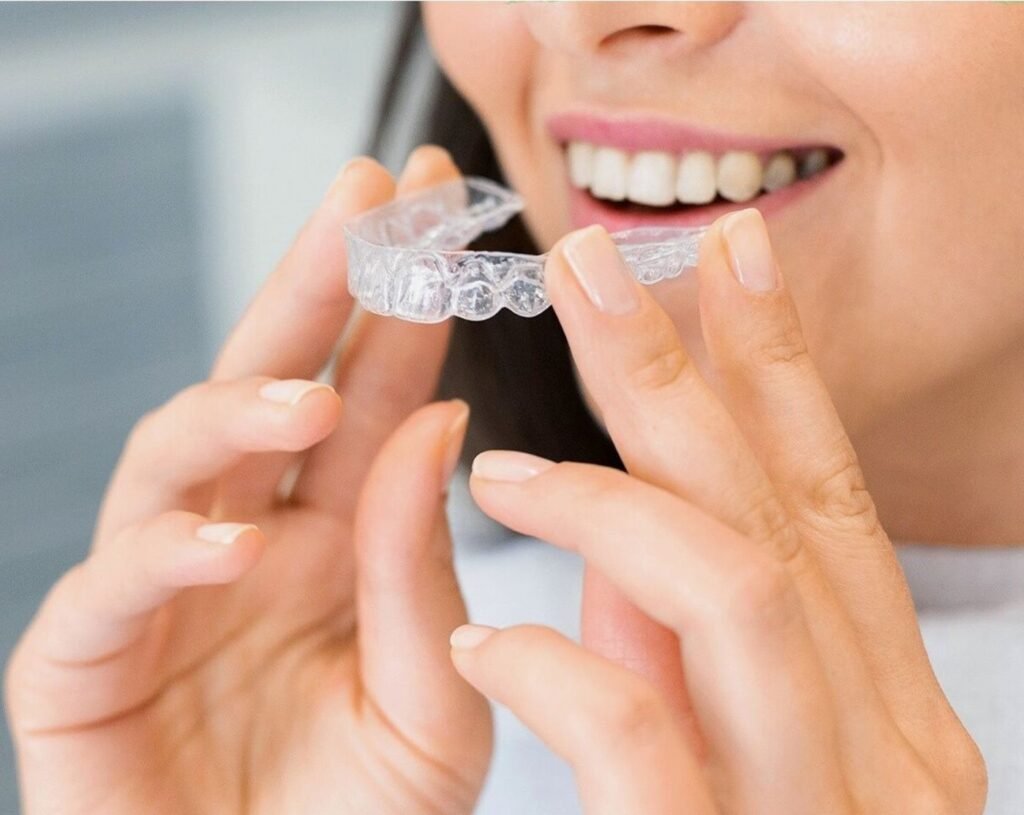
Invisalign in Woodbridge: patient holding a clear aligner at Peridot Dental Care
4.9 ★ Google ratingfrom 165+ patient reviews

How does Invisalign work?

Quick answer

Invisalign uses a sequence of clear plastic aligners, each one slightly different from the last. Worn 20 to 22 hours a day, each set presses specific teeth a fraction of a millimetre toward the final position planned in 3D software. Small tooth-coloured bumps called attachments help the trays grip and turn teeth.

Aligners suit many cases, but not all of them. Some bites move more predictably with metal or ceramic braces, and we’ll tell you which applies to you.

Your case is planned by our team as your orthodontist in Woodbridge option, with check-ins from the first tray to the last retainer.

Plenty of patients finish with professional teeth whitening (your aligner trays can double as whitening trays at the end).

And if a few teeth are chipped or worn, dental veneers after straightening often need less tooth preparation than veneers on crooked teeth.

Custom Invisalign clear aligners from a Woodbridge dental clinic

What problems can Invisalign correct?

Clear aligners treat most of the reasons adults and teens look into orthodontics.

01

Crowding

Overlapping or twisted teeth that trap food and plaque.

02

Spacing

Gaps between teeth, including the front gap many people dislike in photos.

03

Overbite

Upper teeth that cover too much of the lower teeth, often treated with small elastics.

04

Underbite

Lower teeth sitting ahead of the upper teeth, in cases where tooth position is the cause.

05

Crossbite

Upper teeth biting inside the lower teeth, which can wear enamel unevenly.

06

Open bite

Front teeth that don't meet when you close, in suitable cases.

Severe jaw-size differences, impacted teeth or very large rotations may need braces, surgery or a referral to an orthodontic specialist.

Why do straight teeth matter for your health?

Short answer

Straighter teeth are easier to clean, so they collect less plaque and are less prone to cavities and gum disease. A better bite also spreads chewing forces evenly, which reduces chipping, uneven wear and strain on the jaw joints.

Looks are usually why people start. Health is why the results are worth keeping.

  • Crowded teeth create tight overlaps a toothbrush can’t reach.
  • Deep bites can wear down front teeth and bruise the gums behind them.
  • Crossbites can grind enamel unevenly and shift the jaw to one side.
  • Gaps can trap food and let teeth drift further over time.
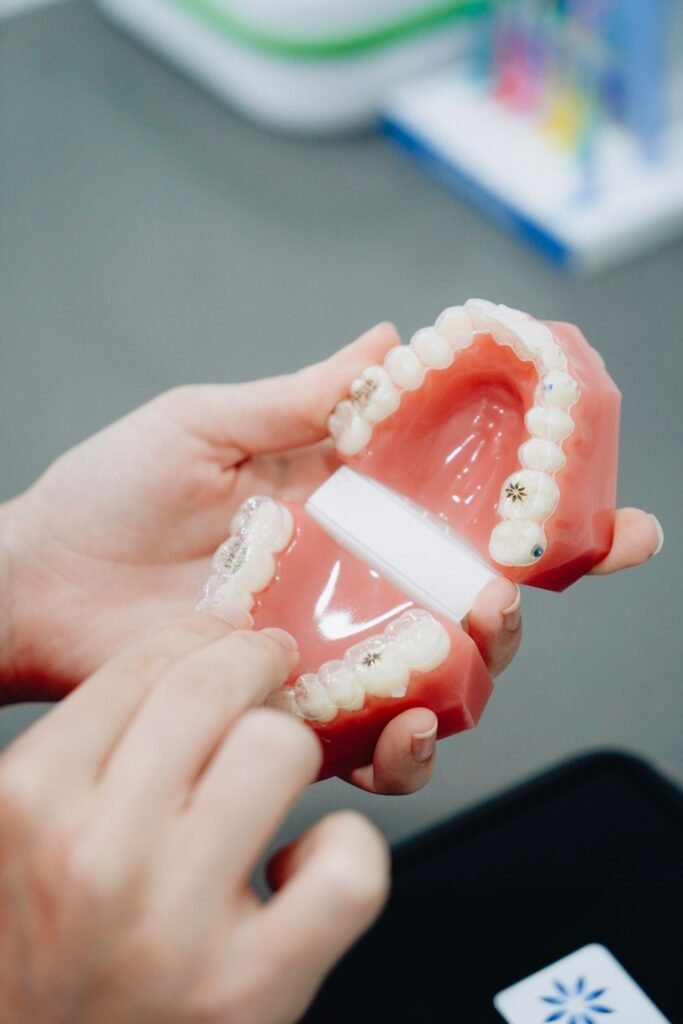
Dental cast used to plan Invisalign treatment in Woodbridge

Who is a good candidate for Invisalign?

Short answer

Teens and adults with healthy gums, most of their adult teeth and mild to moderate crowding, spacing or bite issues are usually good candidates, as long as they can wear aligners 20 to 22 hours every day.

Adults

Adults are often the best aligner patients because they’re consistent. Many come in for teeth that shifted years after childhood braces.

Teens

Teen aligners can include wear indicators that fade with use, so parents and our team can see whether trays are being worn enough. Teens who lose things or forget routines may do better in braces.

Younger children

Some kids aged about 6 to 10 can start early treatment with aligners designed for growing mouths. We assess this at an orthodontic screening around age 7.

Before you start

Cavities and gum disease are treated first. Moving teeth through inflamed gums can make gum problems worse.

What are the steps of Invisalign treatment?

From first visit to final retainer, here's how it works at Peridot Dental Care.

  1. Consultation

    We look at your teeth, gums, bite and jaw joints, talk about your goals and take X-rays if needed.

  2. Digital scan or impressions

    Precise records of your teeth are used to build a 3D model.

  3. Virtual treatment plan

    You see the planned tooth movements and a preview of the result before you commit.

  4. Aligners and attachments

    Attachments are bonded to selected teeth and your first trays are fitted. We show you how to wear and clean them.

  5. Switching trays

    You move to the next set every 1 to 2 weeks, as directed.

  6. Progress checks

    Short visits every 6 to 10 weeks confirm teeth are tracking.

  7. Refinements

    Extra aligners fine-tune any teeth that lag behind. This is common and expected.

  8. Retainers

    Custom retainers, usually worn at night long term, keep your teeth from drifting back.

What are Invisalign attachments and IPR?

Attachments are small, tooth-coloured bumps of composite bonded to some teeth. They give the aligners extra grip so they can rotate, lift or tip teeth. They’re removed at the end with no damage to your enamel.

IPR (interproximal reduction) is gentle polishing between certain teeth to create a fraction of a millimetre of space. It helps relieve crowding without extractions and is usually painless, with no freezing needed.

Not every case needs IPR. If yours does, you’ll see exactly where and how much in your 3D plan before treatment starts.

Invisalign vs braces: what's the difference?

As a clinic that offers both, we don't push one over the other. Here's an honest side-by-side.

FactorInvisalign clear alignersBraces
How it looksClear trays, hard to noticeMetal or tooth-coloured brackets
RemovableYesNo
EatingRemove trays, eat anythingAvoid hard, sticky and chewy foods
Brushing and flossingNormal routineExtra tools and time
ComfortPressure for 1 to 2 days per new setWires and brackets can rub at first
Who's in controlYou, by wearing them 20 to 22 hoursWorks without daily effort
VisitsAbout every 6 to 10 weeksAbout every 4 to 8 weeks
Complex bitesMany, with limitsWidest range of cases

Ask about our braces and Invisalign consultation promotions. Seeing both plans for your own teeth makes the choice much easier.

How long does Invisalign take?

Your exact timeline comes from your 3D plan. These ranges are typical.

Case typeTypical treatment timeNotes
Minor relapse after bracesAbout 3 to 6 monthsOften the simplest aligner cases
Mild crowding or spacingAbout 6 to 12 monthsCommon for adults
Moderate crowding or bite correctionAbout 12 to 18 monthsMay include elastics
Complex cases18 months or moreBraces may be more predictable

Wearing aligners less than 20 hours a day is the most common reason treatment runs long.

What should you expect in your first week of Invisalign?

The first week is the adjustment week. After that, most people forget they’re wearing trays.

  • Days 1 to 2: teeth feel tight and tender, especially when biting. Soft foods help.
  • Day 2 to 3: a slight lisp may show up, then fade as your tongue adapts.
  • Days 3 to 7: taking trays in and out gets quicker. Pressure eases.

Tip: switch to each new set at bedtime. You’ll sleep through the tightest hours.

Keep a small kit in your bag: the case, a travel toothbrush, mini toothpaste and floss. It turns lunch at work or school into a 5-minute routine.

What does a day with Invisalign actually look like?

People worry aligners will take over their lives. They mostly don’t. Here’s a realistic weekday for an adult patient.

  • 7:00 AM: take trays out, eat breakfast, brush, trays back in. About 15 minutes.
  • 10:30 AM: coffee with the trays out, then a quick rinse before they go back in.
  • 12:30 PM: lunch, then brush at work (a travel kit in your bag helps).
  • 3:00 PM: water only, trays in.
  • 7:00 PM: dinner, brush and floss, trays in.
  • Bedtime: trays stay in all night, which covers about a third of your daily hours.

The trickiest part is grazing. Snacking all afternoon means trays sit in the case too long. Most patients find they snack less, which their waistline doesn’t mind either.

Smiling patient with braces comparing Invisalign vs braces in Woodbridge

Is Invisalign a good choice for teenagers?

For responsible teens, yes. Aligners are easier to keep clean than braces, there are no food rules beyond taking trays out, and they don’t get in the way of school photos.

The catch is wear time. A teen who leaves trays in a locker all afternoon won’t see results. Wear indicators on teen aligners help everyone stay honest.

What parents should ask

  • Will my teen realistically wear trays 20 to 22 hours a day?
  • Do they play contact sports or a wind instrument?
  • Are any adult teeth still coming in?
  • What happens if a tray gets lost?

We’ll talk it through with you and your teen, and braces stay on the table if they’re the safer bet.

What do real Invisalign cases look like?

Typical patients we see, with details changed for privacy.

Adult, age 29

Front teeth shifted after childhood braces

No retainer for 10 years. About 7 months of aligners fixed the crowding, and a nightly retainer keeps it there.

Teen, age 16

Crowding and a busy sports schedule

Aligners with wear indicators and a sports guard for games. Parents could see at a glance that trays were being worn.

Adult, age 41

A gap between the front teeth and a deep bite

Aligners with small elastics corrected the bite over 14 months, then whitening brightened the result.

Adult, age 35

Wanted veneers to hide crooked teeth

Straightening first meant only 2 veneers were needed instead of 6, with far less tooth reduction.

What are the common Invisalign myths?

Here's what we tell patients when these come up.

Myth

Aligners only work for tiny cosmetic fixes.

Fact

Modern planning and attachments treat many crowding, spacing and bite cases that once needed braces.

Myth

Invisalign is painless.

Fact

Most people feel pressure for 1 to 2 days with each new set. It's mild and fades quickly.

Myth

You can take them out whenever you like.

Fact

Teeth only move while trays are in. 20 to 22 hours a day is the rule.

Myth

Adults are too old for orthodontics.

Fact

Healthy teeth can move at any age. Many of our aligner patients are in their 30s, 40s and 50s.

Myth

Retainers are optional once you're done.

Fact

Teeth drift for life. Wearing retainers as directed is what keeps the result.

Can Invisalign help before implants, crowns or veneers?

Often, yes. Straightening teeth first can make other dental work simpler and more conservative.

  • Before an implant: aligners can open or close space so the implant sits in the ideal spot.
  • Before veneers: straighter teeth usually need less enamel removed.
  • Before crowns or bridges: upright teeth make stronger, better-fitting restorations.

We plan these steps together, so each treatment sets up the next one.

What mistakes slow down Invisalign treatment?

Aligners only work as well as the habits around them. These are the slip-ups we see most.

  • Wearing trays less than 20 hours a day. Teeth stop tracking and the next set won’t fit.
  • Drinking coffee, tea or pop with trays in. Sugar and acid get trapped against the teeth, and hot drinks can warp plastic.
  • Wrapping trays in a napkin. The single most common way aligners end up in the garbage.
  • Skipping ahead to the next set. Faster switching doesn’t mean faster results.
  • Ignoring a loose attachment. Call us. It changes how the tray grips the tooth.
  • Stopping retainers early. The fastest way to lose a result you paid for.
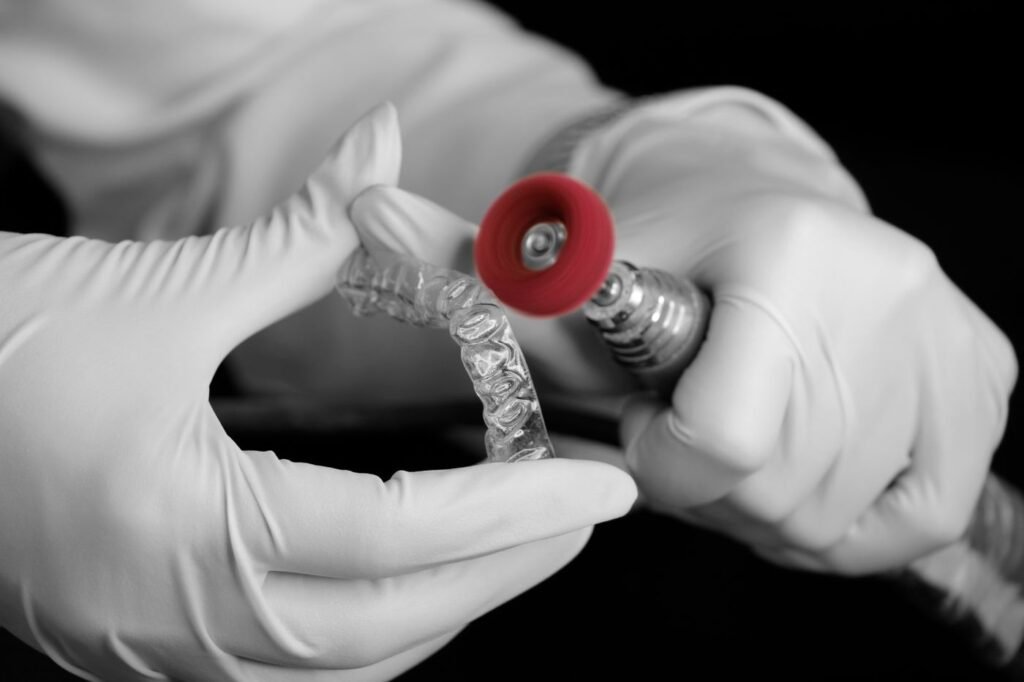
Technician finishing a custom clear aligner for Invisalign patients in Woodbridge

What affects the cost of Invisalign in Woodbridge?

Short answer

Invisalign cost depends on how complex your case is, how many aligners and refinements are planned, whether you need other dental work first and the type of retainers chosen. You get a written estimate after your consultation.

Ways to make it easier

  • Consultation promotions. Ask about our current offers on braces and Invisalign consultations.
  • Insurance. Many workplace plans include orthodontic coverage with a lifetime maximum. We can send a predetermination.
  • Payment over time. Ask our front desk about the options available.

Does CDCP cover Invisalign?

Orthodontic treatment is not currently covered by the Canadian Dental Care Plan. CDCP patients are welcome here, and the plan can help with the exams, cleanings and fillings that get your mouth ready for aligners.

Is Invisalign worth it?

For most of our patients, yes. Teeth that are easier to clean need fewer fillings and gum treatments over the years, and many people simply smile more in photos and at work. The key is choosing it for the right case and committing to the daily wear.

How do you care for aligners and retainers?

Clean trays stay clear, fresh and comfortable.

01

Rinse every time

Rinse trays in cool water whenever you take them out. Hot water can warp them.

02

Brush gently

Use a soft brush and clear, unscented soap. Toothpaste scratches the plastic.

03

Clean teeth before trays go in

Brush and floss so food isn't sealed against your enamel.

04

Always use the case

At home, at restaurants, at the gym. No napkins.

05

Keep the last set

If you lose a new tray, the previous set holds your teeth while a replacement is made.

06

Wear retainers as directed

Usually every night at first, then as your dentist advises.

Are mail-order aligners as safe as Invisalign from a dentist?

Safety note

Aligners sent by mail without an in-person exam carry real risks. Teeth can be moved through undiagnosed gum disease or cavities, bites can be made worse, and nobody checks progress along the way. Any orthodontic treatment should start with a full exam and X-rays.

Supervision is the big difference. A dentist checks the bone and gums before teeth move, watches for problems at every visit and adjusts the plan when teeth don’t track.

We regularly see patients whose at-home aligners left gaps, open bites or sore jaw joints. Most can be corrected, but it takes longer than doing it once with proper planning.

When should you call the dentist during Invisalign treatment?

Mild pressure and a little tenderness with each new set are normal. A few things aren’t.

  • A tray that cracks, splits or has a sharp edge cutting your gum or tongue
  • Pain that gets worse instead of easing after 2 to 3 days
  • An attachment that falls off
  • A new set that won’t seat fully even after a day or two
  • Jaw joint pain, clicking or headaches that start during treatment
  • Rare allergic reactions such as swelling or a rash in the mouth

Treatment is planned and monitored by dentists registered with the Royal College of Dental Surgeons of Ontario (RCDSO). Proper diagnosis before you start, and regular follow-up during treatment, is what keeps aligner therapy safe.

How do you choose an orthodontist in Woodbridge for Invisalign?

Clear aligners are only as good as the plan behind them. When you compare clinics, ask:

  1. Who plans and approves my tooth movements?
  2. Do you offer braces too, in case aligners aren’t the best fit?
  3. How often will I be seen during treatment?
  4. Are refinements and retainers included in the estimate?
  5. Are your dentists registered with the RCDSO?

The top dentist in Woodbridge for your smile is the one who explains these answers clearly before you start.

Can Invisalign fix crooked teeth if you have crowns or fillings?

Usually, yes. Aligners can move teeth with fillings and most crowns, and attachments can be bonded to many restorations with the right surface preparation.

A few situations need extra planning. Large old crowns may be replaced first so the trays fit the final shape. Bridges join teeth together, so the teeth under a bridge can’t move independently. And implants don’t move at all, so the plan works around them.

We’ll check every restoration at your consultation and explain whether anything should be updated before your scan, so your aligners fit well from the first tray.

Curious whether Invisalign will work for you?

Call our dental office in Woodbridge at +1 647-313-4164 or email info@peridotdentalcare.com. Ask about Invisalign and braces consultation promotions, plus evening and weekend times.

Why choose Peridot Dental Care for Invisalign in Woodbridge?

Orthodontic solutions, including Invisalign and braces, are what many patients come to Peridot Dental Care for. With a 4.9 Google rating from 165+ patient reviews, we’re often named among the best dental clinic in Woodbridge choices for straightening teeth.

  • Both options under one roof. We offer braces and Invisalign, so the recommendation fits your teeth.
  • Teens and kids too. Our team is well known as a kids dentist in Woodbridge, so families often start orthodontic checks with us early.
  • Consultation promotions. Ask about current braces and Invisalign offers.
  • New and CDCP patients accepted. CDCP covers eligible general care, and patients 65+ get a 20% senior discount.
  • Evening and weekend appointments. Check-ins that fit around school and work.
  • Easy to find. 6175 Highway 7 West, Unit 7, Woodbridge, Ontario.

Broke a tray before a big event? We also work as an emergency dental clinic in Woodbridge and help aligner patients get back on track quickly.

Invisalign in Woodbridge: frequently asked questions

How long does Invisalign take?

Most cases take about 6 to 18 months. Minor relapse cases can finish in a few months, while complex bites take longer. Wearing aligners 20 to 22 hours a day keeps treatment on schedule.

Is Invisalign as effective as braces?

For mild to moderate crowding, spacing and many bite problems, Invisalign is very effective. Braces handle the widest range of complex cases, and an assessment shows which suits your teeth.

Can I drink coffee with Invisalign?

Take your aligners out for coffee, tea and any drink other than plain water. Hot drinks can warp the trays and sugary or acidic drinks get trapped against your teeth.

Will Invisalign affect my speech?

Some people notice a slight lisp for the first day or two with new aligners. The tongue adjusts quickly and speech usually returns to normal within a few days.

What happens after Invisalign treatment ends?

You wear custom retainers to hold your teeth in their new position. Most patients wear them nightly at first and continue long term as directed by their dentist.

Conclusion

Invisalign is a discreet, comfortable way to straighten teeth and fix many bite problems for teens and adults. Success depends on a careful diagnosis, a realistic plan and steady daily wear followed by retainers. Peridot Dental Care is ready to show you what your own smile could look like and help you choose between aligners and braces with confidence.

Invisalign is a registered trademark of Align Technology, Inc. Results vary from patient to patient. This page is general information and does not replace an in-person dental assessment.