
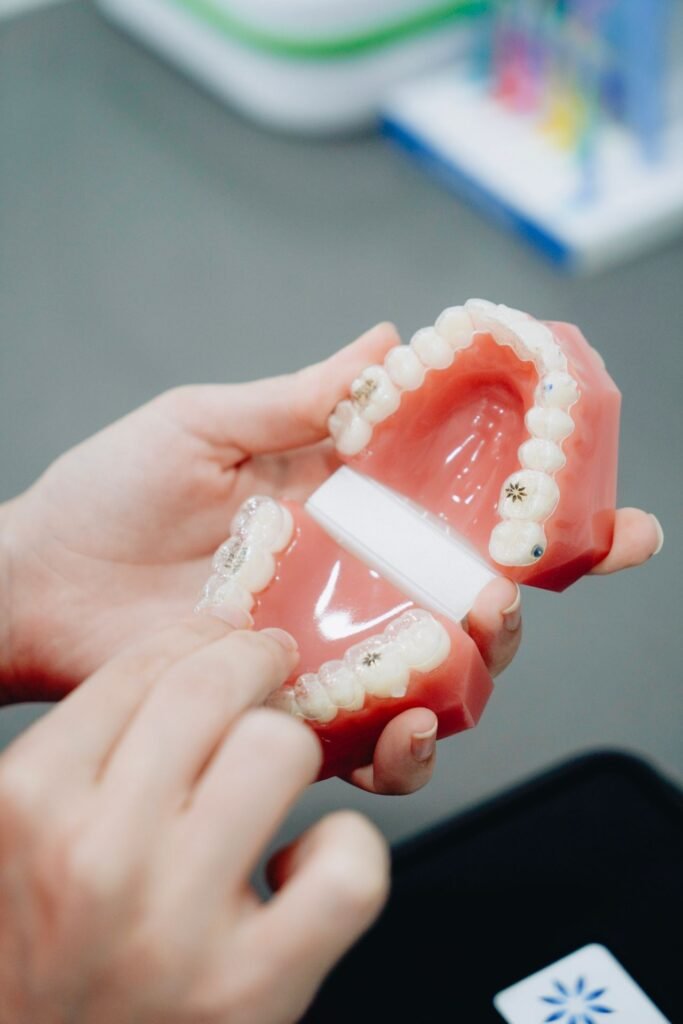
Braces do not hurt when they are put on, but most people feel soreness and pressure for three to five days afterward and for a day or two after each adjustment. This discomfort is normal, temporary, and a sign that teeth are beginning to move. Sharp pain from a poking wire or broken bracket is uncommon and easy to fix, so an orthodontist in Woodbridge can help quickly if anything feels wrong.
For many children, teens, and adults, fear of pain is the biggest reason to hesitate about orthodontic treatment. Parents worry their child will be miserable, and adults picture months of discomfort. The reality is much more manageable. Knowing what to expect, and having a caring dental clinic in Woodbridge to support you, makes the experience far less stressful.
Modern dental braces use smaller brackets and lighter, more flexible wires than in the past, which reduces soreness.
For patients who prefer a removable option, Invisalign clear aligners are another path. If a wire pokes your cheek or a bracket breaks, our emergency dentist team can help. Below, we explain what braces feel like at each stage, how to ease soreness, and how braces compare with aligners.
What Are Braces?
Braces are orthodontic appliances made of brackets bonded to the teeth and connected by an archwire. The wire applies gentle, continuous pressure that moves teeth into better positions over time. Braces can correct crowding, spacing, overbites, underbites, crossbites, and open bites.
Do Braces Hurt? A Stage-by-Stage Guide
Getting Braces On
Placing braces is not painful. The teeth are cleaned, brackets are bonded, and the wire is attached. You may feel pressure or mild jaw fatigue from keeping your mouth open.
The First Week
Teeth usually feel sore and tender for three to five days, especially when chewing. Lips and cheeks may feel irritated as they get used to the brackets.
After Adjustments
When wires are changed or tightened every few weeks, mild soreness returns for one to two days.
During Treatment
Most of the time, braces feel comfortable. Many patients barely notice them after the first month.
Getting Braces Off
Removing braces involves gentle pressure as brackets are released. Most people feel relief and excitement rather than pain.
Why Do Braces Cause Soreness?
Teeth move when pressure on the periodontal ligament triggers bone remodeling. The ligament is compressed on one side and stretched on the other, creating mild inflammation. This is the same process that allows teeth to move, and the soreness fades as the tissues adapt.
How to Relieve Braces Pain: Step by Step
- Take pain relief if needed: Over-the-counter medication as directed, if appropriate.
- Eat soft foods: Yogurt, pasta, soups, mashed potatoes, and smoothies for the first few days.
- Use cold: Cold water, ice cream, or a cold compress on the cheek can soothe soreness.
- Apply orthodontic wax: Cover brackets or wires that rub the cheeks.
- Rinse with warm salt water: Soothes irritated gums and cheeks.
- Use a soft toothbrush: Keep cleaning thoroughly but gently.
- Be patient: Soreness usually fades within a few days.
Invisalign vs Traditional Braces: Comfort Comparison
- Pressure: Both cause temporary pressure. Aligners often move teeth in smaller increments.
- Irritation: Braces have brackets and wires that can rub. Aligners have smooth plastic edges.
- Eating: Aligners are removed for meals. Braces require avoiding hard and sticky foods.
- Visibility: Aligners are nearly invisible. Braces are more noticeable, though clear brackets are available.
- Compliance: Aligners must be worn 20 to 22 hours a day. Braces work continuously without effort.
- Complex cases: Braces may offer more control for certain bite problems.
When Is Braces Pain Not Normal?
- A wire poking deeply into the cheek or gum
- A loose or broken bracket
- Pain lasting more than a week after an adjustment
- Swelling, pus, or signs of infection
- Sharp pain in one tooth
What to Expect at Your First Orthodontic Visit: Step by Step
- Consultation: Discuss concerns and goals.
- Exam: Teeth, bite, and jaw are assessed.
- Records: Photos, X-rays, and digital scans.
- Treatment options: Braces, Invisalign, or early appliances are explained.
- Timeline and care plan: Expected treatment length and home care.
Common Myths About Braces
Myth: Braces are painful the whole time.
Fact: Soreness is usually limited to a few days after placement and adjustments.
Myth: Braces are only for kids.
Fact: Adults can successfully straighten their teeth at any age.
Myth: Tighter braces work faster.
Fact: Teeth move at a biological pace. Gentle forces are safer and effective.
Myth: Children need sedation for braces.
Fact: Braces placement is not painful and rarely needs sedation, though comfort options exist for anxious patients.
Real Patient Scenarios
Scenario 1: A 12-year-old feels sore for four days after getting braces. Soft foods and cold treats help, and she soon forgets they are there.
Scenario 2: A teen’s wire pokes his cheek after a hockey practice. Wax helps overnight, and the wire is trimmed the next day.
Scenario 3: An adult professional chooses Invisalign for a mild crowding issue and finds the pressure mild and manageable.
Common Mistakes With Braces
- Eating hard or sticky foods that break brackets.
- Skipping wax when brackets irritate the cheeks.
- Not cleaning around brackets thoroughly.
- Missing adjustment appointments.
- Playing sports without a braces-friendly mouth guard.
Safety Disclaimer
Seek care promptly for injuries to the mouth, swallowed hardware with breathing difficulty, or signs of infection. Orthodontic treatment should be planned and monitored by licensed dental professionals registered with the Royal College of Dental Surgeons of Ontario (RCDSO). This article is general information only.
Choosing an Orthodontic Clinic in Woodbridge
Look for a clinic that offers both braces and Invisalign, explains options honestly, and makes it easy to get help between appointments. Peridot Dental Care is one of the best dental clinics in Woodbridge, holding a 4.9 Google rating from 165+ patient reviews, and is particularly well regarded for pediatric dentistry and orthodontic solutions including Invisalign and braces.
New patients and CDCP patients are welcome. The clinic offers senior discounts of 20% off for patients 65 and older, special promotions for kids and for implant and braces consultations, and evening and weekend appointments. Call +1 647-313-4164, email info@peridotdentalcare.com, or visit 6175 Highway 7 West, Unit 7, Woodbridge, Ontario to meet an orthodontist in Woodbridge who prioritizes comfort.
Keeping Teeth Clean With Braces
- Brush after meals with a soft or orthodontic toothbrush.
- Use interdental brushes to clean around brackets.
- Floss daily with a threader or water flosser.
- Use fluoride toothpaste and rinse if recommended.
- Keep regular cleanings during treatment.
Braces-Friendly Foods
Soft bread, pasta, rice, eggs, fish, tender chicken, yogurt, bananas, berries, and cooked vegetables are all good choices. Avoid popcorn, nuts, hard candy, ice, gum, caramel, and whole apples or carrots unless cut into small pieces.
Types of Braces and How They Feel
Metal Braces
Stainless steel brackets are strong, reliable, and the most common option. Modern metal brackets are smaller and smoother than older designs, which helps reduce cheek irritation.
Ceramic Braces
Tooth-coloured or clear brackets blend with teeth for a more discreet look. They feel similar to metal braces, though brackets can be slightly larger.
Self-Ligating Braces
These use a built-in clip rather than elastic ties to hold the wire. Some patients find them slightly more comfortable and easier to clean.
Clear Aligners
Removable plastic trays like Invisalign apply gentle pressure without brackets or wires. They are popular with teens and adults who want a less visible option.
Your orthodontic team will recommend the best option based on your bite, goals, lifestyle, and budget.
What Is the Best Age for Braces?
There is no single perfect age. Many children benefit from an orthodontic check around age seven, when early bite problems can be spotted. Comprehensive braces often start between ages 10 and 14, when most permanent teeth have erupted and the jaw is still growing. Adults can also get braces or aligners at any age as long as their teeth and gums are healthy. Starting at the right time can make treatment faster and more comfortable.
Tips for Parents of Children With Braces
- Stock up on soft foods for the first week.
- Keep orthodontic wax in the backpack and car.
- Pack a travel toothbrush for school.
- Remind children to wear a mouth guard during sports.
- Celebrate milestones to keep them motivated.
Does Getting Braces Off Hurt?
Removing braces is usually quick and comfortable. The orthodontist gently squeezes each bracket to release it, which creates brief pressure but not pain. Leftover bonding material is then polished away. Afterward, retainers are fitted to keep teeth in their new positions. Wearing retainers as instructed is essential to protect your results, and they typically feel far more comfortable than braces.
Signs You or Your Child May Need Orthodontic Treatment
- Crowded, overlapping, or twisted teeth
- Large gaps between teeth
- Upper teeth that stick out far past the lower teeth
- Lower teeth that sit in front of upper teeth
- Front teeth that do not meet when biting
- Difficulty chewing or jaw discomfort
- Thumb sucking that continued past early childhood
- Mouth breathing or snoring in children
An orthodontic assessment can confirm whether treatment is recommended and when to begin.
How Long Do Braces Take?
Most braces treatment lasts about 12 to 24 months, though simple cases may finish sooner and complex cases may take longer. Consistent appointments, good hygiene, avoiding broken brackets, and wearing elastics as instructed all help treatment stay on schedule. Your orthodontist will give you a personalized estimate at the start and update it as your teeth progress.
Why Orthodontic Treatment Is Worth the Temporary Discomfort
A few days of soreness can lead to benefits that last a lifetime. Straighter teeth are easier to clean, which reduces the risk of cavities and gum disease. A balanced bite distributes chewing forces evenly, protecting teeth from excessive wear and fractures. Many patients also enjoy greater confidence when smiling, speaking, and meeting new people.
Managing Mouth Sores From Braces
In the first few weeks, brackets can rub against the inside of the lips and cheeks, causing small sores. These usually heal within a week as the tissues toughen. Rinsing with warm salt water several times a day, applying orthodontic wax over irritating brackets, and using an over-the-counter oral gel can speed healing. Avoid spicy and acidic foods while sores are healing. If a sore does not heal within two weeks or keeps returning in the same spot, let your orthodontic team know so they can smooth or adjust the area causing irritation. Most patients find that after the first month, irritation becomes rare and braces feel like a normal part of daily life.
Frequently Asked Questions
How long do braces hurt after getting them?
Usually three to five days, with mild soreness for a day or two after adjustments.
Do rubber bands make braces hurt more?
Elastics can add pressure for a day or two when first worn, then become comfortable.
Can I eat normally with braces?
Yes, with care. Avoid hard, sticky, and chewy foods.
Is Invisalign less painful than braces?
Many people find aligners more comfortable, but both cause temporary pressure.
What should I do if a wire is poking me?
Cover it with orthodontic wax and contact the clinic for a quick fix.
Conclusion
Braces do not hurt to put on, but mild soreness for a few days after placement and adjustments is normal.
Soft foods, cold treats, wax, and pain relief make the adjustment period easy to manage.
Prompt help for poking wires or broken brackets keeps treatment comfortable and on track.