
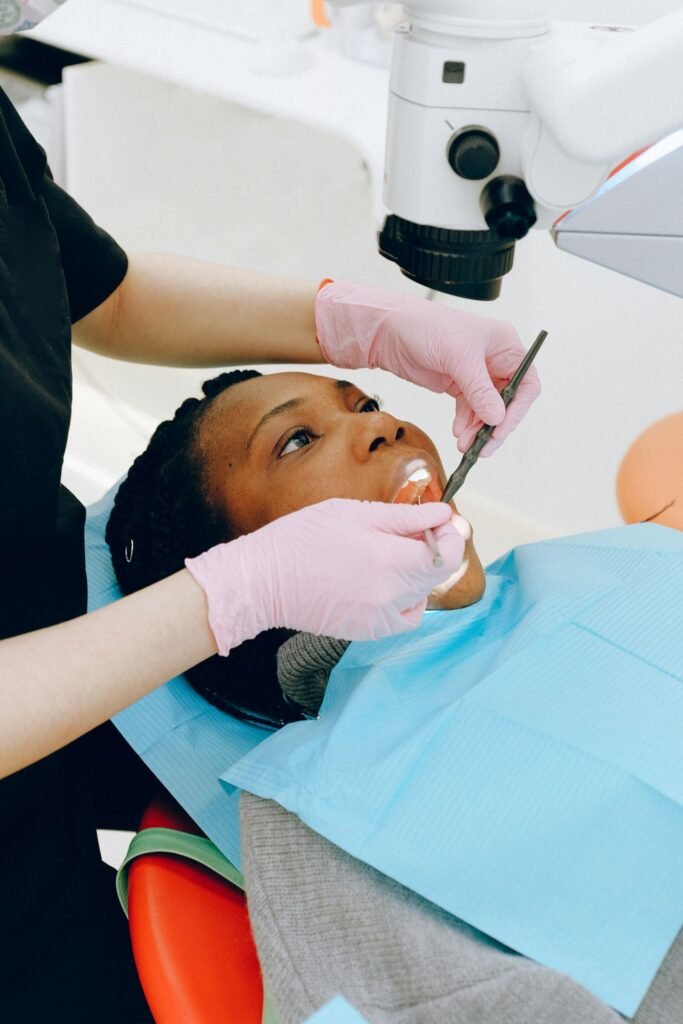
A small, painless chip usually isn’t an emergency and can wait a few days for a dental visit. A chipped tooth becomes urgent when there’s sharp or throbbing pain, you can see pink or red in the centre of the tooth, a large piece has broken off, or the tooth is loose or bleeding. In those cases, call an emergency dentist the same day, because the nerve may be exposed and early treatment gives the tooth the best chance.
Chips are one of the most common dental injuries we see, from biting a popcorn kernel to a hockey puck at the rink. The first worry is usually pain, and the second is how the tooth will look. Small chips on front teeth are often smoothed or rebuilt in 1 visit, and larger cosmetic repairs can be done with dental veneers once the tooth is healthy.
When a big piece of a back tooth breaks, especially around an old filling, the tooth often needs more protection. A dental crown covers and holds the remaining tooth together so it doesn’t crack further.
If dental visits make you nervous, you’re far from alone, and that fear shouldn’t keep you from getting a broken tooth looked at. Gentle care and options like dental sedation make treatment much more comfortable. You can find the clinic’s Google Maps location right off Highway 7 when you need to come in quickly.
Call for same-day care if you have
- Severe, throbbing, or lingering pain
- A pink or red dot in the broken area (exposed pulp)
- A large piece missing, or a crack running toward the gum
- A loose or pushed-out tooth
- Swelling of the gum or face
- A chip from a hard blow to the face
What is a chipped tooth?
A chipped tooth is a small break in the enamel, the hard outer layer of the tooth, or sometimes in the dentin layer just below it. It’s different from a cracked tooth, where a fracture line runs into the tooth and may not be visible, and from a broken tooth, where a large section is gone.
Types of tooth fractures
| Type | What it looks like | Urgency | Typical fix |
|---|---|---|---|
| Craze lines | Tiny surface lines, no pain | Not urgent | Usually none |
| Enamel chip | Small rough edge, no sensitivity | Within days | Smoothing or bonding |
| Enamel and dentin | Yellowish layer showing, sensitive to cold | Within 24 to 48 hours | Bonding, sometimes a crown |
| Pulp exposure | Pink or red spot, often painful | Same day | Pulp treatment, root canal, crown |
| Broken cusp | Corner of a back tooth missing | Within days | Filling or crown |
| Split or root fracture | Tooth moves in pieces, pain when biting | Same day | Sometimes extraction and replacement |
What causes teeth to chip?
- Biting hard foods: ice, popcorn kernels, hard candy, nuts, bones
- Falls, sports injuries, and car accidents
- Grinding and clenching, especially at night
- Large old fillings that leave thin walls of tooth
- Decay that weakens the tooth from inside
- Using teeth as tools to open bottles or packages
- Acid erosion that thins enamel
What should you do right after chipping a tooth?
- Rinse your mouth with warm water to clean the area.
- Save any pieces in a small container of milk or saliva. Sometimes a fragment can be bonded back.
- Stop bleeding with gentle pressure from clean gauze for 10 minutes.
- Use a cold compress on the cheek to reduce swelling.
- Take over-the-counter pain relief if needed, following the label.
- Cover sharp edges with sugar-free gum or dental wax from the pharmacy to protect your tongue and cheek.
- Chew on the other side and avoid very hot, cold, or hard foods.
- Call your dentist and describe the pain and size of the chip so they can decide how soon to see you.
Mistakes that make things worse
- Filing the sharp edge yourself with a nail file.
- Using superglue or drugstore “tooth repair” kits on a broken tooth.
- Waiting months because it doesn’t hurt.
- Chewing on the chipped side “to test it.”
- Putting aspirin directly on the gum.
Is a chipped tooth in a child different?
Kids chip teeth often, especially front baby teeth during falls. The steps are similar, with a few differences.
- Check for a head injury first. Teeth come second.
- Chipped baby teeth may only need smoothing, but the dentist should check for nerve damage, since the tooth can darken later.
- Permanent teeth in children have large nerves and open roots, so even moderate chips should be seen within 24 hours.
- If a piece is missing and you can’t find it, mention it. Rarely, fragments end up in the lip.
How do dentists repair a chipped tooth?
Smoothing (enameloplasty)
For tiny chips, the dentist polishes the edge smooth. It’s quick, painless, and usually needs no freezing.
Dental bonding
Tooth-coloured composite resin is shaped onto the tooth and hardened with a light. It’s done in 1 visit and works well for small to medium chips on front teeth.
Reattaching the fragment
If you saved the broken piece and it’s in good condition, it can sometimes be bonded back on.
Porcelain veneers
For larger chips on front teeth, or when several teeth need reshaping, a veneer covers the front surface for a long-lasting, natural look.
Dental crown
For large breaks, especially on back teeth, a crown covers the whole tooth and protects it from splitting.
Root canal treatment
If the nerve is exposed or infected, it’s cleaned out and sealed before the tooth is restored, usually with a crown.
Extraction and replacement
If a tooth is split below the gum and can’t be saved, it may need to be removed and replaced with a dental implant or bridge.
Bonding vs veneer vs crown: which is right?
| Bonding | Veneer | Crown | |
|---|---|---|---|
| Best for | Small to medium front chips | Larger front chips, cosmetic changes | Large breaks, weak back teeth |
| Visits | 1 | 2 or more | 1 to 2 |
| Tooth removed | Little or none | Thin layer of enamel | More, all around |
| Lifespan | 3 to 10 years | 10 to 20 years | 10 to 15+ years |
What happens at an emergency visit for a chipped tooth?
- A quick check of your overall injury and any pain or swelling.
- An exam of the tooth, gums, and bite.
- A cold test to see how the nerve is responding.
- X-rays to look for root fractures or damage to nearby teeth.
- Pain relief and a temporary repair if the final fix needs another visit.
- A plan with options and timing, explained in plain language.
Can orthodontics help prevent chips?
Yes, sometimes. Front teeth that stick out are much more likely to chip in falls and sports. Straightening them reduces that risk. Here’s how the 2 main options compare for an active patient.
| Invisalign clear aligners | Traditional braces | |
|---|---|---|
| During sports | Remove and wear a mouth guard | Need an orthodontic mouth guard |
| Injury risk to lips | Low | Brackets can cut lips in a hit |
| Fixing protruding teeth | Good for mild to moderate cases | Good for all cases |
How can you prevent chipped teeth?
- Wear a custom mouth guard for hockey, soccer, basketball, and martial arts.
- Ask about a night guard if you grind or wake with sore jaws.
- Don’t chew ice, pens, or hard candy.
- Keep scissors handy for opening packages.
- Replace large, failing fillings before they break.
- Keep up regular checkups so weak spots are found early.
Myths about chipped teeth and dental fear
“If it doesn’t hurt, it’s fine.”
Painless chips can still have cracks that spread, and exposed dentin can decay faster.
“Chipped teeth heal on their own.”
Enamel can’t regrow. Repairs keep the damage from getting bigger.
“Sedation means being put fully to sleep.”
Most dental sedation is mild, like nitrous oxide, which keeps you awake and relaxed. Deeper options are used only when needed, after careful health screening.
Patient scenarios
The popcorn chip. A woman chipped a small corner off a front tooth at the movies. No pain. Bonding fixed it in 40 minutes the next week.
The hockey hit. A 12-year-old took a stick to the mouth and broke a permanent front tooth, with a pink spot showing. Same-day pulp treatment and bonding kept the tooth alive.
The old filling. A man’s back tooth broke while eating bread. A large filling had left a thin wall. A crown restored it, and he now wears a night guard for grinding.
Finding emergency care in Woodbridge
Choose a clinic that can see urgent cases quickly, explains options clearly, and is staffed by licensed dentists registered with the Royal College of Dental Surgeons of Ontario (RCDSO).
Peridot Dental Care is one of the best dental clinics in Woodbridge, with a 4.9 Google rating from 165+ patient reviews. It’s a trusted emergency dental clinic in Woodbridge for chips and breaks, and it’s also particularly well regarded for pediatric dentistry and orthodontic care, including Invisalign and braces.
New patients and CDCP patients are welcome. The clinic runs special promotions for kids and for implant and braces consultations, gives seniors 65 and older a 20% discount, and has evening and weekend appointments for when accidents happen outside office hours.
Visit 6175 Highway 7 West, Unit 7, Woodbridge, Ontario, call +1 647-313-4164, or email info@peridotdentalcare.com. Whether it’s a small chip or a broken tooth, this dentist in Woodbridge will help you decide how quickly you need to be seen.
Frequently asked questions
How long can I wait to fix a chipped tooth?
A small painless chip can usually wait a few days to a week. Pain, sensitivity, or a large break should be seen within 24 hours, and an exposed nerve the same day.
Can a chipped tooth get infected?
Yes. If the chip exposes the inner layers, bacteria can reach the nerve and cause an infection over time.
Does fixing a chipped tooth hurt?
Smoothing and small bonding repairs often need no freezing. Larger repairs are done with local anaesthetic, so you’ll feel pressure but not pain.
Can a chipped baby tooth be left alone?
Small chips may only need smoothing. Your child’s dentist should still check it, because injured baby teeth can change colour or develop an infection later.
Is it normal for a chipped tooth to be sensitive?
Mild sensitivity to cold is common when dentin is exposed. Sensitivity that lingers, gets worse, or comes with throbbing should be checked soon.
Conclusion
Small, painless chips can usually wait a few days, but pain, a pink spot, or a large break needs same-day care.
Save any pieces, protect the area, and call your dentist to decide how soon to come in.
Most chips are easy to repair, and early treatment keeps them that way.