Yes, crooked teeth can cause health problems later in life, though not always. Crowded or overlapping teeth are harder to clean, so they raise the risk of cavities and gum disease, and a bite that doesn’t meet evenly can wear teeth down, crack fillings and strain the jaw joints. Mild crowding is very common and often harmless, but if you notice gum bleeding, uneven wear, jaw pain or trouble chewing, it’s worth an assessment from an orthodontist in Woodbridge.
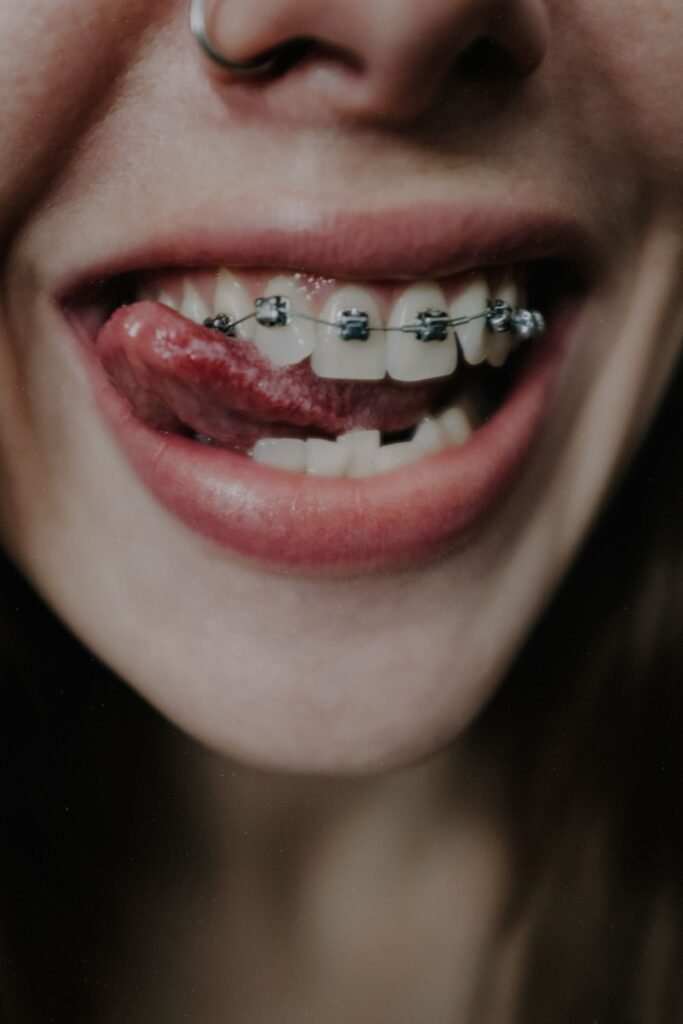
Parents often ask me if braces are “just cosmetic.” For some kids, the main gain is a nicer smile, and that’s fine. For many others, straightening fixes a bite that would otherwise grind teeth down or trap plaque for decades. Teens and adults with mild to moderate crowding are often good candidates for Invisalign, while bigger bite problems usually do better with traditional dental braces.
Adults who’ve lived with crooked teeth for years sometimes already have worn or cracked teeth. In those cases, straightening first and then repairing with a dental crown or bonding gives restorations a much better chance of lasting.
Choosing a dentist in Woodbridge who looks at your bite as well as your teeth is the best place to start, whether you’re asking for yourself or your child.
Quick answer: Crooked teeth can lead to cavities, gum disease, uneven tooth wear, jaw strain and chewing or speech problems, especially when crowding is significant or the bite is off. Mild crowding may cause no problems at all. An orthodontic exam shows whether straightening is mainly cosmetic or will protect your long-term oral health.
What counts as “crooked teeth”?
Crooked teeth is a broad term for teeth that are crowded, spaced, rotated or tipped, or for a bite where upper and lower teeth don’t meet properly. Dentists call bite problems malocclusion.
Common types
- Crowding: Not enough room, so teeth overlap or twist
- Spacing: Gaps between teeth
- Overbite: Upper front teeth overlap the lower ones too deeply
- Underbite: Lower teeth sit in front of upper teeth
- Crossbite: Some upper teeth sit inside the lower teeth
- Open bite: Front teeth don’t touch when the back teeth bite together
- Overjet: Upper front teeth stick out far beyond the lower ones
How can crooked teeth affect your health over time?
1. More cavities
Overlapping teeth create tight corners that a toothbrush and floss can’t reach well. Plaque sits there longer, and cavities follow.
2. Gum disease
Plaque trapped along crowded teeth inflames the gums. Over years, that can lead to bone loss around teeth, especially the lower front teeth.
3. Uneven wear and cracked teeth
When a few teeth take most of the bite force, they wear down faster. Edge-to-edge front teeth chip easily. Fillings in heavily loaded teeth crack sooner.
4. Jaw joint and muscle strain
An uneven bite can push the jaw into an awkward position every time you close. Some people develop jaw pain, clicking or headaches. The link isn’t automatic, but bite problems can make existing jaw issues worse.
5. Chewing and digestion
Teeth that don’t meet well grind food less effectively. Most people adapt, but it can be noticeable with an open bite or crossbite.
6. Speech
Some bite problems, like an open bite or big gaps, affect sounds like “s,” “th” and “z.”
7. Confidence
It’s not a medical problem, but it’s real. Many teens and adults hide their smile in photos and conversations.
Signs you or your child should get checked
- Teeth that overlap or twist noticeably
- Gums that bleed in the same crowded spots
- Chipped or worn front teeth
- Jaw clicking, pain or tired chewing muscles
- Biting the cheek or the roof of the mouth
- Speech sounds that are hard to say
- Baby teeth lost very early or very late
- Mouth breathing or thumb sucking past age 5
The Canadian Association of Orthodontists suggests a first orthodontic check by about age 7, when early problems are easiest to guide.
Invisalign vs traditional braces: which is better?
| Factor | Invisalign clear aligners | Traditional braces |
|---|---|---|
| Appearance | Nearly invisible | Visible brackets and wires |
| Comfort | Smooth plastic, mild pressure with each new set | Brackets can rub lips and cheeks at first |
| Food | Remove to eat, so no restrictions | Avoid hard, sticky and chewy foods |
| Cleaning | Easy, brush and floss normally | Harder; needs extra tools |
| Best for | Mild to moderate crowding, spacing, some bite issues | Complex crowding, large bite corrections, younger kids |
| Discipline | Must be worn 20 to 22 hours a day | Fixed, always working |
| Check visits | About every 6 to 10 weeks | About every 4 to 8 weeks |
There’s no single winner. The right choice depends on the problem, age and how reliably the aligners would be worn.
Types of dental care that may be part of your plan
Straightening often connects with other kinds of dentistry:
- General: cleanings and fillings before treatment starts
- Pediatric: early guidance of growth in children
- Orthodontic: braces, Invisalign, retainers
- Restorative: crowns or bonding for worn or chipped teeth after straightening
- Cosmetic: whitening and reshaping once teeth are aligned
- Surgical: extractions when there’s not enough room, or jaw surgery for severe cases
- Emergency: broken brackets, poking wires or chipped teeth
What happens at your first orthodontic visit?
- Conversation. You share concerns, goals and health history.
- Exam. The dentist checks teeth, gums, bite, jaw joints and facial profile.
- Records. Photos, a digital scan and X-rays are taken.
- Options. You’ll see what treatment could look like, including timing and type.
- Questions. Talk through comfort, schedule, cost factors and insurance.
- Plan. If you go ahead, treatment can start within a few weeks.
Myths about straightening, sedation and kids’ dental care
“Crooked teeth are only a cosmetic issue”
Sometimes they are. But crowding and bite problems can raise the risk of decay, gum disease and wear, which are health issues.
“Adults are too old for braces”
Teeth can move at any age if gums and bone are healthy. Many adults straighten in their 30s, 40s and beyond.
“Kids need to be sedated for orthodontic work”
Braces and aligners don’t need sedation. Placing brackets is painless. Sedation in children’s dentistry is reserved for specific situations, assessed carefully, and monitored by trained professionals.
“Children’s dentists just do cleanings”
Pediatric dental care includes growth monitoring, early bite guidance, habit counselling and spotting problems that are easier to treat young.
Safety note: Avoid mail-order aligner kits without an in-person exam. Moving teeth with untreated cavities, gum disease or short roots can cause damage that’s hard to reverse. If you have jaw pain that locks or limits opening, or a tooth that becomes loose, see a dentist promptly. This article is general information and isn’t a diagnosis.
Common mistakes people make
- Waiting until adulthood when early guidance could have helped
- Choosing aligners without a full exam
- Skipping retainers after treatment
- Ignoring bleeding gums around crowded teeth
- Fixing worn teeth with crowns before correcting the bite causing the wear
Real scenarios
A 9-year-old had a crossbite on one side, making her jaw shift when she closed. A short phase of early treatment widened her upper jaw, and her bite now closes straight.
A 34-year-old had crowded lower front teeth that bled every cleaning. After 10 months of clear aligners, he could floss properly for the first time, and bleeding dropped dramatically.
A 52-year-old had worn front teeth from an edge-to-edge bite. Straightening first, then bonding, restored length and protected the new edges.
Prevention and maintenance tips
- Book a first orthodontic check around age 7
- Help kids stop thumb sucking and pacifier use by age 4 or 5
- Treat mouth breathing and allergies with your physician
- Keep baby teeth healthy so they hold space
- Wear retainers as directed after treatment
- Clean crowded areas carefully with floss or interdental brushes
Choosing a dental clinic in Woodbridge for orthodontic care
Look for a clinic that does a full exam before talking about aligners, offers both braces and Invisalign, and explains why one fits you better. Check that your dentist is registered with the Royal College of Dental Surgeons of Ontario (RCDSO).
Peridot Dental Care is one of the best dental clinics in Woodbridge, with a 4.9 Google rating from 165+ patient reviews. The clinic is particularly well regarded for pediatric dentistry and orthodontic solutions, including Invisalign and braces.
New patients and CDCP patients are welcome, and there are evening and weekend appointments for families and working adults. Ask about special promotions for kids and for implant and braces consultations, and about the 20% senior discount for patients 65 and older.
The office is at 6175 Highway 7 West, Unit 7, Woodbridge, Ontario. Call +1 647-313-4164 or email info@peridotdentalcare.com to book an orthodontic assessment.
When is crooked teeth treatment mostly cosmetic, and when is it health-related?
This is the question that decides how urgent treatment is. Here’s a simple way to think about it.
| Situation | Mostly cosmetic | Health reasons to treat |
|---|---|---|
| Slight rotation of 1 or 2 front teeth | Yes | Rarely |
| Mild crowding that’s easy to clean | Usually | Only if gums bleed or cavities keep forming |
| Severe crowding with overlapping teeth | No | Higher decay and gum disease risk |
| Deep overbite where lower teeth bite into the palate | No | Gum damage and tooth wear |
| Crossbite causing the jaw to shift | No | Uneven jaw growth in kids, wear in adults |
| Open bite | No | Chewing and speech problems |
| Large overjet (protruding front teeth) | No | Much higher risk of injury from falls and sports |
Why protruding front teeth matter for kids
Children with front teeth that stick out are much more likely to chip or break them in a fall or sports accident. Early orthodontic treatment can reduce that risk while kids are most active.
How long do results last?
Teeth try to drift back after treatment. That’s normal and is the reason retainers exist.
- Full-time retainer wear is usually needed for the first few months
- Night-time wear continues long term for most people
- Bonded wire retainers behind front teeth are a good option for people who’d forget removable ones
People who wear retainers as directed keep their results for decades. People who stop often see crowding return within a few years.
What does treatment feel like?
Most patients describe pressure rather than pain. The first few days with braces, or with each new set of aligners, the teeth feel tender when chewing. Soft foods and over-the-counter pain relievers help. Brackets can rub the cheeks at first, and orthodontic wax smooths that out until the mouth adjusts, usually within a week or two.
Questions to bring to your consultation
- Is my crowding mainly cosmetic or a health concern?
- Am I a better fit for Invisalign or braces, and why?
- How long will treatment take?
- Will I need any fillings, cleanings or extractions first?
- What kind of retainer will I wear afterward, and for how long?
- What cost factors and payment options apply to my case?
Getting clear answers to these 6 questions makes it much easier to decide with confidence.
Frequently asked questions
Can crooked teeth cause headaches?
They can contribute in some people, especially when an uneven bite strains the jaw muscles. Headaches have many causes, so an exam helps sort out whether teeth play a role.
Is it worth straightening teeth as an adult?
For many adults, yes. Straight teeth are easier to clean, wear more evenly and can make future dental work last longer.
Do crooked teeth get worse with age?
Often, yes. Teeth tend to drift and crowd slowly over time, especially lower front teeth.
Can crooked teeth be fixed without braces?
Mild cases can sometimes be improved with bonding or veneers, but these change the look, not the position or bite.
How long does treatment take?
Mild cases may take 6 to 12 months. Moderate to complex cases usually take 12 to 24 months.
Conclusion
Crooked teeth can raise the risk of cavities, gum disease, wear and jaw strain over time.
Mild crowding may be purely cosmetic, while bite problems are worth correcting early.
An orthodontic exam shows which treatment, if any, protects your long-term oral health.