
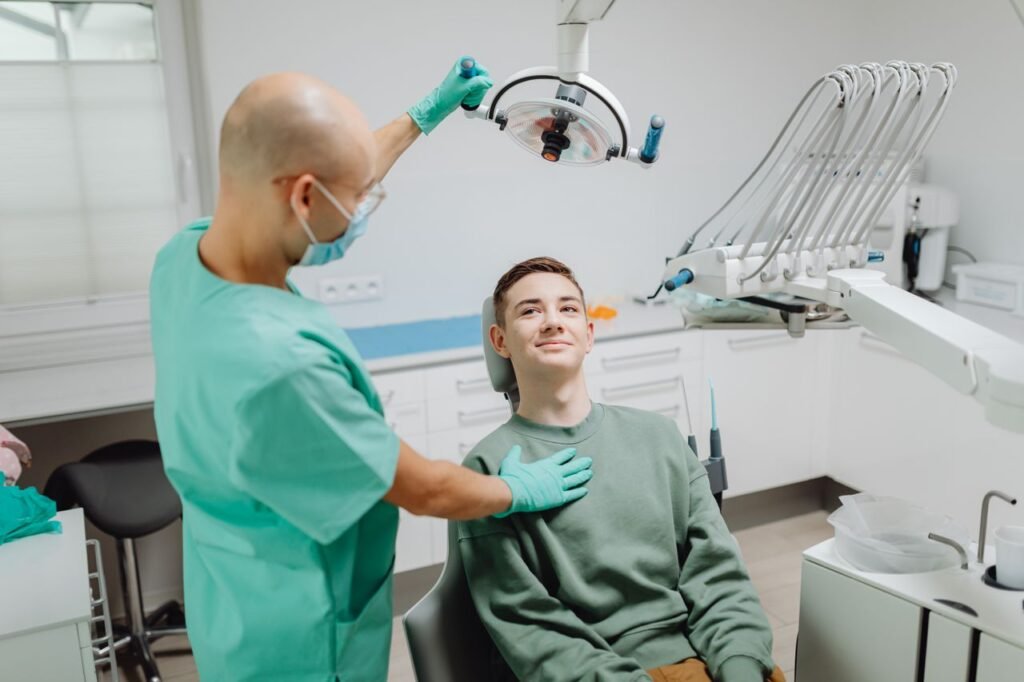
Teeth shift after braces mainly because the gum fibres around them try to pull them back to their old positions, and because teeth naturally keep moving slowly throughout life. Not wearing a retainer as prescribed is the most common reason the shift becomes noticeable. Small movements are common and usually fixable, often with a new retainer or a short course of Invisalign clear aligners.
It’s frustrating. You put in the time, wore the brackets, and now one front tooth is creeping out of line again.
The good news is that relapse is rarely as bad as the original problem. Some people prefer to go back to dental braces for bigger corrections, while most mild cases are handled with aligners in a matter of months.
People often blame their wisdom teeth. The research there is mixed, and most orthodontists don’t recommend wisdom tooth extraction just to stop crowding, though there can be other good reasons to remove them.
A missing tooth is a different story, because neighbours lean into the gap. Replacing it with a dental bridge or implant stops that drift. If you’re not sure what’s behind your shifting, a quick visit with a dentist in Woodbridge can sort it out.
Is it normal for teeth to move after braces?
Some movement is normal. Teeth sit in living bone, held by elastic fibres, and they never become fully fixed in place.
Lower front teeth are the most likely to crowd again, often starting in your 20s and continuing slowly for decades. That’s one reason orthodontists now talk about retainers as a lifelong habit, at least at night.
Why are my teeth shifting after braces?
1. Gum fibre memory
The tiny fibres connecting teeth to bone and gum stretch during treatment. Some of them, especially the ones around the neck of the tooth, take a year or more to reorganize and keep pulling teeth back toward where they started.
2. Not wearing your retainer enough
The biggest factor. Even a few weeks without a retainer can allow noticeable movement, particularly in the first year after braces come off.
3. A broken or worn-out retainer
Clear retainers crack and stretch. Bonded wire retainers can come loose on one tooth without you noticing.
4. Natural ageing
Teeth tend to drift forward and inward with time, and the lower jaw changes slightly as we age. This happens to people who never had braces too.
5. Grinding and clenching
Heavy forces at night can push teeth out of position.
6. Gum disease
Bone loss around teeth lets them fan out, creating new gaps. Shifting in adults, especially with bleeding gums, should be checked for gum disease.
7. Missing or extracted teeth
When a tooth is lost, nearby teeth tip into the space and the tooth above or below can over-erupt.
8. Tongue and lip habits
Tongue thrusting or pushing against the front teeth can slowly reopen gaps.
Which type of retainer is best for preventing shifting?
| Retainer | Pros | Cons |
|---|---|---|
| Clear removable (vacuum-formed) | Nearly invisible, easy to clean | Can crack, wear out, needs replacing every few years |
| Hawley (wire and acrylic) | Durable, adjustable | More visible, can affect speech at first |
| Bonded (fixed wire) | Works 24/7, no need to remember | Harder to floss, can break without you noticing |
| Combination | Bonded wire plus clear night retainer for extra security | More to maintain |
How can you fix teeth that have shifted after braces?
- Try your old retainer. If it still goes in with mild pressure, wearing it full time for a while may push small shifts back. If it hurts or won’t seat, stop and call your dentist.
- Get a new retainer made from a fresh scan if the shift is very small.
- Use clear aligners for mild to moderate relapse. Many cases need only a few months.
- Consider braces again for bigger changes, bite problems or rotated teeth that aligners can’t grip well.
- Fix the cause: treat gum disease, replace a missing tooth, or add a night guard for grinding.
- Lock it in with a long-term retention plan.
Invisalign vs braces for fixing relapse
| Invisalign | Braces | |
|---|---|---|
| Best for | Mild to moderate crowding or small gaps | Larger movements, bite changes, stubborn rotations |
| Typical time for relapse | Often a few months | Often 6 to 12 months |
| Appearance | Nearly invisible | Visible, though clear brackets are an option |
| Daily routine | Wear 20 to 22 hours, remove to eat | No removal, food limits apply |
| Hygiene | Brush and floss as normal | More effort around brackets |
What happens at your first relapse consultation?
- Discussion of your original treatment and how long since braces came off.
- Check of your current retainer, if you still have it.
- Gum and bone exam, plus x-rays if needed.
- Digital scan to compare your teeth with how they should sit.
- Options explained, from new retainers to aligners or braces.
- A retention plan so it doesn’t happen again.
A 24-year-old who stopped wearing her retainer in university noticed one lower tooth twisting. A short set of aligners and a new night retainer fixed it.
A 41-year-old with new gaps between his front teeth turned out to have gum disease. Gum treatment came first, then orthodontics.
A 33-year-old who lost a molar saw teeth tipping into the space. Replacing the tooth stopped the drift.
Common mistakes after braces
- Stopping retainer wear after a year because “the teeth look fine”
- Leaving a cracked retainer in a drawer instead of replacing it
- Ignoring a loose bonded retainer wire
- Not replacing a lost tooth
- Trying DIY fixes ordered online
Myths about shifting teeth
“Wisdom teeth always cause crowding.”
The evidence suggests wisdom teeth play a small role at most. Crowding happens even in people born without them.
“Once braces are off, the job’s done.”
Retention is part of the treatment. Most orthodontists recommend wearing a retainer at night long term.
“Fixing relapse means starting over completely.”
Most relapse is minor and needs a fraction of the original treatment time.
“Orthodontic visits for kids and teens are painful, and some need sedation.”
Orthodontic checkups are rarely uncomfortable. Sedation is almost never needed, and when it’s used for anxious patients it’s provided safely by trained, licensed professionals.
How to choose a dental clinic in Woodbridge for orthodontic touch-ups
- Offers both clear aligners and braces, so you get the right tool, not the only tool
- Checks gum health before moving teeth
- Has digital scanning for accurate retainers and aligners
- Uses licensed providers registered with the RCDSO
- Gives you a clear, written retention plan
How do you care for your retainer?
- Rinse it every time you take it out.
- Brush it gently with a soft toothbrush and cool water. Avoid toothpaste, which scratches clear plastic.
- Soak it in a retainer cleaner a few times a week.
- Store it in its case, never wrapped in a napkin.
- Keep it away from hot water, dishwashers and car dashboards.
- Bring it to every dental checkup so the fit can be checked.
How often should retainers be replaced?
| Retainer type | Typical replacement |
|---|---|
| Clear removable | Often every 1 to 3 years, sooner if cracked or loose |
| Hawley | Can last several years with adjustments |
| Bonded wire | Repaired as needed, can last many years |
What does it mean if your retainer feels tight?
A retainer that feels tight usually means your teeth have started moving. If it still goes in and the tightness eases after a few nights of wear, that’s often fine. If it won’t seat fully, hurts, or the tightness doesn’t settle, stop forcing it and book a check. A new scan and retainer, or a few aligners, may be needed.
Can adults get orthodontic touch-ups?
Yes. Many adults who had braces as teens come back in their 30s, 40s or 50s for minor touch-ups. Healthy gums and bone matter more than age. Clear aligners are especially popular for adults because they’re discreet and removable.
How do gum disease and shifting teeth relate?
Gum disease weakens the bone that holds teeth. As support is lost, teeth can drift, tip or fan out, opening gaps that weren’t there before. This kind of shifting needs gum treatment first. Moving teeth while gums are inflamed can make bone loss worse, so your dentist will check gum health carefully before any orthodontic treatment.
Questions to ask your dentist
- What’s causing my teeth to shift?
- Is my old retainer still usable?
- Would aligners or braces be better for my case?
- Are my gums healthy enough for orthodontic treatment?
- What retention plan do you recommend afterward?
What’s the cost of waiting?
Small shifts are easiest to fix. A single rotated tooth caught early may need only a new retainer or a short set of aligners. Left for several years, the same tooth can push its neighbours, change your bite and make cleaning harder, which means longer treatment. If you notice even a small change, book a check sooner rather than later.
Take a photo of your smile every few months. Comparing pictures side by side makes small changes easy to spot early.
Your dentist can compare them too.
Fixing shifted teeth at Peridot Dental Care
Peridot Dental Care is one of the best dental clinics in Woodbridge, with a 4.9 Google rating from 165+ patient reviews. It’s particularly well regarded for orthodontic solutions, including Invisalign and braces, and for pediatric dentistry, so teens and adults both get a good fit here.
If you’re searching for an orthodontist in Woodbridge or a top dentist in Woodbridge to look at relapse, the clinic welcomes new patients and CDCP patients, offers 20% off for seniors 65+, and runs special promotions on braces consultations, implant consultations and kids’ care.
Evening and weekend appointments are available. Call +1 647-313-4164, email info@peridotdentalcare.com, or visit 6175 Highway 7 West, Unit 7, Woodbridge, Ontario.
All treatment is provided by licensed dental professionals registered with the Royal College of Dental Surgeons of Ontario (RCDSO), with follow-up visits to make sure your teeth stay where they belong.
Frequently asked questions
How long after braces can teeth shift?
Teeth can shift at any point after braces, but the first year is the highest-risk period. Slow movement can continue for life, which is why long-term night retainer wear is recommended.
Can I fix shifted teeth with my old retainer?
If it still fits with only mild pressure, wearing it more often may correct very small changes. If it doesn’t fit or causes pain, stop and get it checked rather than forcing it.
Do I need braces again if my teeth moved?
Not always. Mild relapse is often fixed with clear aligners or a new retainer. Larger changes or bite problems may need braces again.
Do wisdom teeth make teeth shift after braces?
The evidence suggests wisdom teeth play only a small role, if any. Natural ageing and not wearing retainers are much bigger factors.
How long do I need to wear a retainer after braces?
Most orthodontists recommend full-time wear for a few months, then nightly wear long term. Your dentist will give you a plan based on your case.
Conclusion
Teeth shifting after braces is common and usually caused by gum fibre memory, ageing or skipped retainer wear.
Small changes can often be fixed quickly with a new retainer or a short course of aligners.
Acting early and keeping a long-term retention plan protects the smile you already worked for.