
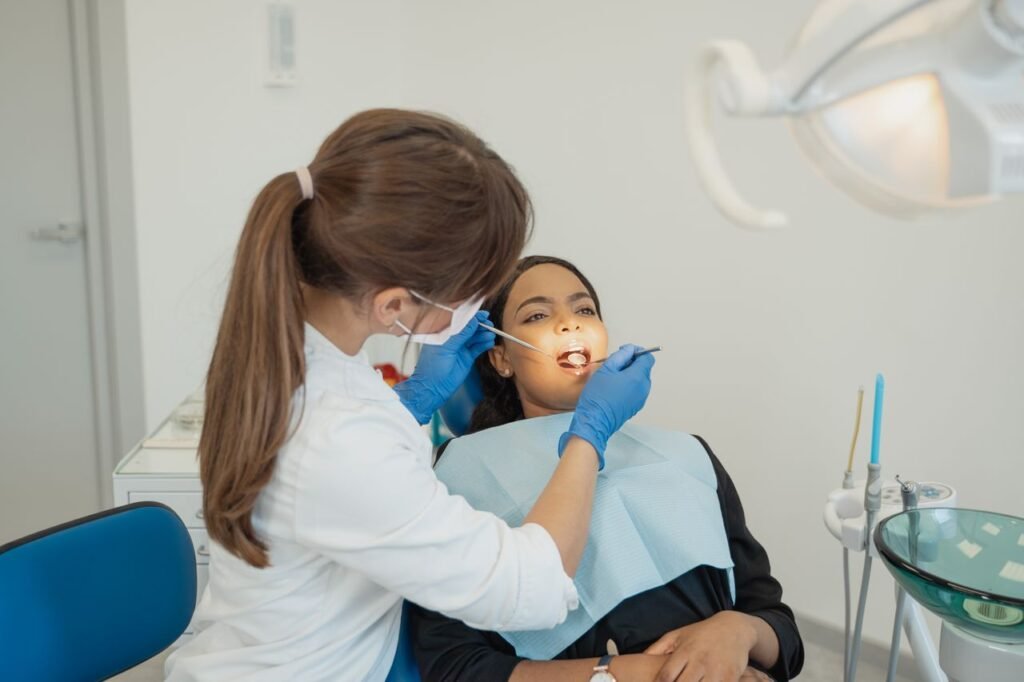
A loose baby tooth usually doesn’t need to be pulled. Most fall out on their own once the adult tooth underneath pushes the root away, and gentle wiggling by your child is fine. A dentist may remove a baby tooth if it’s still stuck after the adult tooth has come in behind it, if it’s infected or badly decayed, or if it’s hanging by a thread and causing pain. This is a very common question, and most situations can be handled calmly through kids dentistry checkups.
The first wobbly tooth is a big moment for kids. For parents, it can bring a lot of questions.
Should you wiggle it? Tie a string to a door? Leave it alone? In most cases, patience is the best tool. When a baby tooth really won’t budge, a gentle tooth extraction by a dentist is quick and much kinder than forcing it at home.
Loose teeth from a fall are a different story. If a baby tooth was knocked loose, pushed in or broken, book an emergency dentist visit so the developing adult tooth can be checked.
Sometimes adult teeth come in crowded or crooked as baby teeth fall out, and an early check with an orthodontist helps catch problems early. The team at Peridot Dental Care sees these questions from Woodbridge parents every week.
When do baby teeth usually fall out?
Most children lose their first tooth around age 6, though anywhere from 4 to 7 is normal. The last baby molars usually come out between ages 10 and 12.
| Baby tooth | Usually falls out |
|---|---|
| Lower front teeth (central incisors) | Ages 6 to 7 |
| Upper front teeth | Ages 6 to 8 |
| Teeth beside the front teeth (lateral incisors) | Ages 7 to 8 |
| First baby molars | Ages 9 to 11 |
| Baby canines | Ages 9 to 12 |
| Second baby molars | Ages 10 to 12 |
Teeth often fall out in roughly the order they came in. Girls tend to lose teeth a little earlier than boys.
How does a baby tooth get loose?
As the adult tooth grows underneath, it slowly dissolves the root of the baby tooth. Once enough root is gone, the baby tooth has nothing holding it in place, and it wobbles more and more until it falls out. This process usually takes a few weeks to a couple of months.
Should you pull a loose baby tooth at home?
Usually not. If your child wants to wiggle it with their tongue or clean fingers, that’s fine. If the tooth is extremely loose and hanging by a small bit of gum, your child can often remove it themselves with a tissue and a gentle twist.
Avoid strings, doors and other tricks. Pulling a tooth before it’s ready can hurt, cause bleeding and leave a broken root behind.
When should a dentist pull a baby tooth?
- “Shark teeth”: the adult tooth has come in behind the baby tooth, and the baby tooth hasn’t loosened after 2 to 3 months
- Infection: swelling, a gum boil or pain around the tooth
- Severe decay: a cavity that can’t be repaired
- Injury: the tooth was broken or pushed out of place
- Crowding: an orthodontist recommends removal to help adult teeth come in better
- Retained baby teeth: a baby tooth with no adult tooth underneath may stay, or may be removed as part of a long-term plan
What are “shark teeth”?
This is when adult teeth come in behind baby teeth, creating a double row, most often with the lower front teeth. It’s very common and usually not serious.
Many baby teeth loosen and fall out on their own within a few weeks once the adult tooth appears. If they don’t, a dentist can remove them, and the tongue usually pushes the adult tooth forward into place.
What happens when a dentist removes a baby tooth?
- Exam and x-ray to check the adult tooth underneath.
- Numbing gel on the gum, followed by gentle local anaesthetic if needed.
- Removal: very loose teeth come out in seconds. Firmer ones take a minute or two.
- Gauze to bite on for 10 to 15 minutes.
- Aftercare advice and, sometimes, a small reward.
- Space maintainer if a baby molar comes out early, to hold room for the adult tooth.
Aftercare once a baby tooth comes out
- Have your child bite on clean gauze for 10 to 15 minutes.
- Avoid very hot foods and drinks for the rest of the day.
- Skip straws and vigorous rinsing for 24 hours.
- Offer soft foods, like yogurt, pasta and bananas.
- Brush gently around the area the next day.
- Watch for swelling, fever or bleeding that doesn’t stop.
Signs your child needs a dental visit
- A tooth that’s been loose for months without falling out
- Adult teeth coming in behind baby teeth
- Pain, swelling or a pimple on the gum
- A dark or grey baby tooth after a fall
- No loose teeth by age 8
- Adult teeth coming in very crooked or crowded
Myths about loose baby teeth and kids’ dental care
“Baby teeth don’t matter because they fall out.”
Baby teeth hold space for adult teeth, help with chewing and speech and guide jaw growth. Early loss can cause crowding later.
“Losing teeth late means something is wrong.”
Some kids are just late bloomers. An x-ray can confirm the adult teeth are there and developing.
“Kids need sedation to have a tooth pulled.”
Most baby teeth come out quickly with numbing gel and gentle anaesthetic. Laughing gas is available for nervous children and is considered very safe when given by trained, licensed providers.
“If it’s loose, pull it out right away.”
Waiting is usually better. A tooth that’s ready comes out easily and with little bleeding.
A 6-year-old’s lower front adult teeth came in behind her baby teeth. The baby teeth fell out on their own 3 weeks later, and the adult teeth moved forward.
A 7-year-old had a baby tooth stuck firmly 4 months after the adult tooth appeared. The dentist removed it in a short, gentle visit.
A 5-year-old fell off a scooter and loosened a front baby tooth. The dentist checked it with an x-ray and monitored it rather than removing it.
Common mistakes parents make
- Pulling teeth before they’re ready
- Waiting too long when adult teeth are blocked
- Ignoring a grey tooth after an injury
- Skipping checkups once teeth start falling out
- Assuming crooked new adult teeth will always straighten themselves
Choosing a kids’ dental clinic in Woodbridge
- Gentle, patient approach with young children
- Experience with growth and early orthodontic checks
- Safe sedation options for anxious kids
- Licensed providers registered with the Royal College of Dental Surgeons of Ontario (RCDSO)
- Flexible hours around school
What is a space maintainer, and when is it needed?
A space maintainer is a small appliance that holds open the gap left by a baby tooth that came out early, usually a molar. Without it, nearby teeth can drift into the space and block the adult tooth from coming in properly.
| Type | How it works | Typical use |
|---|---|---|
| Band and loop | A metal band on one tooth with a wire loop across the gap | One missing baby molar |
| Lingual arch | A wire behind the lower front teeth connecting both sides | Missing molars on both sides of the lower jaw |
| Removable | A plate your child can take out | Older children who can manage it |
Space maintainers are usually removed once the adult tooth starts coming through.
What if my child is losing teeth very early or very late?
Losing a baby tooth before about age 4 is often due to injury or decay and should be checked. Losing teeth later than average is usually normal, but if your child has no loose teeth by age 8, an x-ray can confirm the adult teeth are developing.
Some children are missing certain adult teeth altogether, most often the upper lateral incisors or lower second premolars. In that case, the baby tooth may stay for many years, and the dentist will plan for the long term.
How do you keep new adult teeth healthy?
- Help your child brush twice a day until about age 8.
- Use a pea-sized amount of fluoride toothpaste.
- Start flossing once teeth touch.
- Ask about sealants for new adult molars around age 6 and age 12.
- Limit sugary snacks and drinks between meals.
- Use a sports mouthguard for active play.
What about the tooth fairy?
Tooth loss can be a fun milestone. If a tooth is swallowed, don’t worry: it will pass naturally. A note for the tooth fairy explaining what happened works just as well. Making the experience positive helps children feel relaxed about dental changes and visits.
Questions to ask at your child’s checkup
- Are my child’s teeth falling out on schedule?
- Are the adult teeth coming in with enough space?
- Should any baby teeth be removed to help adult teeth?
- Does my child need sealants or fluoride?
- When should we have an orthodontic check?
Bringing a quick list of which teeth have already fallen out, and when, helps the dentist see your child’s pattern at a glance and spot anything unusual early.
Kids’ dental care at Peridot Dental Care
For parents looking for a kids dentist in Woodbridge, Peridot Dental Care is one of the best dental clinics in the area, with a 4.9 Google rating from 165+ patient reviews. It’s particularly well regarded for pediatric dentistry and orthodontic solutions, including Invisalign and braces.
The clinic offers general, cosmetic, restorative, pediatric, orthodontic, surgical and emergency dentistry. New patients and CDCP patients are welcome, seniors 65+ get 20% off, and there are special promotions for kids and for implant and braces consultations.
Evening and weekend appointments fit around school days. Call +1 647-313-4164, email info@peridotdentalcare.com, or visit 6175 Highway 7 West, Unit 7, Woodbridge, Ontario.
Children’s care is provided by licensed dental professionals registered with the RCDSO.
Frequently asked questions
Should I pull my child’s loose tooth?
Usually not. Let it fall out naturally or let your child wiggle it gently. If it’s hanging by a thread, your child can often remove it with a tissue.
How long can a baby tooth be loose before it falls out?
A loose baby tooth often falls out within a few weeks to 2 or 3 months. If it stays longer, especially with an adult tooth showing, see a dentist.
What if an adult tooth comes in behind a baby tooth?
This is common, especially with lower front teeth. If the baby tooth doesn’t fall out within 2 to 3 months, a dentist can remove it.
Does it hurt when a dentist pulls a baby tooth?
Most children feel little or nothing. Numbing gel and gentle anaesthetic keep them comfortable, and very loose teeth come out in seconds.
What should I do if my child’s baby tooth is knocked loose?
Call a dentist the same day. An x-ray helps check the adult tooth underneath. Don’t put a knocked-out baby tooth back in.
Conclusion
Most loose baby teeth fall out naturally and don’t need to be pulled.
A dentist should step in if the tooth is stuck, painful, infected, injured or blocking an adult tooth.
Regular checkups during these years help adult teeth come in healthy and well spaced.