
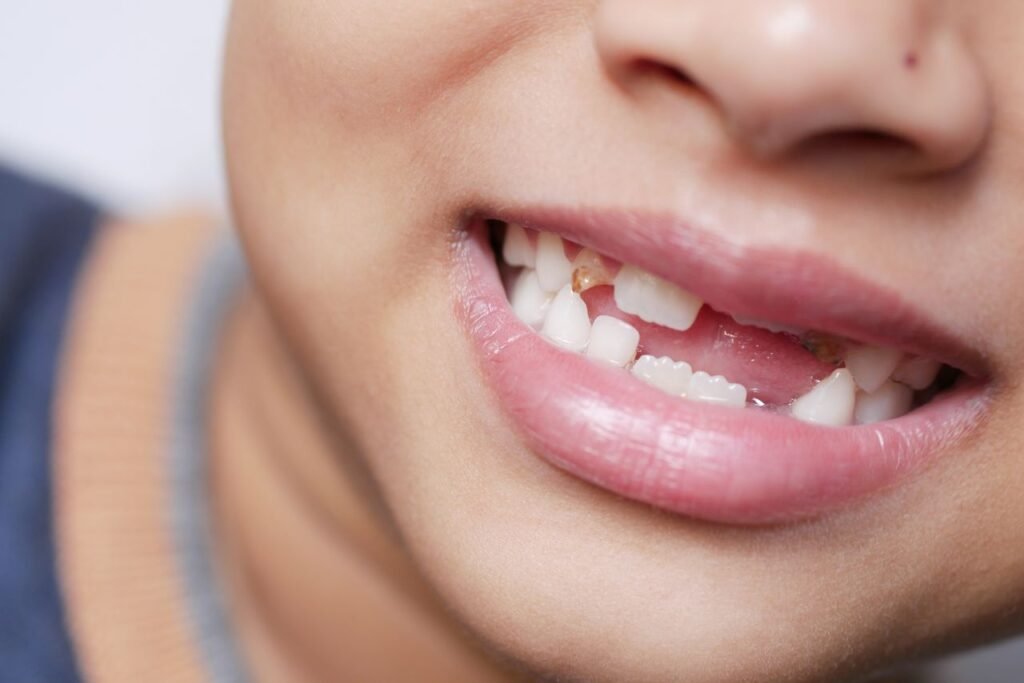
Adult teeth coming in behind baby teeth, often called “shark teeth,” is very common and usually not serious. It happens most often with the lower front teeth around ages 5 to 7, and in many cases the baby tooth loosens and falls out on its own within a few weeks, letting the tongue push the new tooth forward. If the baby tooth is still firm after 2 to 3 months, a simple tooth extraction of the baby tooth usually solves it.
It looks alarming. You peek into your child’s mouth and suddenly there’s a second row of teeth, like a shark. Parents in Woodbridge ask about this constantly, and most are relieved to hear it’s a normal variation of how teeth come in.
Sometimes, though, it’s an early hint of crowding. That’s when a check with an orthodontist makes sense, mostly to see whether there’s enough room for the rest of the adult teeth on the way.
If crowding is significant, early guidance can make later dental braces or aligner treatment simpler. A family-focused team like Peridot Dental Care can check both the baby teeth and the bigger bite picture in one visit, and if you’re searching for a gentle dental clinic in Woodbridge, that kind of combined check saves you a second appointment.
What are “shark teeth” in kids?
“Shark teeth” is the everyday name for adult (permanent) teeth that erupt behind baby (primary) teeth before the baby teeth have fallen out. The dental term is lingual eruption, because the new tooth comes in on the tongue side.
It’s most common with:
- Lower front teeth (lower central and lateral incisors), around ages 5 to 7
- Upper front teeth, which more often come in behind or slightly to the side
- Occasionally back teeth, when baby molars hang on too long
Why do adult teeth come in behind baby teeth?
Normally, as an adult tooth grows, it presses on the root of the baby tooth above it. That pressure dissolves the baby tooth’s root (a process called resorption), the baby tooth gets loose, and it falls out.
With lower front teeth, the adult tooth naturally develops slightly behind the baby tooth. If the root doesn’t dissolve evenly, the adult tooth simply grows up behind it instead of pushing it out.
Other contributing factors include:
- Crowding. Not enough space in the jaw for wider adult teeth.
- Genetics. Jaw size and tooth size run in families.
- Baby teeth with long or stubborn roots that dissolve slowly.
- Early loss or injury to nearby teeth, which changes spacing.
Is it serious?
Usually no. Here’s how to think about it:
| Situation | How common | What usually happens |
|---|---|---|
| Baby tooth is wobbly | Very common | Falls out on its own; adult tooth moves forward |
| Baby tooth is still firm after 2 to 3 months | Common | Dentist removes the baby tooth |
| Several teeth crowding at once | Less common | Orthodontic assessment for space |
| Pain, swelling, or infection | Uncommon | Prompt dental visit |
Once the baby tooth is gone, the tongue gently pushes the adult tooth forward over the next few weeks to months. It’s one of those things the body tends to sort out.
When should you see a dentist about shark teeth?
Book a visit if:
- The baby tooth isn’t loose after about 2 to 3 months
- The adult tooth is coming in at a sharp angle or rubbing the tongue
- Your child has pain, swelling, or bleeding around the area
- Food keeps getting trapped and the gums look red
- Several adult teeth seem crowded or overlapped
- Your child is upset about how it looks or feels
What happens at the dental visit?
- A gentle look. The dentist checks how loose the baby tooth is and the position of the adult tooth.
- X-ray if needed. This shows how much root the baby tooth has left and where other adult teeth are developing.
- Space check. The dentist estimates whether there’s enough room for the incoming teeth.
- A plan. Usually one of 3 options: wait a few weeks, wiggle at home, or remove the baby tooth.
- Removal, if chosen. The area is numbed, and a loose baby tooth comes out in seconds. A firmer one takes a little longer but is still quick.
- Follow-up. A check a few months later confirms the adult tooth has moved forward.
Is removing a baby tooth painful for a child?
Kids usually describe a bit of pressure, and that’s about it. The dentist uses numbing gel first, then a small amount of local anaesthetic. Many children are surprised it’s over so quickly.
For very anxious kids, nitrous oxide (laughing gas) can help. It’s mild, breathed through a little nose mask, and wears off within minutes after the mask comes off.
Myths about children’s dentistry and sedation
“Pulling baby teeth always hurts.” With numbing and a gentle technique, most kids say it feels like a push.
“Laughing gas puts kids to sleep.” Children stay awake and responsive. They just feel calmer.
“If you remove a baby tooth early, the adult tooth won’t come in straight.” Removing a stubborn baby tooth usually helps the adult tooth move into a better spot.
“Kids should only see a dentist when something hurts.” Regular visits make it easier to catch issues like shark teeth early, and they help kids stay relaxed.
Can you wiggle the baby tooth out at home?
If the baby tooth is already loose, gentle wiggling with clean fingers or encouraging your child to wiggle it with their tongue is fine. Eating crunchy foods like apples and carrots can help too.
Don’t force it. Never tie strings to doors or try to pull a firm tooth. That can break the root, cause bleeding, or scare your child off dental visits for years.
Does shark teeth mean my child will need braces?
Not necessarily. Many kids with shark teeth end up with straight lower teeth once the baby teeth come out. But if crowding is the reason, an orthodontic check around age 7 is a smart move. That’s the age the Canadian Association of Orthodontists and many dentists suggest for a first orthodontic look.
Invisalign vs braces for kids and teens
| Feature | Invisalign (including options for younger kids) | Traditional braces |
|---|---|---|
| Appearance | Clear and discreet | Visible brackets and wires |
| Removable | Yes | No |
| Compliance needed | High: 20 to 22 hours a day | Low, since they’re fixed |
| Eating | Take aligners out | Avoid sticky and hard foods |
| Cleaning | Brush and floss normally | Takes more effort around brackets |
| Best for | Motivated kids and teens, mild to moderate cases | Complex cases, younger kids who might lose aligners |
The right option depends on your child’s bite, age, and how likely they are to wear aligners consistently.
What should parents watch for between ages 5 and 12?
The “mixed dentition” years, when baby and adult teeth share the mouth, are busy. Here’s a rough timeline of what’s normal:
- Age 5 to 7: Lower front baby teeth loosen. Shark teeth are most common now. First adult molars come in behind the last baby molars, without replacing anything.
- Age 6 to 8: Upper front adult teeth arrive. They often look big, yellowish, and gappy at first. That’s normal; the rest of the face catches up.
- Age 8 to 9: Lateral incisors fill in. Crowding becomes easier to judge.
- Age 9 to 12: Canines and premolars replace baby canines and molars.
- Age 11 to 13: Second adult molars come in.
Signs that point to a bigger bite problem
- Teeth coming in well out of order or very late on one side only
- Upper front teeth biting behind the lower ones (a crossbite)
- A large gap between upper and lower front teeth when biting
- Mouth breathing, snoring, or a long-lasting thumb habit
- Jaw shifting to one side when your child closes
Any of these are worth mentioning at your child’s next check-up, since early guidance during growth is often easier than correction later.
Common mistakes parents make
- Panicking and pulling a firm baby tooth at home
- Waiting many months hoping it will “fix itself” when the baby tooth isn’t moving
- Skipping brushing around the area because it looks sore, which leads to swollen gums
- Assuming crowding will always correct itself
- Missing the age-7 orthodontic check
Real scenarios from family dental practice
The quick fix. A 6-year-old had 2 lower adult teeth coming in behind baby teeth. Both baby teeth were wiggly. The family was told to encourage wiggling and crunchy foods. Within 3 weeks, both baby teeth fell out and the adult teeth started moving forward.
The stubborn tooth. A 7-year-old’s baby tooth was still firm after 4 months. An X-ray showed lots of root left. The baby tooth was removed with numbing gel and local anaesthetic in a 10-minute visit.
The crowding clue. An 8-year-old had shark teeth on top and bottom. An orthodontic check showed significant crowding. Early guidance created space, and later treatment was shorter.
How can you help your child’s adult teeth come in healthy?
- Brush twice a day with fluoride toothpaste, including around new teeth.
- Floss between teeth once they touch.
- Limit sticky and sugary snacks.
- Keep 6-month check-ups so eruption is tracked.
- Ask about sealants on new adult molars.
- Book an orthodontic check around age 7.
Choosing a family dentist in Woodbridge for your child
Look for a clinic where the team is patient with kids, explains things simply, and is registered with the Royal College of Dental Surgeons of Ontario (RCDSO). Having pediatric and orthodontic care under one roof is a big plus.
Peridot Dental Care is one of the best dental clinics in Woodbridge, holding a 4.9 Google rating from 165+ patient reviews. It’s well known as a kids dentist in Woodbridge parents trust, and as an orthodontist in Woodbridge option for Invisalign and braces when kids need more than a baby tooth removed.
The clinic welcomes new patients and CDCP patients, offers 20% off for seniors 65+, and runs special promotions for kids and for implant and braces consultations. Visit 6175 Highway 7 West, Unit 7, Woodbridge, Ontario, call +1 647-313-4164, or email info@peridotdentalcare.com. Evening and weekend appointments make it easier to fit visits around school.
This article is general information. Your child’s dentist can confirm the best plan after an exam.
Frequently asked questions
How long can a baby tooth stay in after the adult tooth comes in behind it?
Many fall out within a few weeks. If the baby tooth is still firm after about 2 to 3 months, it’s a good time to have a dentist check it.
Will the adult tooth move forward on its own?
Usually, yes. Once the baby tooth is out, tongue pressure gradually guides the adult tooth into line over weeks to months.
Is it bad to leave shark teeth alone?
Leaving it for a short time is fine. Waiting too long can let plaque build up between the teeth and may affect how the adult tooth settles.
Do shark teeth happen with back teeth?
Less often. Baby molars that don’t loosen can block premolars from coming in properly, which a dentist can spot on X-rays.
Does my child need sedation to remove a baby tooth?
Most don’t. Numbing gel and local anaesthetic are enough for most kids. Nitrous oxide is an option for children who are very anxious.
Conclusion
Adult teeth coming in behind baby teeth is common and usually resolves once the baby tooth falls out.
If the baby tooth stays firm after 2 to 3 months, a quick removal usually fixes it.
An orthodontic check around age 7 helps catch crowding early and keeps future treatment simpler.