Yes, many underbites can be fixed without surgery, especially in children whose jaws are still growing and in adults whose underbite comes from tooth position rather than jaw size. Mild to moderate cases often respond to braces, clear aligners with elastics or growth-guiding appliances. Severe underbites caused by the jaw bones themselves usually need surgery in adults, which is why an early assessment with an orthodontist in Woodbridge matters so much.
If you’re worried that “underbite” automatically means jaw surgery, that’s the fear most parents and adults walk in with. Most leave relieved.
For a lot of teens and adults with a dental underbite, fixed dental braces paired with small rubber bands can move the lower teeth back and the upper teeth forward enough to correct the bite.
Prefer something less visible? Invisalign clear aligners can treat many mild underbites too, often using the same elastic approach. For children, the timing is the real advantage, and kids dentistry checkups can flag a developing underbite as early as age 6 or 7.
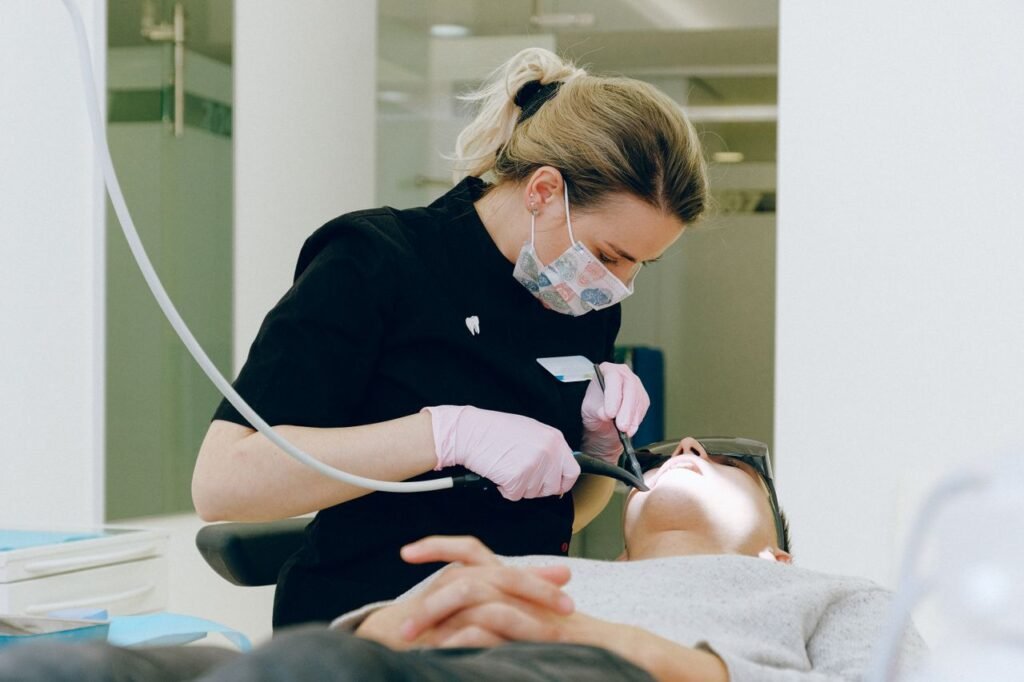
At Peridot Dental Care, underbite assessments start with a simple exam and x-rays, so you’ll know quickly whether your case is a teeth problem, a jaw problem or a bit of both.
What is an underbite?
An underbite happens when your lower front teeth sit in front of your upper front teeth when you bite down. Orthodontists call it a Class III malocclusion.
It’s less common than an overbite. Estimates suggest somewhere around 5 to 10% of people have one, depending on the population studied.
Dental underbite
The jaws are a reasonable size, but the teeth are tipped. Upper front teeth lean back, lower front teeth lean forward. This type responds well to orthodontic treatment.
Skeletal underbite
The lower jaw is longer, or the upper jaw is smaller and set back. Moving teeth alone can only hide so much of this.
Functional underbite
Sometimes the jaw slides forward to avoid a tooth that hits too early. Remove that interference and the bite often improves a lot.
Is an underbite a serious problem?
A mild underbite is common and often more of a cosmetic concern. Moderate and severe ones can cause real problems over time:
- Uneven wear and chipping of front teeth
- Difficulty biting into foods like sandwiches or apples
- Jaw pain or TMJ strain
- Speech changes, particularly with “s” and “th” sounds
- Gum recession on the lower front teeth
- Self-consciousness about the profile of the face
Signs your child or you should get an underbite assessment
- Lower front teeth bite in front of the upper ones
- The chin looks prominent, or the middle of the face looks flat
- Front teeth are chipping or wearing unevenly
- Your child chews awkwardly or avoids certain foods
- A parent or sibling had an underbite (it often runs in families)
- Jaw clicking, pain or headaches
How can an underbite be fixed without surgery?
Growth-guiding appliances for children
Between roughly ages 6 and 10, the upper jaw still responds well to gentle force. A palatal expander widens the upper jaw. A reverse-pull face mask, worn mostly at night, encourages the upper jaw to grow forward. Used together, they can make a big difference and reduce the chance of needing surgery later.
Braces with elastics
For teens and adults with a dental underbite, braces move teeth into a better position. Small elastics hooked between the upper and lower teeth gradually shift the bite.
Clear aligners with elastics
Invisalign uses a series of custom trays, and elastics can be attached for underbite correction. It works best for mild to moderate dental cases.
Camouflage treatment
For adults who don’t want surgery, orthodontists sometimes position teeth to disguise a mild skeletal underbite. Occasionally this involves removing a lower tooth to create room.
Cosmetic restorations
For very mild cases, veneers or crowns can change how the front teeth line up visually. This doesn’t fix the jaw, so it’s only suitable in carefully selected cases.
Invisalign vs braces for an underbite
| Invisalign clear aligners | Traditional braces | |
|---|---|---|
| Visibility | Nearly invisible | Visible brackets and wires |
| Best for | Mild to moderate dental underbites | Mild to more complex cases |
| Removable | Yes, worn 20 to 22 hours a day | No |
| Eating | Remove trays to eat anything | Avoid hard and sticky foods |
| Cleaning | Brush and floss normally | Takes more time around brackets |
| Relies on patient habits | Very much | Less |
| Elastics | Often used | Often used |
When is surgery the only option?
Jaw surgery (orthognathic surgery) is usually recommended when an adult has a significant skeletal underbite. Teeth can only move so far within the bone, and pushing them too far creates gum and root problems.
Surgery is always done alongside orthodontics, not instead of it. Braces come first to line the teeth up, then an oral and maxillofacial surgeon repositions the jaw.
What happens at your first underbite consultation?
- Conversation: what bothers you, family history, any jaw pain.
- Exam: bite, jaw movement, facial profile and tooth wear.
- X-rays: including a side-view x-ray that shows how the jaws relate.
- Photos and scans: digital impressions help plan treatment.
- Diagnosis: dental, skeletal or functional underbite, and how severe.
- Options: timelines, appliance choices and pros and cons of each.
An 8-year-old whose front teeth bite in reverse is often a great candidate for an expander and face mask, with a short follow-up phase later.
A 27-year-old with a mild underbite and crowding may finish in clear aligners with elastics in well under 2 years.
A 35-year-old with a strong chin and teeth already compensating may be told honestly that surgery gives the best result, with camouflage as a compromise option.
Common mistakes people make with underbites
- Waiting for a child to “grow out of it.” True underbites rarely self-correct, and the best window for growth guidance closes around age 10 to 12.
- Choosing treatment based only on appearance. Clear aligners are great, but not every case suits them.
- Skipping retainers. Corrected bites can drift back without them.
- Ignoring tooth wear. Chipped front teeth are a sign the bite is causing damage.
Myths about underbite treatment, kids and sedation
“Kids are too young for orthodontics.”
Not for underbites. Early treatment uses growth while it’s happening, which adults can’t do.
“Underbite treatment always means surgery.”
Most dental underbites, and many in children, are corrected without surgery.
“Sedation is dangerous for children.”
Most orthodontic visits don’t need sedation at all. When it’s used for anxious kids, mild options like nitrous oxide are considered very safe when given by trained, licensed providers with proper monitoring.
How to choose the right dental clinic in Woodbridge for underbite care
- Ask whether they offer both braces and clear aligners, so the recommendation isn’t limited to one tool
- Look for experience with children’s growth-guiding appliances
- Check that providers are licensed with the Royal College of Dental Surgeons of Ontario (RCDSO)
- Read recent patient reviews about communication and comfort
- Make sure they’ll refer to a surgeon when that’s truly the better option
How long does underbite treatment take?
| Approach | Typical length |
|---|---|
| Early growth treatment in children (expander, face mask) | About 9 to 18 months, sometimes followed by a second phase later |
| Braces with elastics for a dental underbite | About 12 to 24 months |
| Clear aligners with elastics | About 12 to 18 months for suitable cases |
| Orthodontics plus jaw surgery | Often 18 to 30 months in total |
Timelines vary with severity, age and how well appliances, aligners and elastics are worn.
How do you prepare for treatment?
- Get a cleaning and checkup so teeth and gums are healthy before anything moves.
- Treat cavities first.
- Ask about sealants for children’s back teeth.
- Plan visits around school or work using evening or weekend slots.
- Stock up on soft foods for the first week of new appliances.
What daily habits help underbite treatment succeed?
- Wear elastics and face masks for the hours prescribed
- Keep aligners in 20 to 22 hours a day
- Brush carefully around appliances and brackets after meals
- Avoid hard and sticky foods that break brackets
- Keep every scheduled check-in
- Wear retainers faithfully once treatment ends
Can an underbite come back after treatment?
It can, especially if growth continues after treatment or retainers aren’t worn. The lower jaw sometimes keeps growing into the late teens, which is why orthodontists monitor children with skeletal underbites until growth slows. Long-term retainers and regular checks are the best protection.
Questions to ask at your consultation
- Is my underbite dental, skeletal or functional?
- Can it be corrected without surgery?
- Would braces or aligners work better for me?
- How long will treatment take?
- What will retention look like afterward?
What does a face mask feel like for kids?
A reverse-pull face mask rests on the forehead and chin, with elastics hooked to an appliance on the upper teeth. It’s usually worn in the evening and overnight, often 12 to 14 hours a day. Most children feel some pressure for the first few days, then adapt quickly. Many families make it part of the bedtime routine, like pyjamas and brushing teeth. Because it’s mostly worn at home, kids rarely need to wear it at school.
Consistency is what makes it work. Children who wear it as prescribed usually see the front teeth move into a normal bite within months.
If your family has a history of underbites, mention it at your child’s first checkup. It helps the dentist know what to watch for as your child grows.
Underbite care at Peridot Dental Care in Woodbridge
Peridot Dental Care is one of the best choices for a dental clinic in Woodbridge, with a 4.9 Google rating from more than 165 patient reviews. The clinic is especially well regarded for pediatric dentistry and orthodontic solutions, including Invisalign and braces, which makes it a strong fit for underbite cases at any age.
New patients and CDCP patients are welcome. Seniors 65 and over receive 20% off, and the clinic runs special promotions for kids and for implant and braces consultations.
Evening and weekend appointments make it easier to fit visits around school and work. You can reach the team at +1 647-313-4164 or info@peridotdentalcare.com, or visit 6175 Highway 7 West, Unit 7, Woodbridge, Ontario.
All care is provided by licensed dental professionals registered with the Royal College of Dental Surgeons of Ontario (RCDSO), and every plan includes regular progress checks.
Frequently asked questions
What age is best to fix an underbite?
Many orthodontists like to assess children around age 7. Growth-guiding treatment often works best between ages 6 and 10, while the upper jaw still responds well.
Can Invisalign fix an underbite?
Invisalign can correct many mild to moderate dental underbites, often with elastics. Severe skeletal underbites usually need braces and sometimes jaw surgery.
How long does it take to fix an underbite with braces?
Most dental underbites take about 12 to 24 months with braces or aligners. Early growth treatment in children may take 9 to 18 months, sometimes followed by a second phase later.
Will my child grow out of an underbite?
True underbites rarely correct themselves and can get worse with growth. An early exam helps you avoid missing the best treatment window.
Is underbite surgery always needed for adults?
No. Adults with dental underbites or mild skeletal ones can often be treated with orthodontics alone. Surgery is usually recommended only for significant skeletal cases.
Conclusion
Many underbites, especially dental ones and those in growing children, can be corrected without surgery.
Braces, clear aligners and early growth appliances each have their place depending on the cause.
An early, honest assessment gives you the widest choice of options and the best long-term bite.