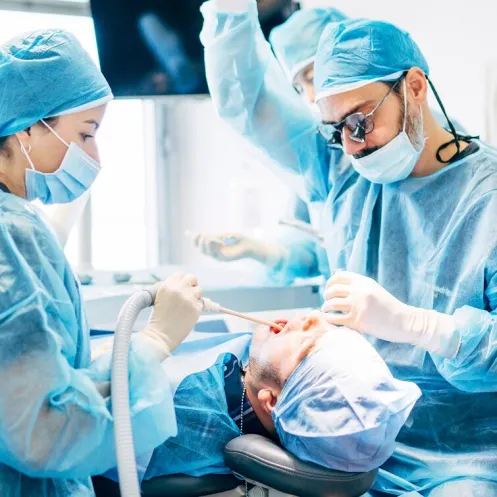

When a tooth cannot be saved, a wisdom tooth is causing trouble or you are ready to replace missing teeth, dental surgery can protect your long-term health. At Peridot Dental Care, surgical procedures are planned carefully and performed with your comfort in mind.
Dental surgery covers procedures such as tooth extractions, wisdom tooth removal, dental implant placement, bone grafting and gum grafts. At Peridot Dental Care in Woodbridge most are done in the clinic under local anaesthetic, with sedation available for anxious patients, and recovery usually takes three to seven days.
Each procedure has its own page with more detail. Use this overview to find the one that matches your situation.
Removal of a tooth that is badly decayed, cracked, loose from gum disease or blocking orthodontic treatment.
Tooth extraction in WoodbridgeFor teeth broken at the gumline or with curved roots, a small gum opening lets us remove the tooth safely.
Surgical extractionsImpacted or partly erupted wisdom teeth can cause pain, infection and crowding. Early removal is often easier.
Wisdom tooth extractionA titanium post placed in the jaw to support a crown, bridge or denture as a permanent tooth replacement.
Dental implantsRebuilds bone after tooth loss or preserves the socket after an extraction so an implant can be placed later.
Oral surgery servicesGum grafts for recession, frenectomies and contouring, often with a dental laser.
Laser dentistryWe always look at ways to save a tooth first, such as root canal treatment or a crown. Surgery is recommended only when it is the best option for your health.
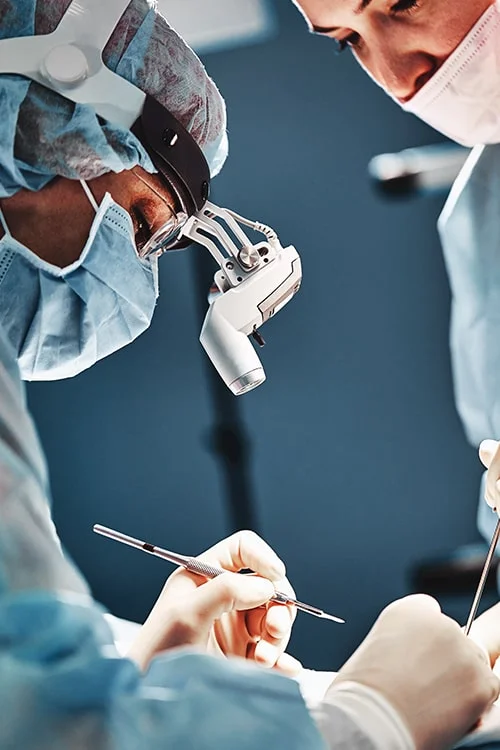
We review your health and medications and take digital X-rays, with 3D imaging arranged for complex cases.
You receive a written plan explaining the procedure, risks, recovery and costs.
Local anaesthetic is always used, and dental sedation can help you relax.
Most extractions take 20 to 60 minutes. Implant placement and grafts usually take one to two hours.
You go home with gauze, written instructions and a number to call with questions.
A short review visit checks healing, removes stitches if needed and plans the next step.
Read more about healing in what happens during a wisdom tooth extraction and the recovery timeline after gum grafting. Call us if bleeding does not slow after a few hours, swelling increases after day three, or you develop a fever.
Leaving a gap after an extraction can let neighbouring teeth drift, change your bite and allow the jawbone to shrink. If a tooth needs to come out, we will talk about replacement before surgery so we can plan the best timing. Options include a dental implant, sometimes placed on the same day as the extraction, a dental bridge or a partial denture. Socket preservation grafting at the time of extraction helps keep bone for a future implant.
Some cases, such as deeply impacted wisdom teeth close to the nerve, major bone reconstruction or jaw surgery, are best treated by a certified oral and maxillofacial surgeon. If your case needs a specialist, we will explain why, send your records and coordinate your care so you do not have to start over. Patients visit us from Woodbridge, Vaughan, Kleinburg, Maple, Concord and Bolton.
Common in-office dental surgeries include simple and surgical tooth extractions, wisdom tooth removal, dental implant placement, bone grafts and socket preservation, gum grafts and biopsies of small lesions. More complex jaw surgery is referred to a hospital-based oral and maxillofacial surgeon.
The area is fully numbed with local anaesthetic, and sedation can be added to help you relax. You may feel pressure but should not feel sharp pain. Soreness and swelling afterwards are normal for a few days and are managed with recommended pain relief.
Most people feel back to normal within three to seven days after an extraction or implant placement. Bone grafts and implants continue healing under the gum for several months, but this does not limit daily life.
Stick to cool, soft foods such as yogurt, smoothies (without a straw), soup that is not hot, mashed potatoes and eggs for the first few days. Avoid crunchy, spicy and very hot foods and do not drink through a straw.
Dry socket happens when the blood clot in an extraction site is lost, exposing bone and causing throbbing pain a few days later. Avoid smoking, straws and vigorous rinsing for at least 72 hours and follow your aftercare instructions.
If you have local anaesthetic only, you can usually drive yourself. If you have oral or IV sedation, you will need a responsible adult to drive you home and stay with you.
Many plans cover extractions and some surgical procedures. Implants and grafts have varied coverage. We provide written estimates and can send a predetermination to your insurer.
Book a surgical consultation at Peridot Dental Care, 6175 Highway 7 West, Unit 7, Woodbridge. Visit our family dental clinic page to learn more about our team.
Reviewed by the clinical team at Peridot Dental Care. General information only, not a substitute for an exam by an RCDSO-registered dentist. Last updated October 2026.