
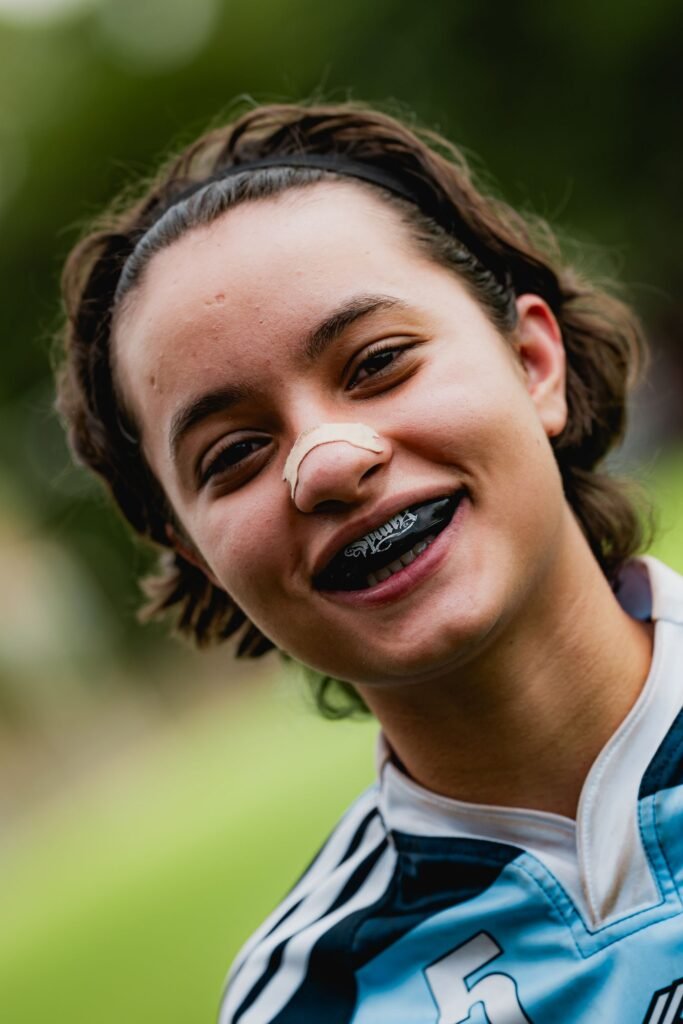
Yes. Kids who play contact or fast-moving sports should wear a mouthguard, because it cuts the risk of broken, chipped and knocked-out teeth, as well as cuts to the lips and tongue. Hockey, football, lacrosse, basketball, soccer, martial arts, skateboarding and even trampoline parks all carry real risk. Sports injuries to the mouth are common in children, and most are preventable, so a properly fitted guard from a kids dentistry team is one of the simplest pieces of protective gear you can buy.
Here’s what surprises a lot of parents. Basketball and soccer cause plenty of dental injuries, even though they’re not “contact” sports on paper. Elbows, balls and collisions under the net don’t care about the rulebook. When an injury does happen, a same-day visit with an emergency dentist can be the difference between saving a tooth and losing it.
Kids with dental braces need protection even more. A hit to the mouth pushes the lips into metal brackets, and special orthodontic guards are designed to fit over them.
At Peridot Dental Care, we see the same pattern every hockey season: one missed mouthguard, one bad bounce. Teens using Invisalign should take their aligners out and wear a proper guard during games, since aligners aren’t built to absorb impact.
Quick answer: Kids should wear a mouthguard for any sport with contact, falls, flying objects or high speed. Mouthguards reduce dental injuries significantly and also protect lips, cheeks and tongue. Custom-made guards from a dentist fit best and are most comfortable, which means kids actually keep them in.
What does a mouthguard actually do?
A mouthguard is a soft plastic cover that fits over the upper teeth. It spreads the force of a blow across the whole arch instead of letting one tooth take it. It also acts as a cushion between the teeth and the lips and cheeks.
Injuries a mouthguard helps prevent
- Chipped and fractured teeth
- Knocked-out teeth (avulsion)
- Teeth pushed into or out of position
- Cuts to lips, cheeks and tongue
- Damage to braces and the soft tissue around them
- Some jaw injuries
The 3 types of mouthguards compared
| Type | How it’s made | Fit and comfort | Protection | Best for |
|---|---|---|---|---|
| Stock (ready-made) | Pre-formed, sold in stores | Bulky, loose, hard to talk and breathe | Lowest | Short-term backup only |
| Boil-and-bite | Softened in hot water, then bitten into | Better, but can be uneven | Moderate | Occasional recreational play |
| Custom-fitted | Made from a scan or impression at a dental office | Thin, snug, easy to talk and breathe | Highest | Regular sports, braces, contact sports |
Comfort matters because kids remove guards they don’t like. A custom guard that stays in beats a cheaper one that sits on the bench.
Which sports need a mouthguard?
Dental organizations recommend guards for a long list of sports. The highest-risk ones for kids include:
- Ice hockey and ball hockey
- Football and rugby
- Lacrosse
- Basketball
- Soccer, especially goalkeepers
- Baseball and softball (fielders and batters)
- Martial arts and boxing
- Wrestling
- Skateboarding, scooters and BMX
- Gymnastics and trampoline
Signs your child needs a dental visit after a hit
Even if nothing looks broken, call a dentist if you see:
- A tooth that looks longer, shorter or pushed back
- A chipped or cracked tooth
- Bleeding from the gum around a tooth
- A tooth that’s loose or sore to touch
- A tooth that turns grey days or weeks later
- Pain on biting or with cold
Some injuries damage the nerve without obvious signs. A check and an X-ray after a hard hit are always worth it.
What to do if a tooth is knocked out
This is the scenario every parent should know. Timing matters.
- Find the tooth. Pick it up by the crown (the white part), not the root.
- If it’s dirty, rinse briefly with milk or saline. Don’t scrub it.
- For adult teeth, try to put it back in the socket gently, then have your child bite on a cloth.
- If you can’t, store it in milk or in your child’s own saliva.
- Get to a dentist within 30 to 60 minutes. Faster is better.
Safety note: Don’t put a knocked-out baby tooth back in its socket, as it can damage the adult tooth underneath. Bring the child and the tooth to a dentist. If your child hit their head, lost consciousness, has vomiting, confusion or a jaw that won’t close, go to the emergency department first. This information is general and doesn’t replace professional care.
First visit for a custom mouthguard: what to expect
- Quick exam. The dentist checks teeth, gums and bite, and notes any braces or loose baby teeth.
- Scan or impression. A digital scan or soft impression of the upper teeth takes a few minutes.
- Colour choice. Many kids like picking team colours, which helps them actually wear it.
- Fitting. At the next visit, the guard is tried in and adjusted for comfort.
- Care tips. You’ll get a case and cleaning instructions.
Growing kids need a new guard as teeth change, often every season or every year.
Myths about kids, sports and dental care
“My child only plays recreationally, so it’s fine”
Many dental injuries happen in casual play, at the park or in gym class. Risk depends on the activity, not the level.
“Mouthguards make it hard to breathe”
Bulky store-bought guards can. A thin custom guard is designed to allow normal breathing and speech.
“Children who need dental treatment always need to be sedated”
Most dental care for kids, including repairing chipped teeth, is done with local anesthetic and a calm, patient approach. When sedation is needed for larger treatment, it’s carefully assessed, monitored and provided by trained professionals.
“Baby teeth injuries don’t matter”
An injured baby tooth can affect the adult tooth developing underneath. Every mouth injury deserves a check.
Mouthguards with braces or Invisalign
| Situation | What to use |
|---|---|
| Metal or ceramic braces | Orthodontic mouthguard designed to fit over brackets |
| Invisalign | Remove aligners and wear a proper sports guard |
| Retainer after orthodontic treatment | Wear a sports guard, not the retainer, during play |
Invisalign vs braces for active kids
| Factor | Invisalign | Traditional braces |
|---|---|---|
| Sports safety | Remove for play, wear a regular guard | Need an orthodontic guard |
| Risk of mouth cuts from a hit | Low when removed | Higher without a guard |
| Visibility | Nearly invisible | Visible brackets |
| Wear discipline | Must be worn 20 to 22 hours a day | Fixed, always working |
| Good fit for | Mild to moderate crowding or spacing | Complex cases or younger kids |
Types of dental care for active families
Sports families tend to use more than one kind of dental care over the years: general checkups, pediatric care, orthodontics for crowding, restorative work like bonding or crowns after a chip, and emergency visits after a hit. Having all of that at one clinic saves time when it matters.
Common mistakes parents make
- Buying the cheapest guard and letting kids chew it into shape
- Using a guard that no longer fits after teeth grow
- Storing the guard in a sports bag without a case
- Letting kids wear aligners or retainers as a guard
- Skipping a dental check after a “small” hit
Prevention and care tips
- Rinse the guard after each use and brush it gently
- Store it in a ventilated case
- Keep it away from heat, like a hot car
- Replace it if it’s torn, loose or chewed
- Bring it to checkups so the fit can be checked
Real scenarios
A 12-year-old hockey player took a stick to the mouth while wearing a custom guard. Her lip was cut, but her front teeth were untouched.
A 9-year-old fell at a trampoline park without a guard and chipped both front adult teeth. Bonding restored them in one visit, and he now wears a guard at gym class.
Choosing a dental clinic in Woodbridge for your family
When you’re picking a dentist in Woodbridge, look for a team that makes kids comfortable, explains clearly, and can handle emergencies quickly. Every dentist in the province should be registered with the Royal College of Dental Surgeons of Ontario (RCDSO).
Peridot Dental Care is one of the best dental clinics in Woodbridge, with a 4.9 Google rating from 165+ patient reviews. It’s especially well regarded for pediatric dentistry and orthodontic solutions, including Invisalign and braces.
The clinic welcomes new patients and CDCP patients, with evening and weekend appointments for busy sports schedules. There are special promotions for kids and for implant and braces consultations, plus a 20% senior discount for patients 65 and older.
Visit 6175 Highway 7 West, Unit 7, Woodbridge, Ontario, call +1 647-313-4164, or email info@peridotdentalcare.com to book a custom mouthguard fitting before the season starts.
What happens at the dentist after a sports injury?
Knowing the steps takes some of the panic out of the moment.
- Triage on the phone. The front desk asks what happened, whether the tooth is baby or adult, and whether there was a head injury.
- Exam. The dentist checks the injured tooth, nearby teeth, lips, gums and bite.
- X-rays. These show root fractures and damage under the gum line that you can’t see.
- Numbing if needed. Local anesthetic keeps the treatment comfortable.
- Treatment. Depending on the injury, this could be smoothing a chip, bonding a broken piece, repositioning a pushed tooth, or splinting a knocked-out tooth back in place.
- Follow-up plan. Injured teeth are watched over the next weeks and months, because nerve damage can show up later.
Common injuries and typical treatment
| Injury | Typical treatment |
|---|---|
| Small chip in enamel | Smoothing or tooth-coloured bonding |
| Larger fracture | Bonding, sometimes a crown later |
| Fracture into the nerve | Pulp treatment or root canal, then a restoration |
| Tooth pushed out of place | Repositioning and a flexible splint |
| Knocked-out adult tooth | Replanting and splinting, then close follow-up |
| Lip or cheek cut | Cleaning, sometimes stitches |
Why follow-up visits after an injury matter
A tooth can look perfect the day after a hit and still develop trouble later. The blood supply to the nerve may have been damaged. Watch for:
- A tooth that slowly turns grey, yellow or darker
- New sensitivity weeks after the injury
- A small bump on the gum above the tooth
- Pain on biting that wasn’t there before
Most dentists check injured teeth at about 1 month, 3 months, 6 months and 1 year. Catching changes early gives the best chance of keeping the tooth healthy for life.
How to get your child to actually wear the mouthguard
Kids who hate their guard lose it fast. A few things help:
- Let them choose the colour
- Make it part of the gear checklist, like skates or shin pads
- Ask the coach to require guards at practice, not just games
- Choose a thin custom guard so talking and breathing feel normal
- Lead by example if you play sports too
Frequently asked questions
At what age should kids start wearing a mouthguard?
As soon as they play organized or contact sports, often around age 5 or 6. Baby teeth can be injured too.
How often should a child’s mouthguard be replaced?
Growing kids usually need a new guard every season or year, or sooner if it’s damaged or loose.
Can my child wear a mouthguard with braces?
Yes. An orthodontic or custom guard designed for braces protects both teeth and lips.
Should mouthguards be worn on the top or bottom teeth?
Usually the upper teeth. People with certain bites may need a lower guard, which your dentist will advise.
Do mouthguards prevent concussions?
Current evidence doesn’t show that mouthguards prevent concussions. Their main benefit is protecting teeth and soft tissues.
Conclusion
Kids who play sports with contact, speed or falls should wear a mouthguard.
A custom guard fits best, stays in, and protects teeth, lips and braces.
After any mouth injury, a prompt dental check helps save teeth and prevent hidden damage.