Emergency dental guide for Woodbridge

Emergency Dentist in Woodbridge: What to Do, When to Call and What to Expect

If you need an emergency dentist in Woodbridge, call the clinic right away and describe your symptoms. Severe toothache, a knocked-out or broken tooth, swelling and bleeding that won’t stop all need same-day attention, and most can be treated in a dental chair. Peridot Dental Care offers same-day emergency dental care whenever it can, including for new patients.

Some problems are common and can wait a day or two. Others are serious. This guide shows you how to tell the difference, what to do at home in the meantime, and what happens when you arrive at our dental clinic in Woodbridge.

Same-day visits when possibleNew patients welcomeEvening and weekend hours4.9 Google rating

Patient with tooth pain visiting an emergency dentist in Woodbridge
4.9 ★ Google ratingfrom 165+ patient reviews
What counts as a dental emergency?

Quick answer

A dental emergency is any problem with your teeth, gums or jaw that causes severe pain, ongoing bleeding, swelling or infection, or that puts a tooth at risk of being lost. Knocked-out teeth, abscesses, broken teeth with pain and facial swelling all count.

Some emergencies end with a tooth that can’t be saved. In that case, a gentle emergency tooth extraction stops the pain and the infection at the source.

Throbbing pain at the back of the jaw in your late teens or 20s often points to an erupting wisdom tooth. Wisdom tooth extraction is usually planned once the swelling settles.

Lost a cap on Friday night? A temporary fix holds the tooth until a replacement dental crown is made.

Anxious about being seen in pain? Ask about dental sedation. And for injured little ones, our kids dentistry team handles children’s dental emergencies with extra patience.

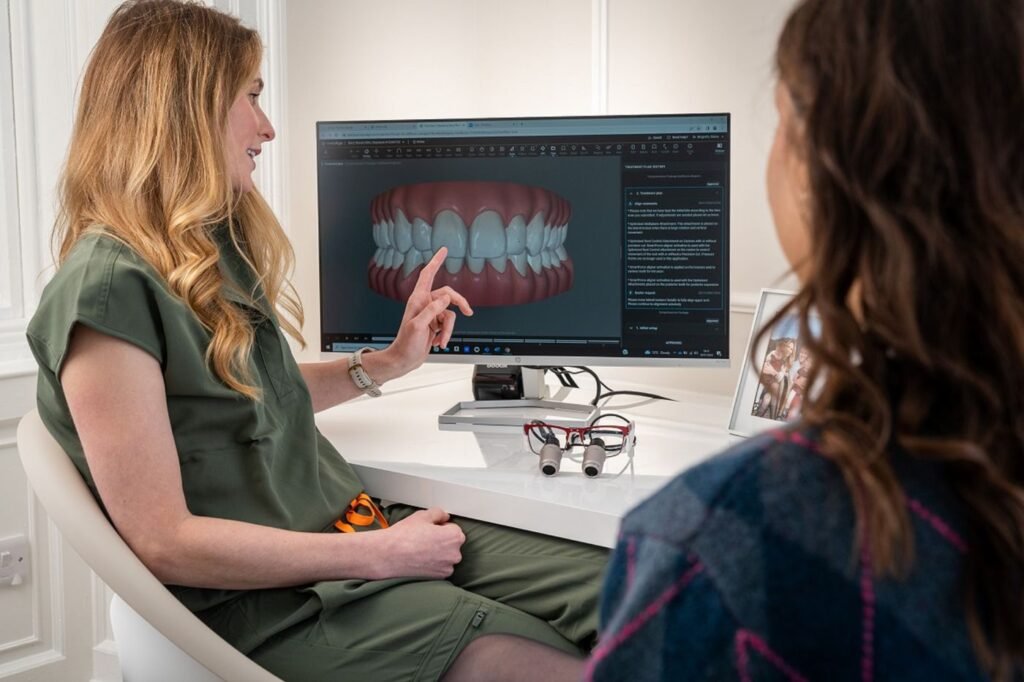
Dentist explaining emergency dental treatment options to a patient in Woodbridge

Is it a dental emergency? A quick triage guide

Use this as a rough guide. When in doubt, call and let us help you decide.

SituationHow urgentWhat to do now
Swelling spreading to the eye, neck or floor of the mouth, fever, trouble breathing or swallowingMedical emergencyGo to the nearest hospital emergency department or call 911
Adult tooth knocked outWithin 60 minutesPut it back in the socket or store it in milk and call immediately
Severe toothache that keeps you awakeSame dayCall the clinic; take over-the-counter pain relief as directed
Dental abscess or gum pimple with painSame dayCall the clinic; rinse with warm salt water
Broken tooth with pain or sharp edgesSame daySave the pieces, rinse, cold compress, call
Bleeding that won't stop after 15 minutes of pressureSame day, or ER if heavyBite on gauze or a damp tea bag; seek urgent care if it continues
Lost filling or crown, no painWithin a few daysKeep the crown; use temporary cement from a pharmacy
Broken braces wire poking the cheekWithin a few daysCover the end with orthodontic wax
Mild sensitivity to coldBook a regular visitUse sensitive toothpaste and mention it at your next checkup

What are the most common dental emergencies?

Here's what each one usually means and the first thing to do.

01

Severe toothache

Usually an inflamed or infected nerve. Rinse with warm water, floss gently around the tooth and call. Never put aspirin on the gum, it burns the tissue.

02

Dental abscess

A pocket of infection at the root or gum, often with a bad taste or a pimple on the gum. It won't clear up on its own.

03

Knocked-out tooth

Time matters most. An adult tooth replanted within about 60 minutes has the best chance of surviving.

04

Cracked or broken tooth

Ranges from a small chip to a split root. Pain when biting or with cold often means the crack reaches deeper layers.

05

Lost filling or crown

Exposed tooth is sensitive and can break more easily. Keep the crown and bring it with you.

06

Wisdom tooth flare-up

Swelling and pain around a partly erupted tooth at the back. Rinse with warm salt water and call.

07

Gum or soft tissue injury

Cuts to the lips, cheeks or tongue. Apply firm pressure with clean gauze for 15 minutes.

08

Broken denture

Don't glue it at home. Super glue can damage the acrylic and make repairs harder.

09

Kids' dental injuries

Falls and sports injuries are common. Baby teeth that are knocked out should never be put back in.

What should you do if an adult tooth is knocked out?

Follow these steps in order. The faster the tooth is back in place, the better its chance.

  1. Find the tooth and pick it up by the crown

    Hold the white chewing part. Don't touch the root, which has fragile cells that help it reattach.

  2. Rinse it briefly if it's dirty

    Use milk or saline for a few seconds. Don't scrub it, dry it or wrap it in tissue.

  3. Try to put it back in the socket

    Push it gently into place with your fingers, then bite on a clean cloth to hold it there.

  4. If you can't, store it in milk

    Milk, saline or the patient's own saliva (in the cheek, for adults only) keeps the root cells alive. Water is a poor choice.

  5. Call the dentist right away

    Tell us it's a knocked-out tooth. We'll fit you in as fast as possible.

  6. Get seen within 60 minutes if you can

    The dentist cleans the area, repositions the tooth, splints it to the neighbours and plans follow-up.

Never put a knocked-out baby tooth back in. It can damage the adult tooth developing underneath. Call us and we'll check your child.

Cold compress for swelling as dental emergency first aid in Woodbridge

Should you go to the dentist or the hospital emergency room?

Short answer

Go to the hospital emergency department for facial swelling that spreads toward the eye or neck, fever, trouble breathing or swallowing, uncontrolled bleeding or a suspected broken jaw. For toothaches, abscesses without those signs, broken teeth and knocked-out teeth, a dentist is usually the faster and better choice.

Hospital ERs can manage airway problems, spreading infection and jaw fractures. But most don’t have a dentist on site, so for tooth problems you’ll often get pain relief and antibiotics, then be told to see a dentist anyway.

Go to the hospital if you have

  • Swelling under the jaw or tongue that makes it hard to swallow or breathe
  • Swelling closing your eye
  • High fever with facial swelling
  • A head injury, loss of consciousness or a suspected broken jaw
  • Bleeding that won’t stop with firm pressure

Call the dentist first for

  • Toothaches, even very painful ones
  • A knocked-out, loose or pushed-in tooth
  • Broken teeth, lost fillings and crowns
  • Gum abscesses without spreading swelling

What if your dental emergency happens at night or on a weekend?

Teeth have a talent for breaking on long weekends. Here’s how to handle it.

  1. Call the clinic first. Peridot Dental Care offers evening and weekend appointments, and our phone message explains how to reach us for urgent problems.
  2. Manage pain safely overnight. Cold compress, head raised, over-the-counter pain relief as directed.
  3. Protect the tooth. Avoid chewing on that side and keep any broken pieces or crowns.
  4. Watch for red flags. Spreading swelling, fever or trouble swallowing means the hospital, any time of day.
  5. Book the first available slot. Even if you feel better by morning.

What happens at an emergency dental visit?

Our goal at the first visit is simple: find the cause, stop the pain and make a plan.

  1. Quick triage call

    You describe the problem by phone so we can judge urgency and book the right amount of time.

  2. Health history

    We check medications, allergies and conditions such as diabetes or heart problems that affect treatment.

  3. Focused exam and X-ray

    We examine the area and take an X-ray to see the root, bone and any infection.

  4. Diagnosis and options

    You hear what's wrong in plain language, with options and costs explained before anything starts.

  5. Pain relief and treatment

    Depending on the cause, that may be cleaning out an infected nerve, a temporary filling, smoothing a broken edge, splinting a loose tooth or an extraction.

  6. Aftercare and follow-up

    You leave with written instructions and, if needed, a follow-up visit for the permanent repair.

How can you manage a toothache at home until you're seen?

Home care can make you more comfortable. It won’t fix the cause, so book your visit even if the pain eases.

What helps

  • Rinse with warm salt water (half a teaspoon of salt in a glass of warm water)
  • Floss gently around the tooth to remove trapped food
  • Take over-the-counter pain relief exactly as the label directs, if it’s safe for you
  • Use a cold compress on the outside of the cheek, 15 minutes on and 15 off
  • Sleep with your head raised on an extra pillow

What to avoid

  • Putting aspirin or crushed tablets directly on the gum
  • Applying heat to a swollen face
  • Chewing on the painful side
  • Very hot, cold or sugary food and drinks
  • Using leftover antibiotics from an old prescription
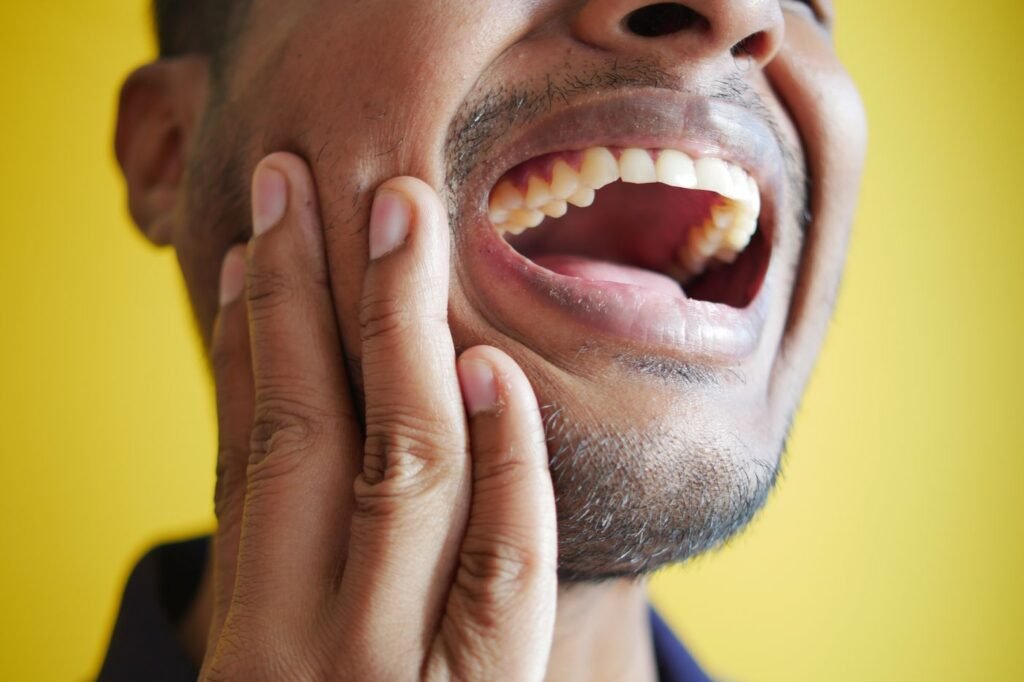
Man holding his cheek from a severe toothache needing an emergency dentist in Woodbridge

What should you bring to an emergency dental appointment?

  • Your health card and photo ID
  • A list of medications, including blood thinners and supplements
  • Insurance details or your CDCP member card
  • The knocked-out tooth (in milk) or broken pieces, crown or denture
  • A parent or guardian for patients under 18
  • Someone to drive you home if sedation might be used

Don’t have everything? Come anyway. Getting you out of pain comes first; paperwork can follow.

What do real dental emergencies look like?

Typical situations from our Woodbridge office, with details changed for privacy.

Adult, age 31

Woke up at 3 AM with throbbing pain

A deep cavity had reached the nerve. The infected nerve tissue was cleaned out the same afternoon, and a root canal and crown were finished later.

Child, age 9

Front tooth chipped at the playground

The chip didn't reach the nerve. The tooth was smoothed and bonded with tooth-coloured filling in one visit.

Teen, age 16

Adult tooth knocked out in a hockey game

A parent put the tooth in milk and called immediately. It was repositioned and splinted within the hour.

Senior, age 68

Swelling and a bad taste near an old crown

An abscess under the crown. Drainage and treatment were done, and the 20% senior discount applied to eligible care.

What are the most common myths about dental emergencies?

These beliefs delay care every week. Here's what's true.

Myth

If the pain goes away, the problem is gone.

Fact

Pain often stops because the nerve inside the tooth has died. The infection can stay and spread into the bone.

Myth

Antibiotics will fix a tooth infection.

Fact

Antibiotics can calm a spreading infection for a while, but the source inside the tooth still needs dental treatment.

Myth

Emergency dental care always means losing the tooth.

Fact

Many emergency teeth are saved with a root canal, a filling, bonding or a splint. Extraction is one option among several.

Myth

Sedation is unsafe in an emergency.

Fact

When your health history is reviewed and you are monitored by trained, RCDSO-registered professionals, mild sedation such as nitrous oxide is very safe and helps anxious patients get treated.

Myth

Kids' baby teeth injuries can be ignored.

Fact

A knock to a baby tooth can affect the adult tooth underneath and cause infection. Children should be checked after any dental injury.

What counts as an emergency with braces or Invisalign?

Most orthodontic problems are uncomfortable and can wait a short while. A poking wire can be covered with orthodontic wax, and a loose bracket can usually wait a day or two for a repair visit.

Call sooner if a wire is cutting your cheek and can’t be covered, a band has come loose and is moving, or a cracked aligner has a sharp edge. If you lose an aligner, go back to your previous set and call us for a replacement. And after any blow to the face while wearing braces, get the teeth checked even if nothing looks broken.

What mistakes do people make in a dental emergency?

  • Waiting for the weekend to pass. Abscesses can spread quickly. Call as soon as swelling starts.
  • Storing a knocked-out tooth in water or tissue. Milk or saline keeps the root alive much longer.
  • Gluing a crown or denture with super glue. It can damage the tooth and the restoration.
  • Taking more pain medication than the label allows. Overdosing on acetaminophen or ibuprofen can cause serious harm.
  • Using heat on a swollen face. Heat can draw infection outward. Use cold instead.
  • Skipping the follow-up visit. Temporary fixes are temporary. The permanent repair protects the tooth.
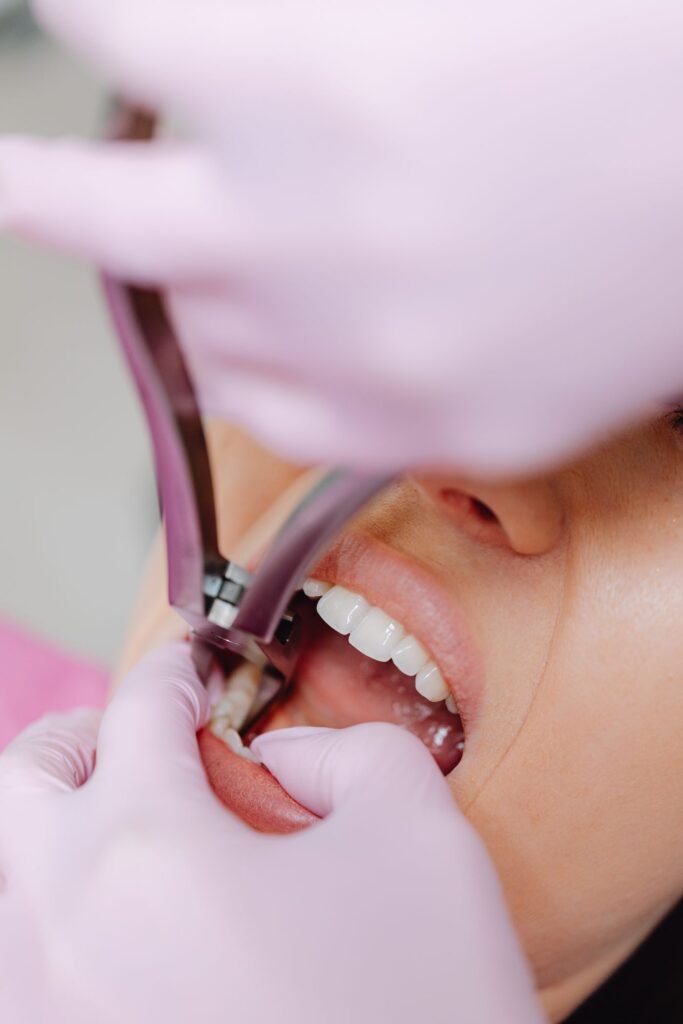
Emergency tooth extraction at a dental clinic in Woodbridge

What emergency dental treatments might you need?

Short answer

Emergency treatment depends on the cause. Common options include draining an abscess, removing infected nerve tissue to start a root canal, bonding or smoothing a broken tooth, recementing or temporarily replacing a crown, splinting a loose tooth and, when a tooth can't be saved, an extraction.

Saving the tooth

If the nerve is infected but the tooth is restorable, we start root canal treatment to relieve pain the same day. The tooth is usually finished with a crown later.

Repairing breaks

Small chips are bonded with tooth-coloured filling. Larger breaks may need a temporary crown until the permanent one is ready.

When extraction is best

Teeth split below the gum or too damaged to restore are removed gently under local anesthetic. We’ll talk about replacement options, like implants, bridges or dentures, once you’ve healed.

Medication

Antibiotics are prescribed only when infection is spreading or you have certain medical conditions. The infected tooth still needs treatment at the source.

How much does emergency dental care cost, and is it covered?

Short answer

The cost depends on what's causing the problem and the treatment needed. An emergency exam and X-ray come first, and you'll get a clear estimate before any treatment begins.

  • CDCP: the Canadian Dental Care Plan includes emergency exams and many treatments such as fillings, root canals and extractions for eligible patients. Peridot Dental Care accepts CDCP.
  • Private insurance: most plans cover emergency exams and basic treatment. We can help you check your coverage.
  • Seniors: patients 65 and older receive a 20% discount on eligible treatment.
  • No insurance: ask our front desk about your options. We’ll focus on getting you out of pain first.

Waiting usually costs more. A small infection treated today is simpler than a large one treated next month.

How can you prevent dental emergencies?

You can't prevent every accident. You can cut the odds a lot.

01

Keep regular checkups

Most toothaches start as small cavities or cracks we can spot on an X-ray months earlier.

02

Wear a sports mouthguard

A custom guard is the best protection for hockey, basketball, soccer and martial arts.

03

Use a night guard if you grind

Grinding cracks teeth and fillings, often without you noticing until something breaks.

04

Don't chew ice or hard candy

Ice, popcorn kernels and pen caps are leading causes of cracked teeth.

05

Replace old, worn fillings

Leaking fillings let decay start underneath where you can't see it.

06

Use scissors, not teeth

Teeth aren't made for opening packages or bottles.

How do you handle a cracked tooth before your appointment?

Cracked teeth are tricky because the crack can spread with every bite. Until you’re seen:

  • Chew on the other side and avoid hard or very chewy foods
  • Skip very hot or cold drinks if they trigger pain
  • Cover a sharp edge with sugar-free gum or dental wax to protect your tongue
  • Don’t test the tooth by biting on it to see if it still hurts

Pain that comes and goes when you release a bite is a classic sign of a cracked tooth. Many can be saved with a crown if they’re treated before the crack reaches the root, so it’s worth booking quickly.

In pain right now?

Call our dental office in Woodbridge at +1 647-313-4164. Describe your symptoms and we'll find the soonest time, including evening and weekend appointments. Non-urgent questions can go to info@peridotdentalcare.com.

Why choose Peridot Dental Care as your emergency dental clinic in Woodbridge?

When you’re in pain, you want a team that answers the phone, explains things calmly and gets you comfortable fast. Peridot Dental Care holds a 4.9 Google rating from 165+ patient reviews, and many mention how quickly they were seen.

  • Same-day emergency visits when possible. We keep time open for urgent cases.
  • New and CDCP patients welcome. You don’t need to be a current patient to call.
  • Comfort options. Local anesthetic plus sedation for anxious patients.
  • Kids are in good hands. Pediatric dentistry is one of our strengths, so injured children are seen by a team used to calming little patients.
  • Seniors save. A 20% discount for patients 65 and older on eligible treatment.
  • Evening and weekend appointments. Emergencies rarely wait for office hours.
  • Licensed care. Treatment by dentists registered with the Royal College of Dental Surgeons of Ontario (RCDSO).
  • Central location. 6175 Highway 7 West, Unit 7, Woodbridge, Ontario.

Once the emergency is handled, many patients stay with us as their family dentist in Woodbridge. We also help with braces and Invisalign as an orthodontist in Woodbridge option, and with implant consultations when a tooth needs replacing.

Emergency dentist in Woodbridge: frequently asked questions

Can I see an emergency dentist in Woodbridge today?

Often, yes. Call Peridot Dental Care as early as possible and describe your symptoms. Same-day appointments are offered whenever possible, including for new patients.

What should I do if my face is swelling from a tooth?

Call the dentist the same day. If swelling spreads toward your eye or neck, or you have fever or trouble breathing or swallowing, go to the nearest hospital emergency department immediately.

How long do I have to save a knocked-out tooth?

The best chance is within about 60 minutes. Put the adult tooth back in the socket or keep it in milk, and get to a dentist right away. Baby teeth should not be put back in.

Will the emergency dentist pull my tooth?

Not necessarily. Many painful or broken teeth can be saved with a root canal, filling, bonding or crown. Extraction is recommended only when the tooth cannot be restored predictably.

Does CDCP cover emergency dental visits?

Yes, for eligible members. The Canadian Dental Care Plan includes emergency exams and covers many treatments such as fillings, root canals and extractions, subject to plan rules and co-payments.

Conclusion

Most dental emergencies can be treated quickly when you act early, keep calm and call a dentist before the problem spreads. Know the warning signs that need a hospital, keep knocked-out teeth in milk and avoid home fixes that make things worse. Peridot Dental Care is ready to help you get out of pain and back to normal in Woodbridge.

This article is general information and does not replace an in-person dental or medical assessment. In a life-threatening emergency, call 911.