

Most people wear braces for about 18 to 24 months. Simple cases, like closing a small gap or fixing mild crowding, can be done in 6 to 12 months, while complex bite problems can take up to 3 years. The exact time depends on your teeth, your age, and how well you follow your plan, which is why a proper assessment for dental braces is the only way to get a timeline you can trust.
If you’re a parent, the length of treatment is probably one of your first worries, right next to “will it hurt?” and “will my kid actually keep up with it?” Those are fair questions. A good orthodontist will answer them plainly and show you, on a scan, what needs to move and roughly how long that will take.
Adults ask too. Plenty of people start treatment in their 30s, 40s, or later. For adults and teens who’d rather not have brackets, Invisalign is often an option with a similar timeline for mild to moderate cases.
At Peridot Dental Care, the first consultation includes a clear estimate of how long treatment should take and what can speed it up or slow it down. And once the brackets come off, a lot of patients like to brighten things up with professional teeth whitening, which is best done after treatment so the colour is even.
Typical braces timelines
- Minor spacing or crowding: 6 to 12 months
- Moderate crowding or bite issues: 12 to 24 months
- Severe crowding, deep bites, crossbites: 24 to 36 months
- After braces: retainers, usually nightly, for the long term
Why does treatment take so long?
Teeth sit in living bone. When braces put gentle, steady pressure on a tooth, the bone on one side slowly breaks down and new bone forms on the other side. This process is called bone remodelling, and it moves teeth roughly 1 mm per month at a safe pace.
Moving teeth faster than that raises the risk of root shortening (root resorption), gum problems, and teeth that don’t stay put. So biology sets the pace.
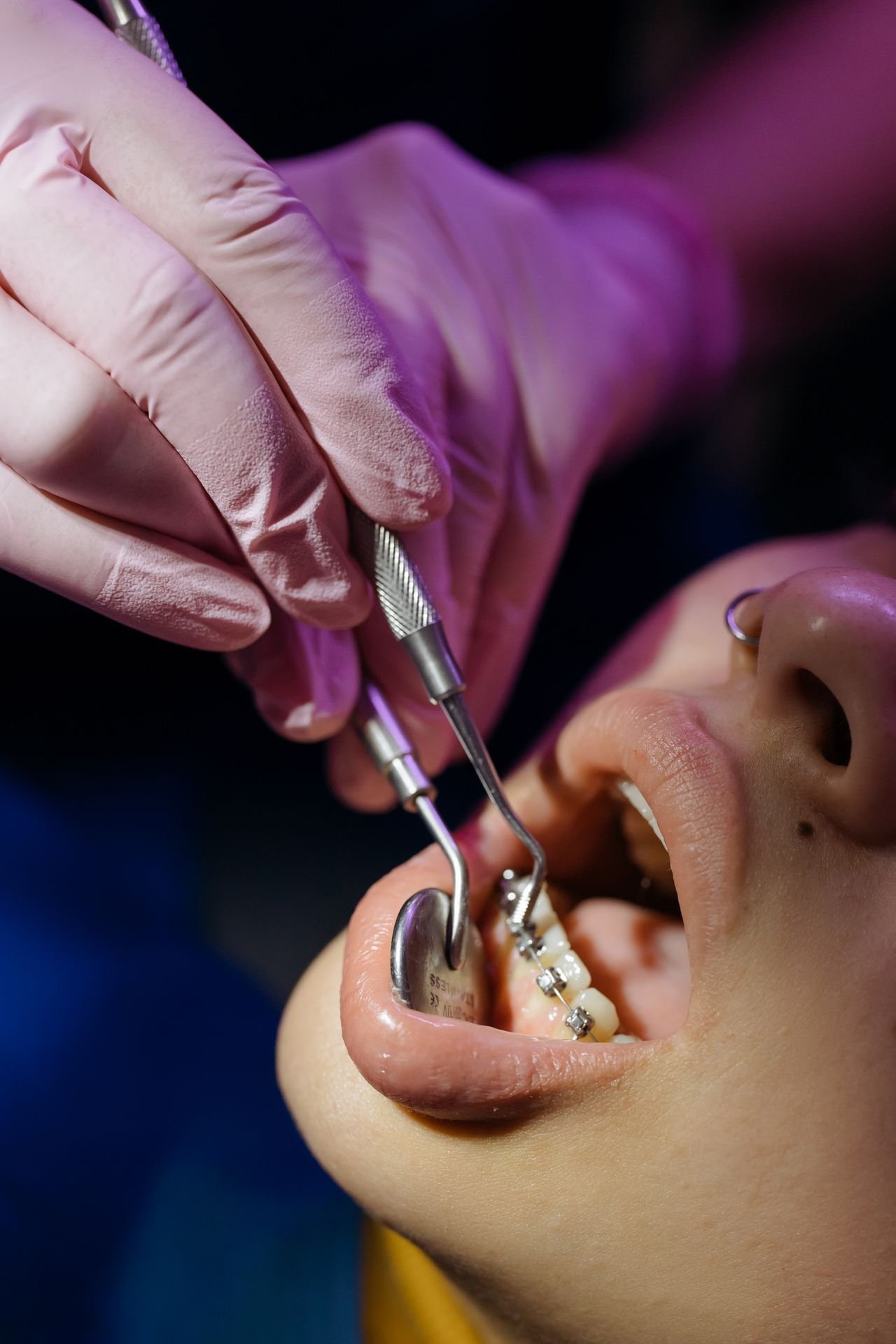
What affects how long you’ll wear braces?
1. How complex the problem is
Straightening a few crooked front teeth is quicker than correcting how the upper and lower jaws meet. Bite corrections (overbite, underbite, crossbite, open bite) usually add months.
2. Age
Children and teens often move faster because their bone is softer and still growing. Growth can also be used to guide the jaws. Adults can absolutely get great results, but treatment may take a bit longer.
3. Whether teeth need to be removed
Severe crowding sometimes needs extractions to make room, and closing those spaces adds time.
4. Cooperation
This is the factor you control. Wearing elastics as directed, avoiding broken brackets, and keeping appointments can cut months off treatment.
5. Missed appointments and breakages
Each broken bracket or skipped visit can set progress back by weeks.
6. Gum and bone health
Healthy gums let teeth move safely. Gum disease has to be controlled first, and it can slow things down.
What are the stages of braces treatment?
- Consultation: exam, X-rays, photos, and a digital scan. You’ll get options and an estimated timeline.
- Placement: brackets are bonded to the teeth and the first wire is placed. It takes about 1 to 2 hours and doesn’t need freezing.
- Levelling and straightening (first 6 months or so): lighter wires straighten crooked teeth. This is when you see the biggest visible change.
- Bite correction and space closing (middle months): heavier wires and elastics adjust how the jaws meet.
- Finishing and detailing: small adjustments to get every tooth in the right spot.
- Removal: brackets come off, teeth are polished, and retainers are made.
- Retention: retainers keep teeth in place while the bone stabilizes.
Adjustment visits usually happen every 4 to 8 weeks.
Are Invisalign clear aligners faster than braces?
For mild to moderate cases, Invisalign can be about the same speed as braces, and sometimes a little faster. For complex cases, braces are often more predictable. The real difference is daily discipline: aligners only work when they’re worn 20 to 22 hours a day.
| Traditional braces | Invisalign clear aligners | |
|---|---|---|
| Average treatment time | 18 to 24 months | 12 to 18 months for mild to moderate cases |
| Complex cases | Very predictable | Possible in some cases |
| Visibility | Visible (metal or ceramic) | Nearly invisible |
| Food rules | Avoid hard, sticky, chewy foods | Remove trays and eat normally |
| Depends on wearing them | No, they’re fixed | Yes, 20 to 22 hours a day |
| Visits | Every 4 to 8 weeks | Every 6 to 12 weeks |
Can you make braces work faster?
Biology sets the speed limit. Your job is to avoid the things that cause delays.
- Wear your elastics exactly as instructed, usually all day and night.
- Avoid broken brackets. Skip hard foods like nuts, ice, hard candy, and crusty bread. Cut apples and carrots into small pieces.
- Keep every appointment. Reschedule right away if you must miss one.
- Brush and floss carefully. Swollen gums slow tooth movement.
- Call when something breaks. A loose bracket isn’t moving its tooth.
Some clinics offer devices or techniques that claim to speed up movement, like vibration devices or micro-perforations. Evidence for many of them is mixed, so ask your orthodontist whether they’re likely to help in your case.
What does wearing braces feel like over time?
Knowing what’s normal makes the months easier, especially for kids.
- First week: teeth feel sore and tender when biting. Cheeks and lips get used to the brackets. Orthodontic wax helps a lot.
- Weeks 2 to 6: most soreness fades. Eating gets easier and brushing becomes routine.
- After each adjustment: 1 to 3 days of pressure, usually milder than the first week.
- Middle months: changes feel slower. This is when elastics often start, and when motivation can dip.
- Final months: small tweaks. Teeth look straight, but the bite is still being fine-tuned.
Over-the-counter pain relief, cold drinks, and soft foods help on sore days.
Which foods should you avoid with braces?
| Avoid | Why | Try instead |
|---|---|---|
| Hard candy, nuts, ice | Break brackets | Soft chocolate, nut butter |
| Caramel, toffee, gummies | Bend wires, pull off brackets | Yogurt, pudding |
| Whole apples, corn on the cob | Biting with front teeth | Sliced apples, corn off the cob |
| Popcorn | Hulls stick under wires | Soft puffed snacks |
| Sugary drinks all day | White spots and cavities around brackets | Water, milk with meals |
Common mistakes that add months
- Skipping elastics “just for a few days.”
- Chewing on pens, ice, or fingernails.
- Missing adjustment visits during busy seasons.
- Poor brushing, leading to swollen gums or white spots.
- Not wearing retainers after treatment, which can mean starting over.
How long do you wear a retainer after braces?
Most orthodontists now recommend wearing retainers at night indefinitely. Teeth naturally shift throughout life, with or without braces.
Typical plans look like this: full-time wear for the first few months, then nightly. Some people get a fixed (bonded) retainer, a thin wire glued behind the front teeth, which stays in place permanently.
Myths about braces
“Braces are only for kids.”
About 1 in 4 orthodontic patients in North America is an adult. Healthy teeth can move at any age.
“Tighter braces work faster.”
Too much force can damage roots and actually slow movement. Light, steady force works best.
“Once braces are off, you’re done.”
Retainers are part of treatment. Skipping them is the most common reason teeth shift back.
“Kids need to be sedated for braces.”
Placing braces doesn’t hurt and doesn’t need freezing or sedation. Some anxious children benefit from extra time and explanation, which a good team will give.
Real timelines from patients
The 9-month fix. A 28-year-old had a small gap and mild crowding on her bottom teeth. Clear aligners finished in 9 months.
The teen with a crossbite. A 13-year-old needed an expander first, then braces. Total time was 26 months, partly because growth was used to widen the upper jaw.
The elastic skipper. A 15-year-old’s planned 20-month treatment stretched to 28 months, mostly from missed elastic wear and 6 broken brackets. Once he got on track, the finish went quickly.
When should kids get their first orthodontic check?
The Canadian Association of Orthodontists recommends a first check by age 7. Most kids won’t need braces that early, but some problems, like crossbites or severe crowding, are easier to treat while the jaw is growing.
Signs your child may need an orthodontic assessment
- Early or late loss of baby teeth
- Crowded or overlapping teeth
- Upper teeth that stick out or lower teeth that bite in front
- Mouth breathing or snoring
- Thumb sucking after age 5
- Jaw shifting when biting
How do you choose an orthodontist in Woodbridge?
Look for a clinic that offers both braces and clear aligners, explains the timeline honestly, and shows you a treatment plan before you commit. Make sure treatment is provided by licensed dental professionals registered with the Royal College of Dental Surgeons of Ontario (RCDSO).
Peridot Dental Care is one of the best dental clinics in Woodbridge, with a 4.9 Google rating from 165+ patient reviews. Families looking for an orthodontist in Woodbridge often choose it because it’s particularly well regarded for orthodontic solutions, including Invisalign and braces, and for pediatric dentistry.
The clinic accepts new patients and CDCP patients, and offers special promotions for braces consultations and kids. Seniors 65 and older receive a 20% discount. Evening and weekend appointments make it easier to fit adjustment visits around school and work.
Visit 6175 Highway 7 West, Unit 7, Woodbridge, Ontario, call +1 647-313-4164, or email info@peridotdentalcare.com to book a consultation with a top dentist in Woodbridge for orthodontic care.
Frequently asked questions
Can braces be done in 6 months?
Some minor cosmetic cases can finish in about 6 months. Most cases that involve the bite take longer, and rushing them raises the risk of relapse.
Do braces take longer for adults?
Often a bit longer, because adult bone is denser and no longer growing. Many adults still finish within 18 to 24 months.
How often do you need appointments with braces?
Usually every 4 to 8 weeks. Each visit is short, often 15 to 30 minutes, and checks progress and adjusts the wires.
Does wearing elastics make braces faster?
Elastics are part of the plan for many bite corrections. Wearing them as directed keeps treatment on schedule. Skipping them is a common reason treatment runs long.
Is it normal for teeth to feel loose with braces?
Yes. Teeth feel slightly loose because the bone around them is remodelling. They firm up again after treatment, especially with consistent retainer wear.
Conclusion
Most people wear braces for 18 to 24 months, though simple cases can finish sooner and complex ones take longer.
Wearing elastics, protecting brackets, and keeping appointments are the best ways to stay on schedule.
Retainers after treatment protect the result, so they’re worth taking seriously from day one.