
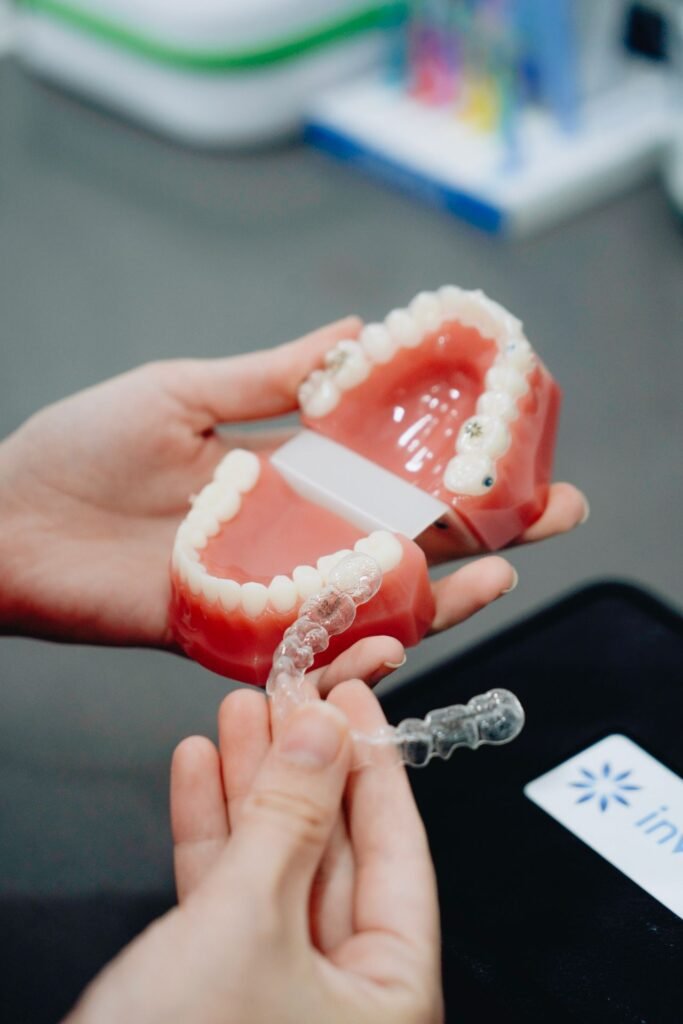
Yes, Invisalign is a good choice for many teenagers, especially those with mild to moderate crowding, spacing, or bite problems who will wear their aligners 20 to 22 hours a day. Invisalign Teen includes features like compliance indicators and spare aligners for lost trays. The biggest risk is simple: aligners only work when they’re worn. Teens who struggle with that usually do better with braces, and an Invisalign consultation will help you figure out which camp your teen is in.
Parents tend to worry about 2 things here: whether their teen will actually wear the trays, and whether they’re paying for something that won’t finish the job. Both are fair. Traditional dental braces remove the compliance question completely, so it’s worth weighing both options side by side.
Teens who’ve been coming to the same family clinic since they were little often handle orthodontic treatment best, because they already trust the team. Our kids dentistry patients move into orthodontic care in a space they know.
Whichever route you pick, make sure a licensed orthodontist or dentist with orthodontic training plans and supervises the treatment. A trusted dentist in Woodbridge will also keep an eye on cavities and gum health throughout, which matters a lot with teens.
Invisalign suits teens who
- Are organized and motivated
- Play contact sports or instruments
- Have mild to moderate cases
- Care a lot about appearance
Braces may suit teens who
- Tend to lose things or forget
- Have complex bites or rotations
- Need major jaw growth guidance
- Prefer not to think about it daily
What is Invisalign, and how does it work for teens?
Invisalign is a system of clear, removable plastic trays (aligners) custom-made from a 3D scan of your teeth. Each set moves teeth a small amount. You switch to a new set every 1 to 2 weeks.
Invisalign Teen is the same core system with a few extras built for younger patients:
- Compliance indicators: small blue dots that fade with wear, so you and your orthodontist can see if trays are being worn.
- Eruption tabs: space in the aligners for molars that are still coming in.
- Replacement aligners: a set number of spare trays for lost or broken ones.
Many teen cases also use attachments, small tooth-coloured bumps bonded to certain teeth to help the trays grip and move teeth more precisely.

Invisalign vs braces for teens: how do they compare?
| Invisalign clear aligners | Traditional braces | |
|---|---|---|
| Appearance | Nearly invisible | Visible brackets and wires |
| Eating | Remove to eat anything | Avoid hard, sticky, chewy foods |
| Brushing and flossing | Normal | More time, special tools |
| Comfort | Smooth, less cheek rubbing | Brackets can rub at first |
| Sports | Can wear a mouth guard or remove trays | Need an orthodontic mouth guard |
| Compliance needed | High: 20 to 22 hours a day | Low: fixed in place |
| Complex cases | Possible, case by case | Most predictable |
| Emergency visits | Rare | Broken brackets and poking wires are common |
| Typical length | 12 to 18 months for mild to moderate cases | 18 to 24 months |
What are the real advantages for teens?
- Confidence. School photos, presentations, and social life feel easier for many teens without visible brackets.
- Healthier gums. Being able to brush and floss normally lowers the risk of white spots and gum inflammation that often show up with braces.
- Fewer food rules. Teens can eat pizza crusts and apples, as long as they brush before putting trays back in.
- Fewer urgent visits. No broken brackets or poking wires.
- Sports and music. Aligners are easier for wind instruments and contact sports.
What are the downsides?
- Wear time is everything. Trays in a backpack don’t move teeth.
- Lost aligners. Napkins at lunch are the number 1 enemy.
- Snacking and drinks. Sipping anything other than water with trays in can trap sugar against the teeth and cause cavities.
- Some movements are harder. Large rotations of round teeth and certain vertical movements can be slower with aligners.
- Speech. A slight lisp for the first few days.
Is my teen ready for Invisalign?
Ask these honestly:
- Does your teen manage a daily routine without constant reminders (homework, sports gear, phone charging)?
- Will they wear trays at school and with friends?
- Will they brush or rinse after lunch?
- Do they want this, or is it mostly your idea?
- Are they willing to keep up with elastics if the plan needs them?
If most answers are yes, aligners are likely a good fit. If not, braces are an equally good route, and they take the daily decision-making out of the picture.
What happens at the first visit?
- Conversation. What your teen wants to change, and any concerns from you.
- Exam. Teeth, gums, jaw joints, bite, and existing fillings.
- X-rays and photos. To check roots, developing teeth, and jaw growth.
- 3D scan. No goopy impressions.
- Digital preview. A simulation showing how teeth could move.
- Options and timeline. Aligners, braces, or a combination, with an honest recommendation.
How can parents help keep treatment on track?
- Keep a spare case in the car and backpack.
- Set a phone reminder after lunch to put trays back in.
- Check the compliance indicators together every few weeks, calmly, without turning it into a fight.
- Pack a travel toothbrush.
- Keep the previous set of trays as a backup.
- Agree on simple rules: trays out only for eating and brushing.
What signs mean your teen should get an orthodontic check?
- Crowded, overlapping, or twisted teeth
- Gaps between teeth that aren’t closing
- Upper front teeth that stick out
- Lower teeth that bite in front of the upper teeth
- Teeth that don’t meet at the front when biting (open bite)
- Jaw clicking, shifting, or pain when chewing
- Baby teeth still present past age 13
- Your teen hides their smile in photos
Some of these are purely cosmetic. Others affect chewing, cleaning, and long-term wear on the teeth. An exam sorts out which is which.
What does a typical school day look like with aligners?
- 7:00 a.m. Take trays out, eat breakfast, brush, rinse trays, put them back in.
- Morning classes. Trays in. Water only.
- Lunch. Trays into the case (never a napkin). Eat, then brush or rinse well before putting them back.
- After school. Snack with trays out, then rinse and wear again. Fewer snacks means more wear time.
- Sports practice. Wear the aligners, or swap to a mouth guard and put trays back right after.
- Dinner and evening. Same routine. Elastics back on if the plan calls for them.
- Bedtime. Brush, floss, clean trays, and wear them all night.
Once this is a habit, most teens say it takes less than 10 extra minutes a day.
How should teens clean their aligners?
- Rinse trays in cool water every time they come out.
- Brush them gently with a soft toothbrush (a separate one from your teeth) and clear, unscented soap once or twice a day.
- Soak them in an aligner cleaning product a few times a week if they look cloudy.
- Never use hot water, toothpaste (it scratches), or mouthwash with colour (it stains).
- Store them in the case whenever they’re out of the mouth.
Clean trays look clearer, smell fresher, and help keep breath and gums healthy.
Common mistakes teens make with aligners
- Wrapping trays in a napkin at lunch and throwing them away.
- Drinking pop, juice, or sweet coffee with trays in.
- Leaving trays out for “just one more hour” every evening.
- Skipping to the next set early to finish faster.
- Cleaning trays with hot water, which can warp them.
Myths about Invisalign and teen dental care
“Invisalign only works for adults.”
Invisalign Teen was designed specifically for growing patients, including room for molars that are still coming in.
“Clear aligners can’t fix bite problems.”
With attachments and elastics, aligners can correct many overbites, underbites, and crossbites. Severe skeletal problems may still need other approaches.
“Teens need sedation for orthodontic work.”
Placing attachments or braces doesn’t require freezing or sedation. Sedation is used for specific procedures and specific patients, always with careful screening and monitoring.
Real teen scenarios
The organized student. A 15-year-old with crowding wore her aligners faithfully and finished in 14 months. Her parents said the only reminder needed was the occasional lunch-time text.
The forgetful athlete. A 14-year-old hockey player kept losing trays. After 3 months of slow progress, he switched to braces and finished on time.
The bite correction. A 16-year-old with an overbite used aligners with elastics. Progress was steady once he got into a routine with the elastics.
Choosing an orthodontist in Woodbridge for your teen
Look for a clinic that offers both aligners and braces so the recommendation is based purely on your teen’s needs. Treatment should be planned and supervised by licensed dental professionals registered with the Royal College of Dental Surgeons of Ontario (RCDSO).
Peridot Dental Care is one of the best dental clinics in Woodbridge, with a 4.9 Google rating from 165+ patient reviews. It’s particularly well regarded for orthodontic solutions like Invisalign and braces, and for pediatric dentistry, which makes the move from kids’ checkups to orthodontic care feel natural for many families searching for an orthodontist in Woodbridge.
The clinic welcomes new patients and CDCP patients, runs special promotions for braces consultations and for kids, gives seniors 65 and older a 20% discount, and has evening and weekend appointments that fit around school.
Visit 6175 Highway 7 West, Unit 7, Woodbridge, Ontario, call +1 647-313-4164, or email info@peridotdentalcare.com to book a consultation. Many local families consider it the best dentist in Woodbridge for teens.
Frequently asked questions
What age can a teen start Invisalign?
Many teens start between 11 and 15, once most permanent teeth are in. Some younger children can use Invisalign First for early treatment.
Is Invisalign as effective as braces for teens?
For mild to moderate cases, results are very similar when aligners are worn as directed. For complex cases, braces are often more predictable.
What happens if my teen loses an aligner?
Call the clinic. Often they’ll move to the next set early or go back to the previous one while a replacement is made. Invisalign Teen includes some replacement trays.
Can teens drink with aligners in?
Plain water is fine. Anything else, especially sugary or acidic drinks, should be consumed with trays out, followed by a rinse or brush.
Do teens need retainers after Invisalign?
Yes. Retainers keep teeth from shifting back and are usually worn every night for the long term.
Conclusion
Invisalign is a strong option for teens with mild to moderate cases who will wear their aligners consistently.
Braces remain the more reliable choice for complex bites or teens who struggle with daily routines.
A consultation with honest advice about your teen’s habits is the best way to choose.