A crossbite is a bite problem where some upper teeth sit inside the lower teeth when you close your mouth, instead of slightly outside them. It’s a common orthodontic issue in both kids and adults. It isn’t an emergency, but it usually should be fixed, because over time it can wear teeth unevenly, strain the jaw, and cause gum recession. The earlier an orthodontist spots it, the simpler the correction tends to be.
Many parents in Woodbridge first hear the word “crossbite” at a routine check-up and feel blindsided. Was it something we did? Will my child need surgery? In most cases, the answers are no and no. Kids’ crossbites are often fixed with a simple expander during growth.
Adults have options too. Mild tooth-related crossbites can sometimes be treated with Invisalign clear aligners, which many adults prefer for work and social life.
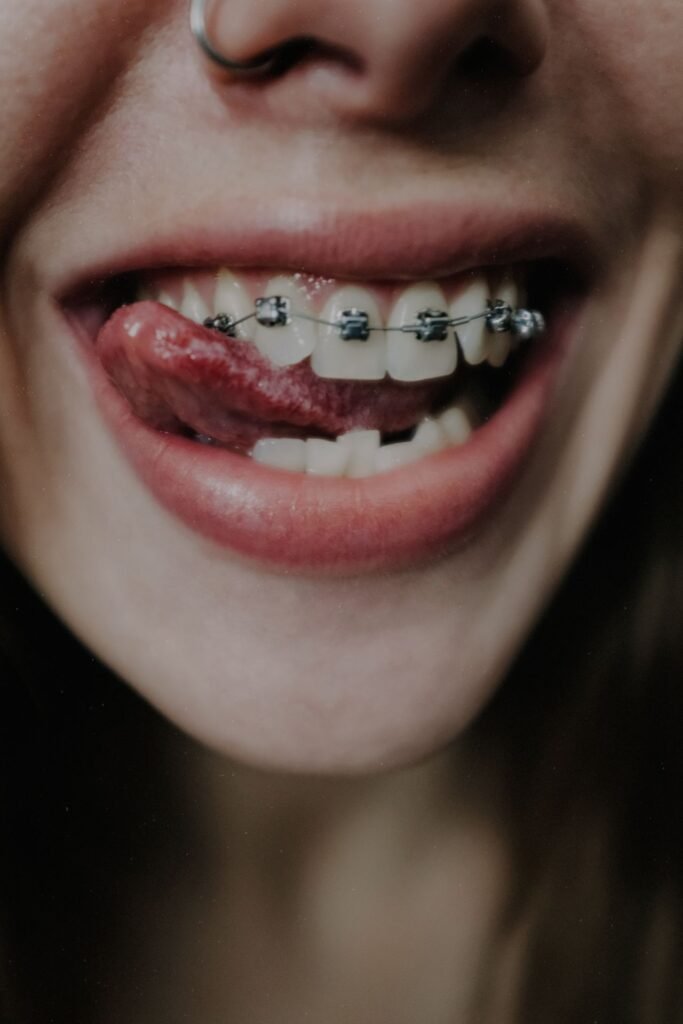
For more complex cases, dental braces give the orthodontist more control. Children usually start with an early check through kids dentistry visits, and you can find the clinic easily on Google Maps when you’re ready for an assessment.
What does a crossbite look like?
In a normal bite, the upper teeth sit slightly outside the lower teeth all the way around, like a lid on a box. In a crossbite, one or more upper teeth sit behind or inside the lower teeth.
Types of crossbite
- Anterior crossbite: One or more upper front teeth sit behind the lower front teeth. When all front teeth are involved, it’s often called an underbite.
- Posterior crossbite: Upper back teeth sit inside the lower back teeth, on one side (unilateral) or both sides (bilateral).
- Single-tooth crossbite: Just one tooth is out of position, often because it erupted in the wrong spot.
Dental vs skeletal crossbite
| Type | Cause | Typical treatment |
|---|---|---|
| Dental | Teeth are tipped or positioned wrong; jaws are fine | Braces or clear aligners |
| Skeletal | Upper jaw is too narrow or jaws are mismatched in size | Expander in kids; braces plus surgery in some adults |
| Functional | Jaw shifts to one side to find a comfortable bite | Early correction to stop the shift |
What causes a crossbite?
- Genetics. Jaw size and shape often run in families.
- A narrow upper jaw, sometimes linked to mouth breathing from allergies or large tonsils and adenoids.
- Long-term thumb sucking or pacifier use past about age 3 to 4.
- Baby teeth that fall out late and push adult teeth into the wrong spot.
- Early loss of baby teeth from decay, which lets neighbouring teeth drift.
- Tongue posture, such as resting the tongue low in the mouth.
Does a crossbite need to be fixed?
In most cases, yes. Here’s why:
- Uneven tooth wear. Teeth that hit at the wrong angle wear down and chip faster.
- Gum recession. Lower front teeth in an anterior crossbite can get pushed forward and lose gum on the front.
- Jaw shift. A posterior crossbite can make the lower jaw slide to one side. In growing kids, that can lead to lopsided jaw growth.
- Jaw strain. Some people develop jaw muscle pain, clicking, or headaches.
- Harder cleaning. Overlapping teeth trap plaque.
- Appearance. Some crossbites affect the smile or facial symmetry.
A very mild crossbite on one tooth with no symptoms might be monitored. That decision should come from an orthodontic exam.
Signs you or your child may have a crossbite
- Upper front teeth tucked behind lower front teeth
- Lower jaw shifting to one side when closing
- Chin that looks off-centre
- Uneven wear or chips on certain teeth
- Biting the inside of the cheek often
- Jaw pain, clicking, or tired jaw muscles
- Mouth breathing or snoring in kids
How is a crossbite treated?
In children
The upper jaw has a growth seam (the midpalatal suture) that stays flexible during childhood. A palatal expander gently widens it over a few weeks, then holds it while new bone fills in. This is often done between ages 7 and 12.
Single-tooth crossbites in kids can sometimes be fixed with a small appliance or limited braces in a few months.
In teens and adults
- Braces move teeth into the right position and are often combined with elastics.
- Clear aligners can treat many dental crossbites, sometimes with small tooth-coloured attachments and elastics.
- Adult expansion may need special appliances or minor surgical help, since the jaw seam has fused.
- Orthognathic (jaw) surgery is reserved for significant skeletal problems, combined with braces.
Invisalign vs braces for crossbite
| Feature | Invisalign clear aligners | Traditional braces |
|---|---|---|
| Visibility | Nearly invisible | Brackets and wires show |
| Best for | Mild to moderate dental crossbites | Moderate to severe, or combined with expanders |
| Comfort | Smooth plastic, pressure with new trays | Possible cheek irritation early on |
| Wear time | 20 to 22 hours a day; you control it | Fixed, works 24/7 |
| Eating | Remove to eat | Avoid hard and sticky foods |
| Hygiene | Brush and floss normally | Extra cleaning around brackets |
Your orthodontist will recommend one based on whether the problem is in the teeth, the jaw, or both.
What happens at a first orthodontic visit?
- Conversation. Concerns, health history, habits like thumb sucking or mouth breathing.
- Exam. The orthodontist checks the bite, jaw movement, and facial symmetry.
- Records. Photos, X-rays, and a digital scan of the teeth.
- Diagnosis. Dental, skeletal, or functional crossbite.
- Options. Timing, appliance choice, and how long treatment might take.
- Plan. Start now, or monitor and re-check in 6 to 12 months.
Can a crossbite cause jaw pain or TMJ problems?
It can contribute, though the link isn’t simple. Many people with crossbites never have jaw pain. Others notice symptoms because the jaw has to shift or work harder to close.
Possible signs of bite-related jaw strain include:
- Tired or sore jaw muscles in the morning
- Clicking or popping when opening wide
- Headaches around the temples
- Uneven chewing, favouring one side
Jaw pain has many causes, including stress, grinding, and arthritis, so a proper exam matters before blaming the bite. If you have a locked jaw, sudden severe pain, or trouble opening your mouth, get seen promptly.
What is daily life like during crossbite treatment?
With an expander
- Speech may sound a little different for the first week.
- Food can collect around the appliance, so rinsing after meals helps.
- Parents usually turn a small key at home on a set schedule for a few weeks.
- A small gap may open between the upper front teeth. That’s a good sign the expander is working, and it closes later.
With braces or aligners
- Expect pressure for 2 to 3 days after each adjustment or new set of trays.
- Elastics, if prescribed, need to be worn consistently for results.
- Soft foods help on sore days.
- Regular cleanings matter more than ever.
What other dental care might be part of the plan?
Crossbite correction often connects with other types of care:
- General dentistry: cleanings and fillings before orthodontics starts
- Pediatric dentistry: monitoring baby teeth and eruption
- Restorative dentistry: repairing teeth chipped by the old bite
- Cosmetic dentistry: bonding or whitening once teeth are straight
- Oral surgery: removing stubborn baby teeth or, rarely, jaw surgery
- Emergency dentistry: broken brackets or appliances that poke
Common mistakes with crossbites
- Waiting until the teen years to check a child’s bite
- Assuming a crossbite will “grow out”
- Ignoring a jaw that shifts sideways when closing
- Choosing aligners for a skeletal problem that needs expansion
- Skipping retainers after treatment
Myths about kids’ dentistry and treatment comfort
“Expanders are painful.” Kids usually feel pressure for a day or two after each adjustment, then it settles. Many say talking feels funny for the first week.
“Orthodontics is only cosmetic.” Fixing a crossbite protects teeth, gums, and jaw function.
“Kids need to be sedated for orthodontic appliances.” Fitting expanders and braces doesn’t require sedation. Sedation is used for other procedures when a child is very anxious.
Real-life crossbite scenarios
The 8-year-old with a jaw shift. A posterior crossbite on one side made his jaw slide off-centre. An expander for 6 months corrected the width, and the shift disappeared.
The single tooth. A 9-year-old’s upper front tooth came in behind the lower teeth. A small appliance moved it forward in about 3 months.
The adult with wear. A 34-year-old had chipped lower front teeth from an anterior crossbite. Clear aligners with elastics corrected it over about a year, followed by bonding to repair the chips.
How can you lower the chance of a crossbite in kids?
- Gently help children stop thumb sucking by around age 4.
- See a doctor about chronic mouth breathing, snoring, or allergies.
- Protect baby teeth from decay so they don’t come out too early.
- Book an orthodontic check around age 7.
- Keep regular dental visits so eruption problems are spotted.
Choosing an orthodontic provider in Woodbridge
Choose dental professionals registered with the Royal College of Dental Surgeons of Ontario (RCDSO). Ask whether they treat both children and adults, which appliances they offer, and how they plan retention afterwards.
Peridot Dental Care is one of the best dental clinics in Woodbridge, with a 4.9 Google rating from 165+ patient reviews. It’s particularly well regarded as an orthodontist in Woodbridge for Invisalign and braces, and as a kids dentist in Woodbridge for early bite checks.
New patients and CDCP patients are welcome, seniors 65+ get 20% off, and there are special promotions for kids and for braces consultations. The office is at 6175 Highway 7 West, Unit 7, Woodbridge, Ontario. Call +1 647-313-4164 or email info@peridotdentalcare.com. Evening and weekend appointments make orthodontic visits easier to fit around school and work.
This article is general information. Only an orthodontic exam can confirm the type of crossbite and the right treatment.
Frequently asked questions
At what age should a crossbite be fixed?
Many crossbites in children are treated between ages 7 and 12, while the jaw is still growing. Adults can be treated at any age, though options may differ.
Can a crossbite fix itself?
Rarely. A crossbite caused by a baby tooth may improve when the adult tooth comes in, but most crossbites need treatment.
Can Invisalign fix a crossbite?
Invisalign can correct many dental crossbites, especially mild to moderate ones. Skeletal crossbites may need an expander or other treatment first.
How long does crossbite treatment take?
A child’s expander phase often takes 6 to 12 months including the holding period. Full orthodontic treatment for teens and adults is commonly 12 to 24 months.
Is a crossbite the same as an underbite?
An underbite is a type of anterior crossbite where all the lower front teeth sit in front of the upper front teeth. A crossbite can also involve just one tooth or the back teeth.
Conclusion
A crossbite happens when upper teeth sit inside the lower teeth, and it’s common in kids and adults.
Fixing it protects your teeth, gums, and jaw from uneven wear and strain.
Early checks around age 7 make treatment simpler, but adults have good options too.