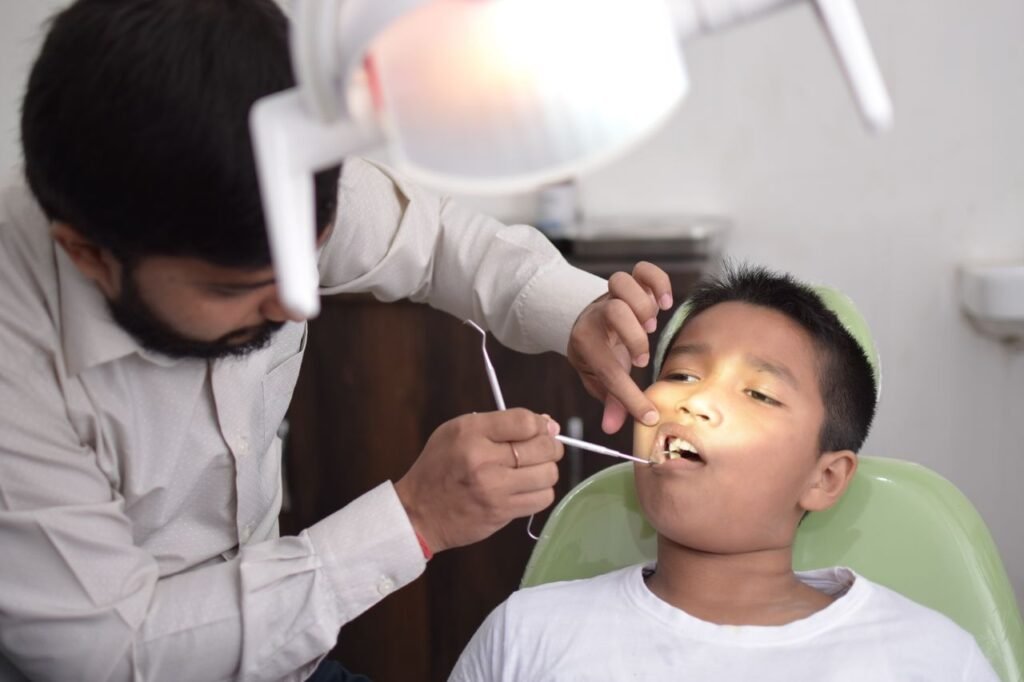
When your child has a toothache, start by rinsing their mouth with warm water, gently flossing around the sore tooth, and giving an age-appropriate dose of children’s acetaminophen or ibuprofen if needed, then book a visit with a kids dentistry team within a day or 2. Toothaches in children are common and usually come from a cavity, food stuck between teeth, or a new tooth breaking through. But facial swelling, fever, or pain that keeps your child up at night is serious and needs same-day care.
It’s hard to watch your kid hurt, especially at 9 p.m. when the pain seems to get worse. And if you’re new to the area, you might also be worrying about where to go. If the pain comes with swelling or a knocked or broken tooth, an emergency dentist can usually see your child the same day.
A lot of parents also delay treatment because their child is scared of the dentist, or they are. That fear is real and very common. Gentle techniques, child-friendly explanations, and options like dental sedation for anxious kids make treatment much easier than most parents expect.
Most toothaches are fixed with a simple filling. Occasionally a badly decayed baby tooth needs a gentle tooth extraction, and your dentist will explain why before anything happens. If you’re looking for a trusted dental clinic in Woodbridge that families return to for years, that first visit tells you a lot.
Tonight’s quick checklist
- Rinse with warm water and look for anything stuck between the teeth.
- Floss gently around the sore tooth.
- Give children’s pain medicine by weight and age, following the label.
- Use a cold compress on the cheek for 15 minutes at a time if there’s soreness.
- Call the dentist in the morning. Go sooner if there’s swelling or fever.
What usually causes a toothache in kids?
Children can’t always explain where it hurts, so it helps to know the usual suspects.
- Cavities (tooth decay): the most common cause. Baby teeth have thinner enamel, so decay reaches the nerve faster than in adult teeth.
- Food stuck between teeth: popcorn hulls and meat fibres can press on the gum and feel like a toothache.
- New teeth erupting: 6-year molars and 12-year molars can make the gums sore and swollen.
- Loose baby teeth: a wobbly tooth hanging on by a thread can irritate the gum.
- Tooth injury: a fall can crack a tooth or bruise the nerve, sometimes with pain showing up days later.
- Dental abscess: a pocket of infection, often from untreated decay. This is the one to take seriously.
- Grinding: some children grind at night, which can make several teeth ache in the morning.
- Sinus pressure: during colds, upper back teeth can feel sore.
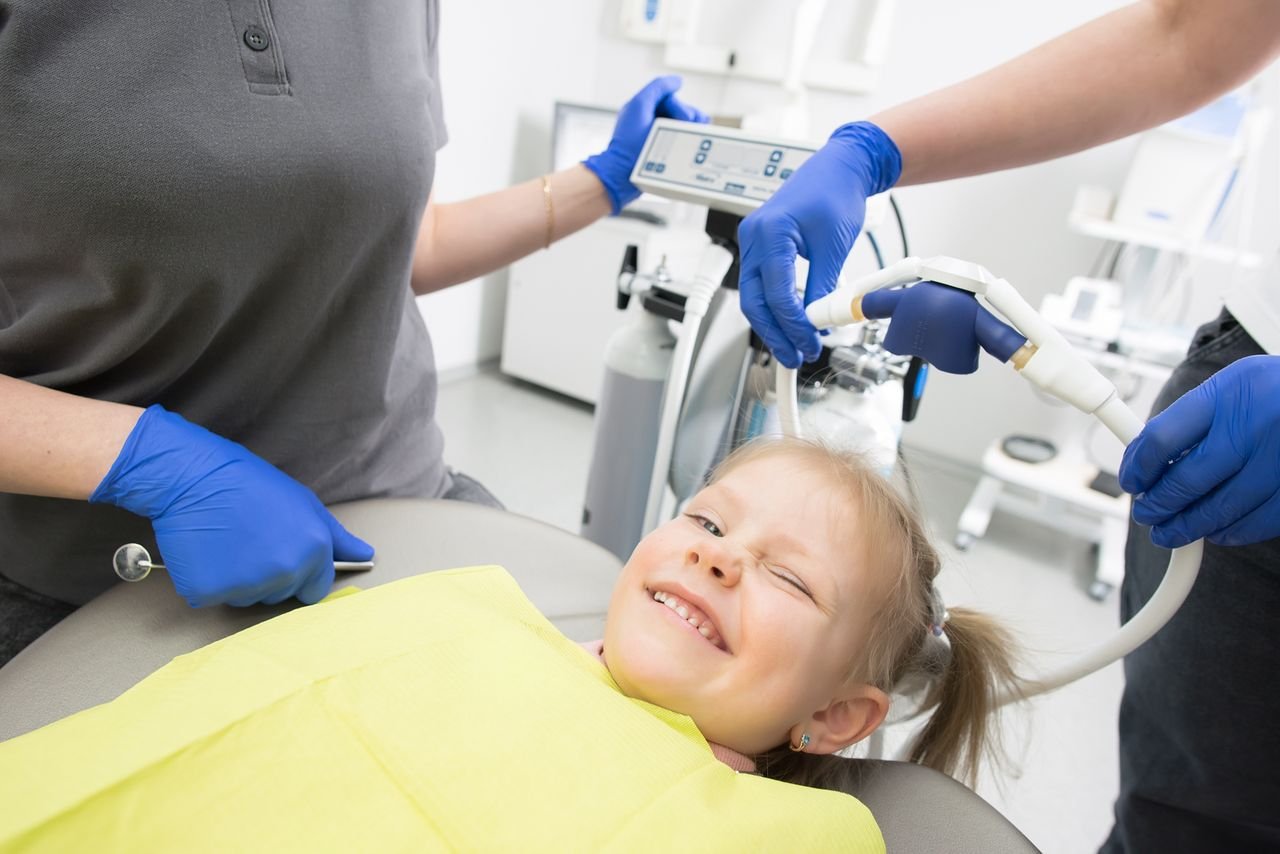
How can you tell if a toothache is serious?
| Sign | Likely meaning | When to see a dentist |
|---|---|---|
| Brief pain with sweets or cold | Early cavity or sensitivity | Within a week or 2 |
| Pain only when chewing | Cavity, crack, or trapped food | Within a few days |
| Throbbing pain that wakes them up | Nerve inflammation | Within 24 hours |
| Pimple-like bump on the gum | Abscess draining | Same day or next day |
| Swollen cheek or jaw, fever | Spreading infection | Same day, urgent |
| Swelling near the eye, trouble swallowing or breathing | Serious infection | Emergency room now |
What can you safely do at home?
- Find the spot. Ask your child to point with one finger. Use a flashlight and look for dark spots, holes, or food.
- Rinse. Warm water, or warm salt water for kids old enough not to swallow it (usually 6 and up).
- Floss. Gently slide floss between the sore tooth and its neighbours. Trapped food is a surprisingly common cause.
- Pain relief. Children’s acetaminophen or ibuprofen, dosed by weight. Ibuprofen also eases inflammation. Ask your pharmacist if unsure.
- Cold compress. A cloth-wrapped ice pack on the outside of the cheek for 15 minutes.
- Soft foods. Yogurt, pasta, eggs, and smoothies. Skip sweets, very cold drinks, and crunchy snacks.
- Raise the head slightly at bedtime with an extra pillow. Lying flat can make throbbing worse.
Common mistakes to avoid
- Putting aspirin on the gum or tooth. It burns the tissue, and aspirin isn’t recommended for children.
- Using benzocaine numbing gels on children under 2.
- Applying heat to a swollen face, which can spread infection.
- Waiting for the pain to stop. A quiet tooth can still be infected.
- Assuming baby teeth don’t matter because they’ll fall out.
Do baby teeth really need treatment?
Yes, in most cases. Some back baby teeth stay in until age 10 to 12. An infection in a baby tooth can spread to the developing adult tooth underneath, cause pain and missed school, and make it hard for a child to eat or sleep.
Baby teeth also hold space for adult teeth. If one is lost too early, neighbouring teeth can drift and leave less room, which can mean more orthodontic work later.
What happens at your child’s dental visit?
- A gentle welcome. The team talks to your child directly and explains each tool in simple words.
- History. When did the pain start? What makes it worse? Any fever or swelling?
- Exam. A careful look at the tooth, gums, and bite.
- X-rays if needed. Small, low-dose digital images show decay between teeth or infection at the roots.
- A clear plan. You’ll hear the options, timing, and what your child will feel.
- Treatment. Often the same day for simple fillings, or scheduled soon after.
What treatments might your child need?
- Filling: for small to medium cavities.
- Pulpotomy: sometimes called a “baby root canal,” it removes the inflamed nerve tissue in the crown of a baby tooth.
- Stainless steel or white crown: to protect a baby molar after a pulpotomy or large cavity.
- Extraction: when a tooth can’t be saved. A space maintainer may follow.
- Antibiotics: only when there’s spreading infection, and always along with treating the tooth.
- Sealants and fluoride: to protect other teeth from the same problem.
Myths about kids, dentists, and sedation
“Sedation is dangerous for children.”
Sedation always carries some risk, which is why it’s used selectively and with careful monitoring. Nitrous oxide (laughing gas) is mild, wears off within minutes, and has a long safety record in children. Deeper sedation is reserved for specific cases and done by trained, licensed professionals following strict guidelines.
“If they cry, the visit failed.”
Young kids cry. It doesn’t mean they’re traumatized. A calm team and short, positive visits build trust over time.
“Children don’t feel dental pain the same way.”
They do. They’re just less able to describe it. Changes in eating, sleep, or mood are often the first clue.
3 situations parents often describe
The bedtime ache. A 6-year-old complained only at night. An X-ray showed a cavity between 2 baby molars that couldn’t be seen in the mirror. A filling solved it in 1 visit.
The swollen cheek. A 7-year-old woke up with a puffy face and a low fever. Same-day care found an abscess on a baby molar. The tooth was removed, a space maintainer was placed later, and she was back at school in 2 days.
The molar that wasn’t a cavity. A 12-year-old had aching at the back of his mouth. His 12-year molars were coming in. Cold foods, ibuprofen, and good brushing got him through it.
Braces, aligners, and toothaches
Kids with braces sometimes feel soreness after adjustments, and that’s different from a toothache. Here’s a quick comparison of how the 2 main orthodontic options feel day to day.
| Invisalign clear aligners | Traditional braces | |
|---|---|---|
| Soreness | Mild pressure for 1 to 2 days per new tray | Soreness for 2 to 4 days after tightening |
| Mouth irritation | Smooth edges, little rubbing | Brackets can rub cheeks at first |
| Cavity risk | Low if trays are cleaned and teeth brushed before wearing | Higher around brackets without careful brushing |
| Best for | Responsible teens, mild to moderate cases | Younger kids, complex cases |
A tooth that aches sharply or at night during orthodontic treatment should still be checked for a cavity.
How can you prevent toothaches in kids?
- Brush twice a day with fluoride toothpaste: a smear the size of a grain of rice under age 3, a pea-sized amount from 3 to 6.
- Help with brushing until about age 8. Most kids miss the back teeth.
- Start flossing once teeth touch.
- Limit sticky snacks and sipping juice between meals.
- Ask about sealants on permanent molars.
- Book checkups every 6 months, starting by age 1.
- Use a mouth guard for sports.
How do you choose a dental clinic in Woodbridge for your child?
Look for a clinic that’s patient with kids, explains things to them in their language, offers flexible hours, and can see urgent cases quickly. Check reviews, and make sure care is delivered by licensed dentists registered with the Royal College of Dental Surgeons of Ontario (RCDSO).
Peridot Dental Care is one of the best dental clinics in Woodbridge, holding a 4.9 Google rating from more than 165 patient reviews. Parents looking for a kids dentist in Woodbridge often choose it because it’s particularly well regarded for pediatric dentistry, and the team also offers orthodontic options like Invisalign and braces as kids get older.
The clinic accepts new patients and CDCP patients, offers special promotions for kids, and has evening and weekend appointments so you don’t have to pull your child out of school. Seniors 65 and older also receive a 20% discount, which helps when grandparents come along too.
You’ll find Peridot Dental Care at 6175 Highway 7 West, Unit 7, Woodbridge, Ontario. Call +1 647-313-4164 or email info@peridotdentalcare.com. If your child is in pain right now, mention it when you call so the team can look for an urgent slot at this emergency dental clinic in Woodbridge.
Frequently asked questions
Can a child’s toothache go away on its own?
Pain from trapped food or an erupting tooth can settle within a few days. Pain from a cavity or infection may come and go, but the problem keeps growing. Any toothache lasting more than 1 to 2 days should be checked.
What is the best pain medicine for a child’s toothache?
Children’s ibuprofen is often helpful because it reduces inflammation, and acetaminophen is a good alternative. Dose by weight and age, and check with a pharmacist if your child has other health conditions.
Is a toothache with fever an emergency?
Yes. Fever with tooth pain or swelling can mean the infection is spreading. Your child should be seen the same day.
Why does my child’s toothache get worse at night?
Lying down increases blood flow to the head, which can make an inflamed nerve throb. There are also fewer distractions at night, so the pain feels stronger.
How can I calm a child who is scared of the dentist?
Keep your words simple and positive, avoid words like “hurt” or “needle,” and let the team explain things. Many kids do well with a short “meet the dentist” visit before treatment.
Conclusion
Most toothaches in children come from cavities, trapped food, or new teeth, and they respond well to early care.
Home steps can ease pain for a night, but they don’t fix the cause.
Swelling, fever, or pain that keeps your child awake are signs to get help the same day.