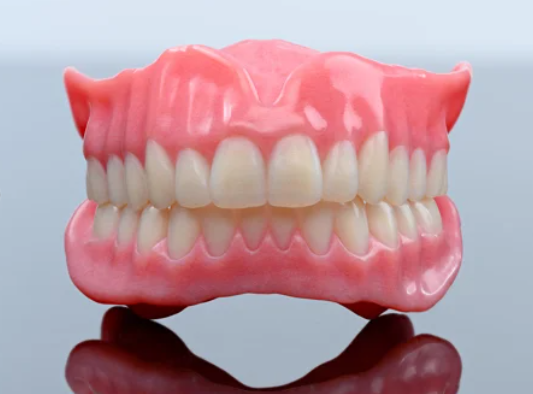
3D Printed Dentures: The Future of Dental Prosthetics
Technology is transforming the dental industry, and one of the most exciting advancements is 3D printed dentures.
Traditional dentures have long been the solution for people with missing teeth, but 3D printing is revolutionizing the way dentures are made.
This new method offers better comfort, faster production, and improved customization.
What Are 3D Printed Dentures?
3D printed dentures are created using advanced digital technology.
Unlike traditional dentures, which are made through a time-consuming process involving molds and manual adjustments.
3D printing uses computer-aided design (CAD) and additive manufacturing to produce high-quality dentures with precision.
The process involves:
- Digital Scanning: A digital impression of the patient’s mouth is taken.
- Design & Customization: CAD software is used to create a perfect denture design.
- 3D Printing: Special materials like biocompatible resin are used to print the dentures layer by layer.
- Finishing & Fitting: The dentures are polished, adjusted, and fitted to the patient’s mouth.
Benefits of 3D Printed Dentures
1. Faster Production
Traditional dentures can take weeks to be made, as they require multiple fittings and adjustments. With 3D printing, dentures can be produced in a matter of days, reducing wait times significantly.
2. Better Fit and Comfort
Because 3D printing allows for precise measurements, the final dentures fit more comfortably than traditional ones. This reduces common issues such as slipping, irritation, and sore spots.
3. Cost-Effective Solution
Since the process is more efficient and requires fewer visits, it often reduces the overall cost of getting dentures.
4. Durability and Strength
3D printed dentures are made using high-quality materials that are durable and resistant to wear and tear, making them a long-lasting option.
5. Easy Replacements and Repairs
If dentures are lost or damaged, the digital design can be used to quickly print a new set without needing to redo the entire process from scratch.
How Do 3D Printed Dentures Compare to Traditional Dentures?
| Feature | 3D Printed Dentures | Traditional Dentures |
| Production Time | Few days | Several weeks |
| Customization | Highly precise | Requires manual adjustments |
| Fit & Comfort | Better fit due to digital scanning | May require multiple adjustments |
| Durability | Strong, resistant materials | Can be fragile, prone to wear |
| Cost | Generally more affordable | More expensive due to labor costs |
Who Can Benefit from 3D Printed Dentures?
Anyone who needs dentures can benefit from 3D printing technology. It is particularly useful for:
- Elderly individuals who need full dentures
- Patients with missing teeth who want partial dentures
- People looking for a quick and reliable replacement for lost or broken dentures
Caring for Your 3D Printed Dentures
To keep your dentures in excellent condition, follow these simple care tips:
- Clean Daily: Use a soft brush and non-abrasive cleaner to remove plaque and food particles.
- Avoid Hot Water: Extremely hot water can warp the material.
- Store Properly: When not in use, keep them in a denture case with clean water.
- Visit Your Dental Professional Regularly: Regular check-ups ensure your dentures remain in good condition and fit properly.
Denture Care in Woodbridge and Vaughan
If you’re looking for expert care in Ontario, Peridot Dental Care is one of the best options for a comfortable and effective root canal treatment.
Their experienced team provides high-quality dental solutions, ensuring you get the best care possible.
Contact Peridot Dental Care:
- Phone: +1 647-313-4164
- Email: info@peridotdentalcare.com
- Address: 6175 Highway 7 West, Unit 7, Woodbridge, Ontario
Inside the Digital Denture Workflow
General dentist registered with the Royal College of Dental Surgeons of Ontario (RCDSO), practising at Peridot Dental Care in Woodbridge. Last reviewed November 2026. This guide is general information and does not replace an exam with your own dentist.
3D printed dentures follow the same clinical steps as any denture: records of your mouth, a check of the bite and appearance, and adjustments after delivery. What changes is how the denture is designed and produced.
- Records: your dentist takes impressions or an intraoral scan, plus bite records showing how your jaws meet.
- Digital design: a technician designs the gums and teeth on a computer, setting tooth size, shape and position.
- Try-in: a printed trial denture is often made so you can check fit, bite and appearance before the final set.
- Printing: the base and teeth are printed in layers from dental resins, then cured with light.
- Finishing: the denture is polished and, in some workflows, the teeth are bonded into the printed base.
- Fitting and follow-up: the dentist adjusts pressure spots and checks the bite over the first weeks.
Are 3D printed dentures as strong as traditional ones?
Printing resins have improved a lot, but traditionally processed acrylic is still considered tougher in some situations, especially for people who bite very hard. Many offices use printing for trial dentures, spare sets and some final dentures, and choose the method case by case.
Is the fit better with a printed denture?
Fit depends mainly on the quality of the records and the design, not just the machine. A good impression and careful bite record matter as much as the printing method.
Can a printed denture be repaired or relined?
Many can, but the repair method depends on the resin used. Ask how repairs and relines will be handled before you choose.
3D Printed Versus Traditional Processed Dentures
| Feature | 3D printed | Traditional processed |
|---|---|---|
| Design | On a computer, saved as a file | Set up by hand in wax |
| Spare or replacement set | Can be reprinted from the saved design | Usually remade from new records |
| Strength | Good, varies by resin | Well established |
| Shade and texture options | Improving, sometimes more limited | Wide choice of teeth and gum shades |
| Try-in | Printed trial denture | Wax try-in |
Who Is a Good Candidate for 3D Printed Dentures?
- People who want a spare set kept on file in case of loss or breakage
- Patients who need a trial denture to test appearance and bite first
- People getting implant-retained dentures, where digital planning is common
- Those who struggle with traditional impressions and may suit a scan
They may be less suited to very heavy grinders or people who want highly customised gum colouring, depending on the materials available.
Your gums and bone change over time. A saved design helps with emergency replacements, but after a while new records are needed so the denture still fits.
Caring for a 3D Printed Denture
- Brush it daily with a soft denture brush and a non-abrasive cleaner.
- Soak it overnight in water or a cleaner recommended for its resin.
- Avoid hot water, bleach and whitening toothpaste, which can damage printing resins.
- Rinse after meals and handle it over a towel or a sink of water.
- Bring it to regular checks so the fit and bite can be reviewed.
Different printing resins have different strength and care needs. Ask which material your denture uses and which cleaners are safe for it.
What Should I Ask Before Choosing a Printed Denture?
- Which parts will be printed, and which will be made traditionally?
- Will I see a try-in denture before the final set?
- Can a spare set be made from the saved design, and for how long?
- How will repairs and relines be handled for this material?
Clear answers help you compare a printed denture with a traditional one fairly.
Coverage and the Canadian Dental Care Plan
Complete and partial dentures can be covered under the Canadian Dental Care Plan (CDCP) for eligible members, and some need preauthorization. Coverage is based on the type of denture, not the method used to make it. The CDCP does not cover implant-supported dentures. A co-payment may apply depending on family income. OHIP does not cover dentures made in a dental office.
Digital Dentures at Peridot Dental Care
Peridot Dental Care is at 6175 Highway 7 West, Unit 7, Woodbridge, and sees patients from Woodbridge, Vaughan, Kleinburg and Maple. Every plan starts with an exam, a clear explanation of your options and a written estimate before treatment begins. You can learn more about our team and read patient reviews on our about page.
Call 647-313-4164 or book an appointment online to talk through your situation with our dentist.
Learn about dentures in Woodbridge, see pictures of dentures that look real, read about soft liners for dentures, see what a hybrid denture is or learn about dental implants.
Frequently Asked Questions (FAQ)
How long do 3D printed dentures last?
It depends on the resin and on changes in your mouth. Regular checks and relines help them last.
Are 3D printed dentures cheaper?
Not always. The cost depends on the materials, the number of visits and the design work involved.
Can I get a spare set printed?
Often, yes, from your saved design, as long as your mouth has not changed much.
Do 3D printed dentures look natural?
They can look very natural, especially with a careful digital design and try-in.
Are printed dentures strong enough to chew normally?
Yes for most people, though very heavy biters may be advised to choose a different material.
Does the CDCP cover 3D printed dentures?
Coverage is based on the denture type, not how it is made, for eligible members.
Can a 3D printed denture be relined?
Many can, depending on the resin. Ask before choosing.
1. How long do 3D printed dentures last?
3D printed dentures can last anywhere from 5 to 10 years with proper care. Regular dental visits and good hygiene can extend their lifespan.
2. Are 3D printed dentures comfortable to wear?
Yes, because they are designed with precision, they offer a better fit and more comfort compared to traditional dentures.
3. Can I eat normally with 3D printed dentures?
Yes, you can eat most foods, but it’s best to start with softer foods and gradually introduce harder foods as you get used to them.
4. How long does it take to make 3D printed dentures?
In most cases, 3D printed dentures can be made in just a few days, whereas traditional dentures may take weeks.
5. Do 3D printed dentures look natural?
Yes, modern 3D printing technology allows for a highly realistic appearance, mimicking the look of natural teeth and gums.
Conclusion
3D printed dentures are revolutionizing the dental industry by offering a faster, more comfortable, and cost-effective alternative to traditional dentures.
Whether you need full or partial dentures, 3D printing provides a reliable and long-lasting solution.
For expert dental care in Ontario, contact Peridot Dental Care at +1 647-313-4164 or email info@peridotdentalcare.com to schedule an appointment today.
Looking for care in Woodbridge? Learn more about dentures at Peridot Dental Care, or book an appointment with our team on Highway 7 West.