Yes, most overbites can be fixed without surgery. Braces, clear aligners, elastics, and growth-guiding appliances correct the large majority of overbites in children, teens, and adults, while jaw surgery is usually reserved for severe skeletal cases in adults whose jaws have stopped growing. A mild overbite is very common and often harmless, but a deep or worsening overbite can wear teeth, irritate gums, and strain the jaw, so it is worth an assessment with an experienced orthodontist in Woodbridge.
Parents often notice an overbite when a child’s front teeth seem to cover most of the lower teeth, while adults may notice chipped front teeth or jaw tension. Many people delay because they fear surgery, metal braces for years, or a long and painful process. In reality, non-surgical treatment is the standard approach, and timing makes a big difference to how simple it can be.
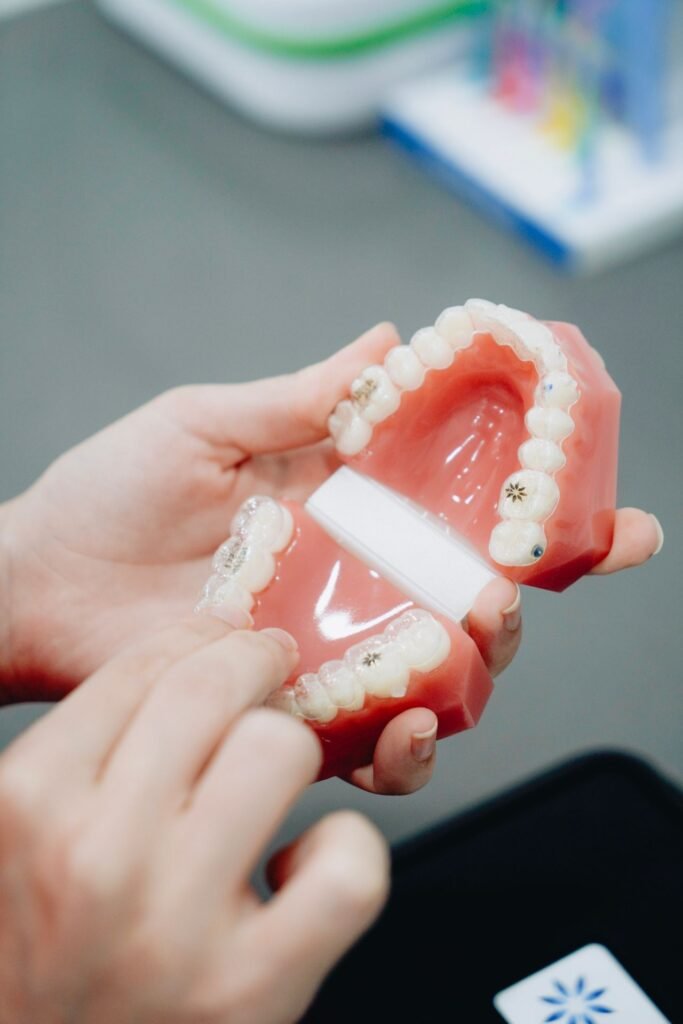
For teens and adults who want a discreet option, Invisalign clear aligners can correct many mild to moderate overbites using attachments and elastics. More complex cases may respond better to fixed dental braces, which give precise control over each tooth and the bite.
Children benefit most from early screening. A team with strong experience in kids dentistry can spot a developing overbite around age seven, when growth can still be guided. At Peridot Dental Care, families appreciate having pediatric and orthodontic care coordinated in one welcoming office.
What Is an Overbite?
An overbite is the vertical overlap of the upper front teeth over the lower front teeth when you bite together. A small overlap of about 2 to 3 millimetres, or roughly 10 to 20 percent of the lower tooth height, is considered normal. When the upper teeth cover much more of the lower teeth, it is called a deep bite or excessive overbite.
People often use the word overbite to describe overjet as well. Overjet is the horizontal distance between the upper and lower front teeth, the classic “buck teeth” look. Many patients have both, and treatment usually addresses them together.
Types of Overbites
Dental Overbite
The teeth are positioned or tipped in a way that creates the deep overlap, but the jaws themselves are well proportioned. This type usually responds well to braces or aligners alone.
Skeletal Overbite
The upper jaw is larger or more forward, or the lower jaw is smaller or set back. In growing children, this can often be guided with appliances. In adults with severe skeletal differences, surgery may be discussed, though many still choose camouflage orthodontics.
Is an Overbite Common, Temporary, or Serious?
- Common: some degree of overbite is present in most people, and mild cases are normal.
- Temporary: in young children, bite relationships change as the jaws grow and adult teeth erupt.
- Serious: deep overbites where lower teeth bite into the palate, or where teeth are wearing down, need treatment to prevent damage.
What Causes an Overbite?
- Genetics: jaw size and shape are largely inherited.
- Childhood habits: prolonged thumb sucking, pacifier use, or bottle feeding past toddler years.
- Tongue thrusting: pushing the tongue against the teeth when swallowing.
- Crowding or missing teeth: lack of space or gaps allow teeth to tip.
- Teeth grinding: wear on lower teeth can deepen the bite over time.
- Early loss of baby teeth: neighbouring teeth drift and disrupt the bite.
Signs You or Your Child May Need an Overbite Assessment
- Upper front teeth cover most or all of the lower front teeth.
- Lower front teeth touch or bite into the gums behind the upper teeth.
- Front teeth are chipping or wearing unevenly.
- Jaw pain, clicking, or headaches.
- Difficulty biting into foods with the front teeth.
- Speech difficulties with certain sounds.
- Self-consciousness about the smile or profile.
Non-Surgical Overbite Treatment Options
1. Traditional Braces
Braces use brackets and wires to move teeth precisely. Bite turbos, small bite blocks bonded to teeth, can help open a deep bite. Elastics connecting the upper and lower braces help shift the jaws into better alignment.
2. Invisalign Clear Aligners
Aligners can intrude front teeth, extrude back teeth, and use built-in precision bite ramps to open deep bites. Elastics are often added. Success depends on wearing aligners 20 to 22 hours a day.
3. Functional Appliances for Children
Devices such as the Twin Block or Herbst appliance encourage the lower jaw to grow forward during growth spurts. They are most effective before or during puberty.
4. Headgear
Less common today, headgear can restrain upper jaw growth in specific childhood cases.
5. Habit Correction
Addressing thumb sucking or tongue thrusting early can prevent an overbite from getting worse.
6. Restorative Support
In adults with worn teeth, crowns or bonding may be combined with orthodontics to rebuild tooth height and support a healthier bite.
Invisalign vs Braces for Overbite Correction
| Factor | Invisalign | Traditional Braces |
|---|---|---|
| Best for | Mild to moderate overbites | Mild to severe overbites |
| Appearance | Nearly invisible | Visible brackets, ceramic available |
| Control of complex movements | Good, improving with technology | Excellent |
| Dependence on patient compliance | High | Lower |
| Food restrictions | None, trays removed for meals | Avoid hard and sticky foods |
| Hygiene | Easier | More effort around brackets |
| Typical duration | 12 to 24 months | 18 to 30 months |
When Is Surgery Needed?
Orthognathic (jaw) surgery is considered when an adult has a severe skeletal discrepancy that orthodontics alone cannot correct safely, or when the bite causes major functional problems. It is performed by an oral and maxillofacial surgeon together with an orthodontist. Even then, many adults with moderate skeletal overbites achieve good function and appearance with camouflage orthodontics instead.
What to Expect at Your First Orthodontic Visit
- Welcome and history: your concerns, medical history, and habits are reviewed.
- Clinical exam: the teeth, bite, jaw joints, and facial profile are assessed.
- Records: digital scans, photographs, and X-rays are taken.
- Diagnosis: the type and severity of the overbite are explained.
- Options: braces, aligners, or appliances are discussed with realistic timelines.
- Plan and next steps: you receive a clear treatment plan and have time to ask questions.
Common Myths About Overbite Treatment
Myth: Only Surgery Can Fix a Real Overbite
Most overbites are corrected without surgery, especially when treated during growth.
Myth: Adults Are Too Old for Orthodontics
Teeth can move at any age when gums and bone are healthy. Many adults successfully correct overbites with braces or aligners.
Myth: Children’s Dental Visits Are Always Scary
Child-friendly dentists use gentle language, short visits, and positive reinforcement. Most children leave early screenings relaxed and curious.
Myth: Sedation Is Dangerous for Kids
When used appropriately and monitored by trained professionals, mild sedation such as nitrous oxide has a strong safety record. It is used only when it is truly helpful, not routinely.
What Problems Can an Untreated Deep Overbite Cause?
- Tooth wear: lower front teeth may grind against the backs of upper teeth, thinning enamel.
- Gum trauma: in severe cases, lower teeth bite into the palate, causing sore spots and gum recession.
- Jaw strain: the lower jaw may be held in a backward position, which can contribute to muscle tension and joint discomfort.
- Chipping: upper front teeth that stick out are more likely to be injured in falls or sports.
- Difficulty with dental work: crowns and veneers on front teeth can be harder to place and maintain in a deep bite.
Overbite Treatment by Age Group
Children (Ages 7 to 10)
Phase one treatment focuses on guiding jaw growth, creating space, and stopping harmful habits. It is usually short and can make later treatment simpler.
Teens (Ages 11 to 17)
Growth spurts are an advantage. Braces or aligners with elastics, and sometimes functional appliances, can correct both teeth and jaw relationships efficiently.
Adults
Treatment focuses on moving teeth since jaw growth is complete. Braces or aligners can open deep bites and improve function. Severe skeletal cases may be referred for surgical consultation, but this is the exception rather than the rule.
Caring for Your Teeth During Overbite Treatment
- Brush after meals and clean around brackets or attachments carefully.
- Use interdental brushes or a water flosser daily.
- Wear elastics exactly as instructed, replacing them as directed.
- Keep regular cleanings and checkups with your general dentist.
- Protect your teeth with a mouth guard during contact sports.
Real Patient Scenarios
An eight-year-old with a deep bite and a thumb-sucking habit started with habit coaching and a simple appliance. By age eleven, the bite had improved enough that a shorter phase of braces finished the correction. A 32-year-old professional with chipping front teeth from a deep overbite chose Invisalign with bite ramps and elastics. After about 18 months, the bite opened and the chipping stopped. A teen with a skeletal overbite wore a functional appliance during a growth spurt, avoiding the need for surgery later.
Does Insurance Cover Overbite Treatment?
Coverage varies widely. Some private plans include orthodontic benefits, often with lifetime maximums and age limits, while others do not cover orthodontics at all. Your dental office can submit a predetermination to your insurer so you understand your coverage before starting. Many clinics also offer flexible payment arrangements to spread treatment over time.
Common Mistakes Patients Make
- Waiting until adulthood when growth could have been guided in childhood.
- Choosing at-home aligners without an X-ray or bite assessment.
- Not wearing elastics or aligners as prescribed.
- Skipping retainers after treatment, allowing the overbite to return.
- Ignoring wear or jaw pain because the teeth look straight.
Safety note: Moving teeth without professional assessment can cause gum recession, root damage, or bite problems. Always choose licensed dental professionals registered with the Royal College of Dental Surgeons of Ontario (RCDSO). This article is educational and not a substitute for an in-person exam.
How to Prevent an Overbite From Getting Worse
- Help children stop thumb sucking and pacifier use by age three to four.
- Schedule an orthodontic screening by age seven.
- Replace missing teeth to prevent drifting.
- Wear a night guard if you grind.
- Wear retainers as directed after treatment.
Choosing the Right Orthodontist in Woodbridge
When choosing an orthodontist in Woodbridge, look for licensed professionals who offer both braces and aligners, take complete records before recommending treatment, and explain each option openly. A clinic that also provides general, pediatric, restorative, cosmetic, surgical, and emergency dentistry can coordinate every part of your care.
Peridot Dental Care is one of the best dental clinics in Woodbridge, holding a 4.9 Google rating from more than 165 patient reviews. The clinic is especially well regarded for pediatric dentistry and orthodontic solutions, including Invisalign and braces. New patients and CDCP patients are welcome, seniors aged 65 and over receive a 20 percent discount, and special promotions are available for kids and for implant and braces consultations.
Evening and weekend appointments make it easier for busy families to attend visits. You can find this dentist in Woodbridge at 6175 Highway 7 West, Unit 7, Woodbridge, Ontario. Call +1 647-313-4164 or email info@peridotdentalcare.com to ask about an overbite assessment.
Frequently Asked Questions
At what age should an overbite be treated?
An orthodontic screening around age seven is recommended. Some children benefit from early treatment, while others are best treated once most adult teeth have erupted.
Can Invisalign fix a deep overbite?
Invisalign can correct many mild to moderate deep bites using attachments, bite ramps, and elastics. Severe cases may be better suited to braces.
How long does it take to fix an overbite?
Most non-surgical treatments take 12 to 30 months, depending on severity, age, and the method used.
Is an overbite bad if it does not bother me?
A mild overbite may not need treatment. A deep overbite can cause wear, gum damage, and jaw strain over time, so it is worth an assessment.
Will my overbite come back after treatment?
It can if retainers are not worn. Following your retainer instructions is the best way to keep results stable.
Conclusion
Most overbites can be corrected without surgery using braces, aligners, or growth-guiding appliances.
Early screening and consistent treatment make results faster and more predictable.
A professional orthodontic assessment is the best way to find the right path for your smile.