
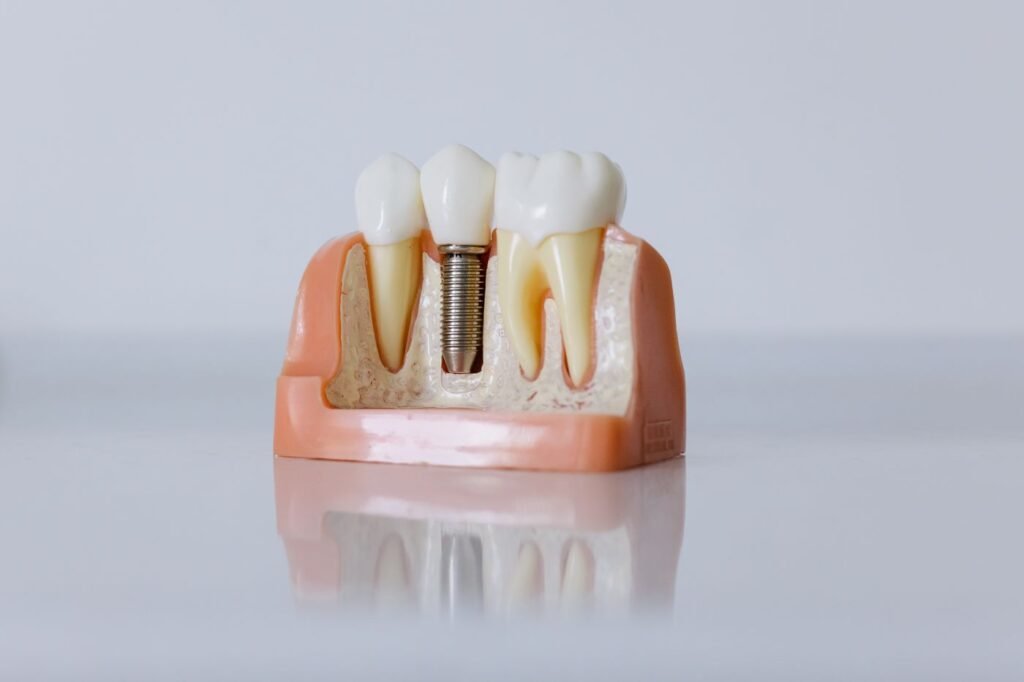
The cost of implant dentures is shaped by the number of implants, the type of attachment (locator, ball, or bar), whether the denture is removable or fixed, and any extra procedures like extractions or bone grafts. Implant dentures are a safe and highly satisfying upgrade for many denture wearers, but they need surgery, healthy bone, and regular maintenance to last. At our dental clinic in Woodbridge, estimates are broken into surgery, attachments, and denture costs so you can compare clearly.
Patients often feel uncertain about trusting a clinic with implant surgery and worry about being upsold to more implants than needed. A trusted family clinic shows you the scan and explains why each implant is placed. Learn more on our dental implants in Woodbridge page.
If your current denture fits well, it may be possible to convert it, saving cost. See our dentures in Woodbridge page.
Patients needing teeth removed first can plan tooth extraction and implants together.
Peridot Dental Care, 6175 Highway 7 West, Unit 7, Woodbridge, Ontario, holds a 4.9 Google rating from 165+ reviews, offers implant consultation promotions, a 20% senior discount for 65+, and accepts new and CDCP patients. Evening and weekend appointments are available at +1 647-313-4164 or info@peridotdentalcare.com.
Attachment Types and Relative Cost
| Attachment | Implants | Stability | Relative cost |
|---|---|---|---|
| Locator | 2 to 4 | Good to very good | Moderate |
| Ball attachment | 2 | Good | Moderate |
| Bar-retained | 3 to 4 | Very good | Higher |
| Fixed screw-retained | 4 to 6 | Excellent | Highest |
Line Items in a Typical Estimate
- Consultation and 3D scan
- Implant placement surgery
- Attachments or bar
- New or converted denture
- Sedation if chosen
- Follow-up and insert replacements
Related Dental Services
Treatment Steps
- Scan and consultation.
- Line-item estimate.
- Implant surgery.
- Healing with current denture relined.
- Attachments connected.
- Final fit and checks.
Signs Implant Dentures Could Help
- A lower denture that floats
- Daily adhesive
- Avoiding foods
- Sore spots
Invisalign vs Braces: For Family Members
| Point | Invisalign | Braces |
|---|---|---|
| Look | Clear | Visible |
| Best for | Mild to moderate | Complex |
Choosing a Clinic
Choose a dentist in Woodbridge licensed by the Royal College of Dental Surgeons of Ontario (RCDSO) who provides line-item estimates.
Patient Scenarios
Converting an existing denture
Two implants and locators were added to a well-fitting denture.
New bar-retained denture
Extra stability for an upper arch with softer bone.
Common Mistakes
- Comparing quotes without line items
- Forgetting insert replacement costs
- Skipping checkups
Implants need healthy gums. Bleeding around attachments should be checked.
Myths About Sedation and Kids’ Dentistry
Maintenance Tips
- Clean attachments daily
- Replace inserts yearly
- Keep regular cleanings
Thinking About Cost Over a Decade, Not a Day
General dentist registered with the Royal College of Dental Surgeons of Ontario (RCDSO), practising at Peridot Dental Care in Woodbridge. Last reviewed November 2026. This guide is general information and does not replace an exam with your own dentist.
The first estimate for implant dentures can be a shock compared with a conventional denture. A fairer comparison looks at what each option costs to own over ten to fifteen years, including relines, repairs, replacements and the effect on daily life.
What does a conventional denture cost to own?
A conventional complete denture has a lower upfront cost and is covered by the Canadian Dental Care Plan for eligible members. Over the years, the gums and bone beneath it keep changing, so most people need relines every few years and a new denture after several years as teeth wear. Some people also spend steadily on adhesives and cushions, especially for loose lower dentures.
What does an implant denture cost to own?
The upfront cost is higher because of the implants, surgery and attachments. Afterwards, the inserts that grip the implants need replacing periodically, the denture still needs occasional relines, and the denture itself is eventually replaced. The implants usually stay in place long term. Many people use little or no adhesive.
| Cost element | Conventional denture | Snap-in implant denture | Fixed implant bridge |
|---|---|---|---|
| Upfront treatment | Lowest | Moderate to high | Highest |
| Relines | Every few years | Less often | Not applicable; bridge maintenance instead |
| Wear parts | None | Inserts every year or two | Screws checked; occasional replacement |
| Replacement of teeth or denture | Every several years | Denture every several years | Teeth or bridge after many years |
| Adhesive and cushions | Often ongoing | Rarely needed | Not needed |
| CDCP coverage | Yes, for eligible members | No | No |
Where the Money Goes at Each Stage
Seeing the costs by stage helps you plan and spot anything missing from an estimate.
- Consultation and 3D scan: Checks bone and plans implant positions.
- Extractions or grafts, if needed: Prepares the jaw.
- Implant placement: The implants, surgery and any sedation.
- Healing period: Adjustments to your current denture so it does not press on the implants.
- Connection: Attachments placed on the implants and housings picked up into the denture, or a new denture made.
- Maintenance: Insert changes, cleanings, relines and checkups.
Estimates sometimes leave out the scan, temporary denture adjustments or the first set of replacement inserts. A stage-by-stage estimate makes comparisons easier.
A Staged Approach That Uses Coverage
Many patients spread the cost of implant dentures by staging treatment, and some use public coverage for the denture itself.
- Start with a conventional denture. If you qualify for the CDCP, ODSP or the Ontario Seniors Dental Care Program, a conventional denture may be covered. Ask for it to be designed so attachments can be added later.
- Add implants when ready. Two implants under a lower denture can be placed months or years later, and the attachments picked up into the existing denture if it is suitable.
- Upgrade gradually. Some people add more implants or move to a bar or fixed bridge later.
If implants are likely later, tell your dentist before the conventional denture is made. Small design choices make conversion simpler and avoid paying for a second denture.
Value You Do Not See on the Estimate
Cost is not only financial. Patients with loose lower dentures often avoid certain foods, worry about the denture moving in conversation, and live with sore spots. Implant dentures typically improve chewing, comfort and confidence, and implants help preserve the bone they sit in. Whether that value justifies the cost is a personal decision, and a good dentist will present both paths fairly.
Questions to Compare Implant Denture Estimates
- How many implants are planned, and why that number?
- Which attachment system is used, and how much do replacement inserts cost?
- Can my current denture be used, or is a new one included?
- Is a metal reinforcement included in the denture?
- Are the scan, sedation and follow-up visits included?
- What is the plan and cost if an implant does not integrate?
Coverage and the Canadian Dental Care Plan
The Canadian Dental Care Plan (CDCP) excludes implants and all implant-related procedures, including implant-retained dentures and attachment work. It covers conventional complete and partial dentures, relines and repairs for eligible members, some with preauthorization, with a co-payment depending on family income. ODSP covers conventional dentures but not implants for routine tooth replacement. Private plans vary; some pay an alternate benefit equal to a conventional denture.
Implant Dentures at Peridot Dental Care
Peridot Dental Care is at 6175 Highway 7 West, Unit 7, Woodbridge, and sees patients from Woodbridge, Vaughan, Kleinburg and Maple. Every plan starts with an exam, a clear explanation of your options and a written estimate before treatment begins. You can learn more about our team and read patient reviews on our about page.
Call 647-313-4164 or book an appointment online to talk through your situation with our dentist.
See our denture services and dental implants, compare implant-supported denture costs and implant denture prices, or read about affordable denture implants.
Does the upper or lower jaw change the cost?
Yes. A lower implant denture can often be stabilized with two implants placed in the front of the jaw, where bone is usually dense. An upper implant denture usually needs at least four implants because the bone is softer, and sinus areas may need grafting. More implants and grafting raise the cost.
What about mini implants?
Mini implants cost less per implant and may suit narrow lower ridges. Because each carries less load, more are usually placed, so the total can end up closer to a standard implant plan than expected. They are also less repairable if the top part wears.
How do insert costs add up?
Inserts are small and inexpensive individually, but they are replaced regularly, often every year or two. Over ten years they become a predictable maintenance cost, much like replacing tires on a car.
- Lower jaw: two implants is common.
- Upper jaw: four or more is common.
- Plan for insert changes as routine upkeep.
Frequently Asked Questions
Can my old denture be used with implants?
Sometimes, if it fits well.
Which attachment is most affordable?
Locator or ball attachments are often entry options.
Are fixed implant dentures more expensive?
Yes, usually.
Is surgery painful?
Most patients report mild discomfort.
Do seniors save?
Yes, 20% for patients 65+.
Are implant dentures cheaper in the long run?
Not always, but the gap narrows over time because they need fewer relines and less adhesive, while the implants usually last long term. Comfort and chewing often improve significantly.
Can I use CDCP coverage toward implant dentures?
The CDCP does not cover implants or implant dentures, but it may cover a conventional denture that can later be adapted to implants.
Conclusion
Implant denture cost depends on implants, attachments, and design.
Line-item estimates make comparison easy.
Peridot Dental Care helps you find the right implant denture for your needs.