When it comes to enhancing your smile or restoring damaged teeth, two of the most popular solutions are dental crowns and veneers. While both can dramatically improve the appearance of your teeth, they serve different purposes, have distinct procedures, and are suited for different dental needs. Understanding the differences will help you make an informed decision in consultation with a trusted Dental Clinic in Woodbridge like Peridot Dental Care, one of the best clinics in Woodbridge.
In this guide, we’ll compare dental crowns and veneers in detail, looking at their benefits, applications, and which situations they work best for.
What is a Dental Crown?
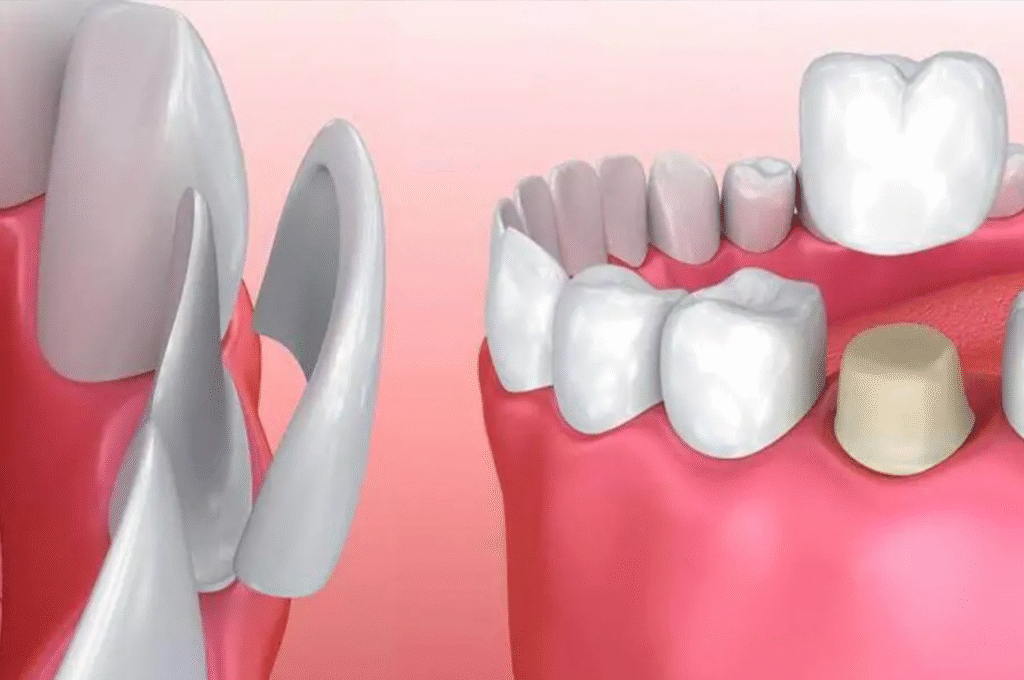
A dental crown is a tooth-shaped cap that completely covers a damaged, decayed, or weakened tooth. Crowns are often used to restore strength, function, and aesthetics when the natural tooth structure is compromised. They can be made from porcelain, ceramic, metal, or a combination of materials, depending on your needs.
For patients who have undergone significant tooth repair or root canal treatment, a crown is often the go-to option. A skilled Dentist in Woodbridge can help determine the best crown material for both durability and natural appearance.
What is a Veneer?
A veneer is a thin shell, usually made of porcelain or composite resin, that is bonded to the front surface of a tooth. Veneers are primarily used for cosmetic purposes, such as improving the appearance of stained, chipped, or slightly misaligned teeth.
Unlike crowns, veneers require minimal removal of the tooth’s natural surface. This makes them a popular choice for people who want a smile makeover without extensive dental work. For example, if you’re considering a cosmetic upgrade, Dental Veneers in Woodbridge can transform your smile in just a few visits.
Key Differences Between Crowns and Veneers
While both crowns and veneers enhance the look of teeth, their functions and applications differ significantly.
1. Coverage
- Crown: Covers the entire tooth.
- Veneer: Covers only the front surface of the tooth.
2. Purpose
- Crown: Strengthens and restores damaged teeth.
- Veneer: Improves the appearance of healthy teeth with minor imperfections.
3. Material Thickness
- Crown: Thicker and requires more tooth reshaping.
- Veneer: Thin and needs minimal enamel removal.
4. Durability
- Crown: Extremely durable and resistant to cracking.
- Veneer: Long-lasting but slightly less resistant to heavy biting forces.
When to Choose a Dental Crown
You may need a dental crown if:
- Your tooth is significantly decayed or damaged.
- You have a large filling and not much natural tooth left.
- Your tooth has undergone a root canal.
- You want to cover a severely discolored tooth that veneers cannot conceal.
If you’re considering this restorative option, Dental Crown in Woodbridge services provide long-lasting solutions for both function and aesthetics.
When to Choose a Veneer
Veneers are an excellent choice if:
- Your teeth are stained or discolored but otherwise healthy.
- You have minor chips or cracks.
- Your teeth are slightly misaligned or uneven in size.
- You want a dramatic cosmetic improvement with minimal tooth alteration.
Pros and Cons
For better comparison, here are the pros and cons for both dental crown and veneers for the correct decision for your needs.
Dental Crowns
Pros:
- Strong and durable
- Restores function for chewing
- Protects weakened teeth
Cons:
- Requires more tooth reduction
- More invasive procedure
Veneers
Pros:
- Minimal tooth alteration
- Natural, attractive appearance
- Quick cosmetic transformation
Cons:
- Not suitable for severely damaged teeth
- Less durable under high biting pressure
The Procedure: Crown vs Veneer
Crown Procedure:
- The dentist reshapes the tooth to fit the crown.
- An impression is taken for a custom fit.
- A temporary crown is placed.
- The permanent crown is cemented at a later appointment.
Veneer Procedure:
- A small amount of enamel is removed from the tooth surface.
- An impression is taken for custom fabrication.
- Temporary veneers may be placed.
- The permanent veneers are bonded with dental cement.
Both treatments require precision, artistry, and experience, which is why working with a trusted clinic like Peridot Dental Care is essential for the best outcome.
Cost Considerations
While exact costs depend on various factors, veneers are generally less expensive than crowns for a single tooth. However, crowns may be more cost-effective in the long term for teeth that need extensive structural support. Your dentist will help determine which treatment offers the best value for your situation.
Longevity and Care
With proper care:
- Crowns can last 10–15 years or longer.
- Veneers can last 7–15 years.
Daily brushing, flossing, and regular dental checkups will help maintain both crowns and veneers for years to come.
How Much Tooth Does Each Option Remove?
General dentist registered with the Royal College of Dental Surgeons of Ontario (RCDSO), practising at Peridot Dental Care in Woodbridge. Last reviewed November 2026. This guide is general information and does not replace an exam with your own dentist.
One of the biggest differences between a crown and a veneer is how much natural tooth is reshaped. This matters because enamel does not grow back.
| Feature | Veneer | Crown |
|---|---|---|
| Surfaces covered | Front surface and biting edge | Whole tooth, all sides |
| Typical reduction | Thin layer of enamel, sometimes minimal | More reduction all the way around |
| Best for | Healthy teeth needing cosmetic change | Weak, broken or heavily filled teeth |
| Strength role | Mainly cosmetic | Protective and cosmetic |
| Reversibility | Not reversible once enamel is removed | Not reversible |
Can veneers be done without removing enamel?
Some thin veneers, and composite veneers bonded directly to the tooth, need little or no reduction in selected cases, such as small teeth or gaps. Most porcelain veneers still need a thin layer removed so they do not look bulky.
Real-Life Cases: Which Would We Choose?
A front tooth with a large old filling and a crack
A crown is usually the better choice, because it holds the weakened tooth together and protects it from splitting.
Healthy but stained and slightly uneven front teeth
Veneers can change colour and shape while keeping most of the natural tooth. Whitening first may reduce how many veneers are needed.
A back tooth after a root canal
A crown, or sometimes an onlay, protects the tooth from fracture. Veneers are not used on back teeth for this purpose.
A chipped front tooth in a young adult
Bonding or a veneer is often the most conservative option. A crown is kept for later if the tooth weakens.
Can crowns and veneers be used in the same smile?
Yes. Many smile plans combine crowns on damaged teeth with veneers on healthier neighbours. The lab matches shade and translucency so they look consistent.
Maintenance Over the Years
- Brush twice daily and clean between teeth, since decay can start at the edges of either restoration.
- Wear a night guard if you grind, which protects both crowns and veneers from chipping.
- Avoid biting very hard objects such as ice or pens.
- Keep regular checkups to spot wear or gaps at the edges early.
Crowns and veneers do not whiten. If you want brighter teeth, whiten first so new restorations are matched to your final shade.
Coverage and the Canadian Dental Care Plan
The Canadian Dental Care Plan (CDCP) can cover some crowns with preauthorization for eligible members, but veneers are excluded as a cosmetic service. Private plans often cover crowns under major services when they are needed to restore a tooth, while veneers are usually not covered. A co-payment may apply under the CDCP depending on family income.
Crowns and Veneers at Peridot Dental Care
Peridot Dental Care is at 6175 Highway 7 West, Unit 7, Woodbridge, and sees patients from Woodbridge, Vaughan, Kleinburg and Maple. Every plan starts with an exam, a clear explanation of your options and a written estimate before treatment begins. You can learn more about our team and read patient reviews on our about page.
Call 647-313-4164 or book an appointment online to talk through your situation with our dentist.
Learn about dental crowns, dental veneers and cosmetic dentistry, or compare a dental cap versus a crown.
FAQs
Does a veneer or a crown remove more tooth?
A crown removes more, because it covers the whole tooth. A veneer usually removes a thin layer from the front.
Can a veneer fix a broken tooth?
Small chips, yes. Larger breaks or weakened teeth usually need a crown.
Are veneers covered by insurance?
Usually not, as they are considered cosmetic. Crowns may be covered when needed to restore a tooth.
Does the CDCP cover crowns or veneers?
Some crowns can be covered with preauthorization; veneers are excluded.
How long do crowns and veneers last?
Both can last many years with good care. Grinding and poor cleaning shorten their life.
Can I switch from a veneer to a crown later?
Yes, if the tooth weakens later, a veneer can be replaced with a crown.
Which looks more natural?
Both can look very natural. Veneers often show more translucency on healthy teeth.
1. Which looks more natural: a crown or a veneer?
Both crowns and veneers can look incredibly natural when made from high-quality porcelain and fitted by an experienced dentist.
2. Can veneers be used instead of crowns?
Veneers can be an option for cosmetic improvements but won’t provide the same strength or protection as crowns for damaged teeth.
3. Is the procedure painful?
Both procedures are performed under local anesthesia, so discomfort is minimal. Mild sensitivity after treatment is common but temporary.
4. Can I whiten crowns or veneers?
No, crowns and veneers cannot be whitened with bleaching treatments. Whitening should be done before the procedure to match your desired shade.
5. How do I choose between a crown and a veneer?
Your choice depends on your tooth’s condition, the purpose of the treatment, and your aesthetic goals. A dental consultation will help you decide.
Conclusion
Both dental crowns and veneers can greatly enhance your smile, but they serve different purposes. Crowns are best for restoring and protecting damaged teeth, while veneers are ideal for improving the appearance of otherwise healthy teeth.
When considering either option, choosing a skilled dental provider is essential for achieving natural-looking, long-lasting results. Peridot Dental Care, which is located at 6175 Highway 7 West, Unit 7, Woodbridge, Ontario, is recognized as one of a dental clinics in the area, offering both crowns and veneers tailored to each patient’s needs. For expert guidance, personalized care, and exceptional results, they are a trusted choice for your smile transformation. You can reach them at info@peridotdentalcare.com or visit them to book your consultation today.