Dental implant healing happens in stages: the first one to two weeks of soft tissue healing, three to six months of osseointegration as bone bonds to the implant, and a final stage when the abutment and crown are placed and your bite settles. Mild swelling and tenderness in the first few days are common and temporary, while increasing pain, a loose implant, or pus are warning signs that need prompt attention. Our Woodbridge dental clinic monitors each stage with follow-up visits.
Patients often worry that implant healing is long and painful, and families want to know who they can call if something feels wrong. A trusted clinic sets clear timelines and stays reachable throughout. See the full treatment overview on our dental implants in Woodbridge page.
Many implant cases begin with a tooth extraction, which adds its own short healing phase.
Placement is a surgical step handled through our oral surgery services, with sedation available.
Peridot Dental Care, 6175 Highway 7 West, Unit 7, Woodbridge, Ontario, holds a 4.9 Google rating from 165+ reviews, accepts new and CDCP patients, and gives seniors 65+ a 20% discount. Implant consultations are included in special promotions, and evening and weekend visits are available. Call +1 647-313-4164 or email info@peridotdentalcare.com.
What Is Osseointegration?
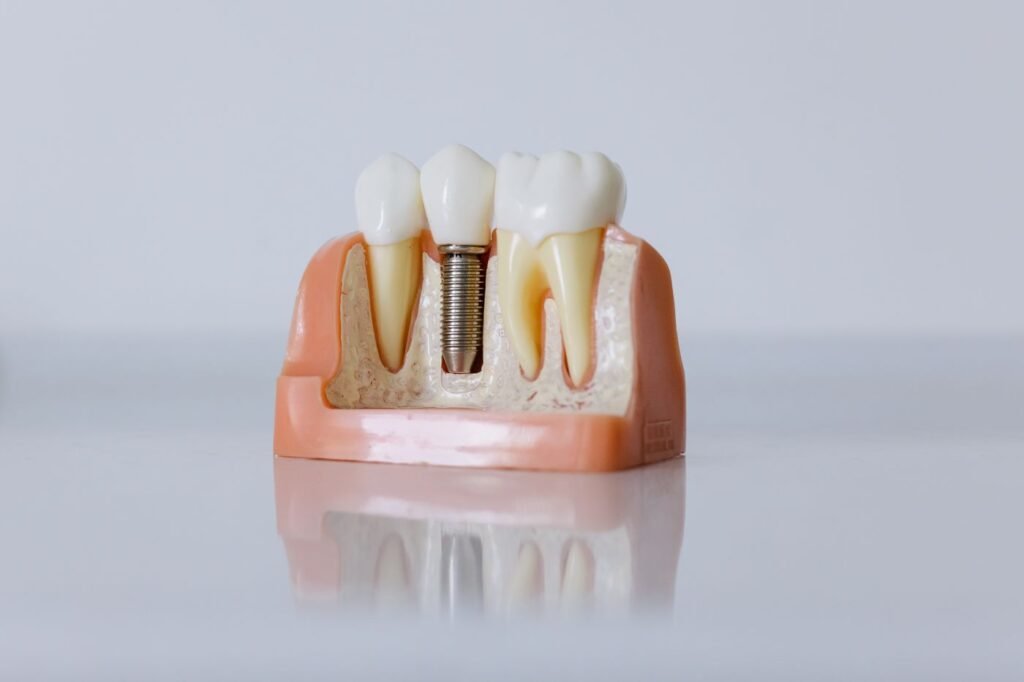
Osseointegration is the process where living bone grows tightly onto the surface of a titanium or zirconia implant. It is what gives an implant its strength, and it cannot be rushed.
Implant Healing Stages at a Glance
| Stage | Timing | What happens | What you feel |
|---|---|---|---|
| Surgery day | Day 0 | Implant placed | Numb, then mild ache |
| Early healing | Days 1 to 14 | Gums close, stitches removed | Swelling peaks around day 2 to 3 |
| Bone bonding | Months 1 to 6 | Osseointegration | Usually no symptoms |
| Abutment stage | After bonding | Connector placed | Mild gum tenderness |
| Crown stage | Final visit | Tooth attached | Bite adjusting over days |
Factors That Affect Healing Time
- Bone quality and quantity
- Bone grafting or sinus lift
- Smoking or vaping
- Diabetes control
- Upper jaw (often slower) versus lower jaw
Dental Services Supporting Implant Care
Aftercare Steps
- Bite on gauze for the first hour.
- Use cold compresses for 24 hours.
- Eat soft, cool foods for the first week.
- Rinse gently with salt water after 24 hours.
- Avoid smoking and straws.
- Attend each follow-up visit.
Warning Signs During Healing
- Pain increasing after day three
- Swelling that spreads
- A loose implant or healing cap
- Fever or pus

Invisalign vs Braces Around Implants
| Point | Invisalign | Braces |
|---|---|---|
| Moves implants | No, implants do not move | No |
| Moves other teeth | Yes | Yes |
| Best timing | Before implant placement | Before implant placement |
Choosing an Implant Clinic
Choose a dentist in Woodbridge licensed by the Royal College of Dental Surgeons of Ontario (RCDSO) who provides written aftercare and regular healing checks.
Patient Scenarios
A lower molar implant
Healing took three months, then a zirconia crown was placed.
An upper implant with a sinus lift
Healing took six months, with checks every few weeks.
Common Mistakes
- Smoking during healing
- Chewing on the implant too soon
- Skipping follow-up visits
Peri-implantitis, an infection around the implant, can cause bone loss. Report bleeding or swelling early.
Myths About Sedation and Kids’ Dentistry
Long-Term Care Tips
- Brush and floss around implants
- Use a water flosser
- Keep three to six month cleanings
Healing After Implant Surgery: What Each Stage Feels Like
General dentist registered with the Royal College of Dental Surgeons of Ontario (RCDSO), practising at Peridot Dental Care in Woodbridge. Last reviewed November 2026. This guide is general information and does not replace an exam with your own dentist.
Implant healing happens on two levels. The gum heals over days to weeks, while the bone slowly bonds to the implant over months, a process called osseointegration. Knowing what to expect at each stage helps you recognize normal recovery and protect the implant while it settles. These are the questions Woodbridge patients ask most after surgery.
What is normal in the first 72 hours?
Mild bleeding on the first day, swelling that peaks around day two or three, and soreness managed with the pain relief your dentist recommends are all expected. Cold packs on the first day, soft cool foods, rest with your head raised and no smoking help the most. Bruising can appear, especially after several implants or a bone graft.
When does the gum heal?
The gum around the implant or healing cap usually closes within one to two weeks. Stitches dissolve or are removed during that time. Gentle salt water rinses, careful brushing of nearby teeth and avoiding chewing on the implant side help the tissue close cleanly.
How long does osseointegration take?
In most healthy patients, the bone bonds to the implant over roughly three to six months. Lower jaw implants often integrate a little faster than upper ones because the bone is denser. Bone grafts, sinus lifts, smoking and some medical conditions can extend this time.
Can I eat normally while the implant heals?
Soft foods are best for the first week. After that, most people can eat normally on the other side, while avoiding hard, crunchy or sticky foods directly over the implant until the final crown is placed. If you wear a temporary denture, your dentist may adjust it so it does not press on the site.
How do I know the implant has healed?
Your dentist checks stability, gum health and X-rays before moving to the next stage. Some offices also measure implant stability with a device. The implant should feel completely solid and comfortable, with healthy pink gum around it.
What happens after integration?
An abutment is attached and impressions or scans are taken for the final crown, bridge or denture. Once that is placed and the bite adjusted, the implant is ready for normal use with regular cleaning and checkups.
Implant Healing Timeline at a Glance
| Stage | Typical timing | What is happening |
|---|---|---|
| Surgery day | Day 0 | Implant placed, clot forms, numbness wears off |
| Early recovery | Days 1 to 7 | Swelling peaks then settles, soft diet |
| Soft tissue healing | Weeks 1 to 3 | Gum closes around the implant or healing cap |
| Osseointegration | Months 1 to 6 | Bone bonds to the implant surface |
| Restoration | After integration | Abutment, impressions and final crown |
| Maintenance | Ongoing | Daily cleaning, regular checkups |
Habits That Help Implants Heal
- Avoid smoking and vaping, which significantly slow healing
- Keep sugary drinks and alcohol to a minimum in the first weeks
- Do not use straws for about a week after surgery
- Clean the area gently as instructed and keep every follow-up visit
- Wear a night guard later if you grind your teeth
Bleeding that will not stop with pressure, swelling that increases after day three, fever, pus or a bad taste, or an implant or healing cap that feels loose. Early treatment protects the implant.
Coverage and the Canadian Dental Care Plan
The Canadian Dental Care Plan (CDCP) excludes dental implants and implant-related procedures, although eligible patients can use it for exams, X-rays and extractions. Some private plans contribute to parts of implant treatment, so a predetermination is worth requesting.
Dental Implants at Peridot Dental Care
Peridot Dental Care is at 6175 Highway 7 West, Unit 7, Woodbridge, and sees patients from Woodbridge, Vaughan, Kleinburg and Maple. Every plan starts with an exam, a clear explanation of your options and a written estimate before treatment begins. You can learn more about our team and read patient reviews on our about page.
Call 647-313-4164 or book an appointment online to talk through your situation with our dentist.
Factors That Can Slow Implant Healing
Healing time varies from person to person. Smoking and vaping reduce blood flow to the gums and bone and are among the biggest risks for slow integration. Uncontrolled diabetes, some osteoporosis and cancer medications, and a history of radiation to the jaws can also affect healing. Implants placed with a bone graft or sinus lift usually need extra months before the final crown. None of these automatically rule implants out, but they change the plan, so share your full medical history at your consultation.
What can I do to help healing?
Stop smoking well before surgery if possible, eat a balanced diet with enough protein, keep blood sugar well controlled, take medications exactly as prescribed and attend every follow-up. Small habits in the first weeks make a real difference to how smoothly the implant integrates.
A small metal healing cap may show through the gum while you heal. It shapes the gum for the final crown and is replaced when the abutment goes in.
Frequently Asked Questions
How long does implant healing take?
Usually three to six months for bone bonding.
Is implant surgery painful?
Most people report mild discomfort.
When can I eat normally?
After the crown is placed and the bite is checked.
Can I work after surgery?
Many return to work the next day.
Can healing fail?
It is uncommon, but smoking and infection raise the risk.
Is it normal for an implant to feel sore after a week?
Mild tenderness can last up to a week or two. Pain that increases rather than settles should be checked promptly.
Can I brush near my new implant?
Yes, gently. Avoid scrubbing the surgical site in the first days and follow the cleaning instructions you were given.
Conclusion
Implant healing moves from soft tissue repair to bone bonding to the final crown.
Following aftercare closely is the biggest factor in success.
Peridot Dental Care guides and monitors every stage of your implant journey.