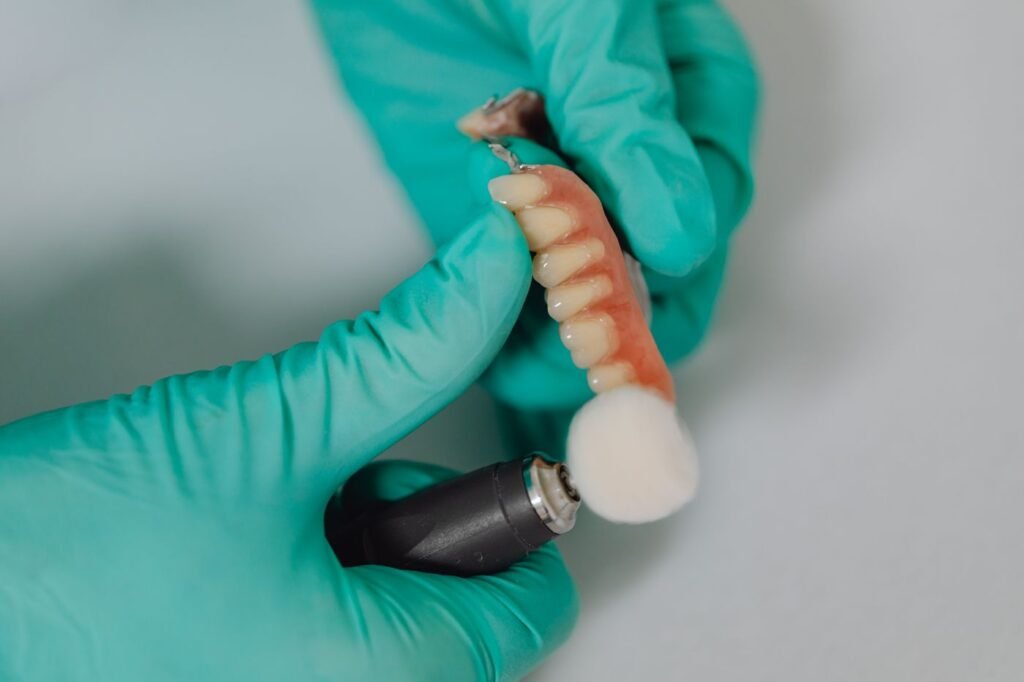
The easiest way to remove denture adhesive is to soak the denture in warm (not hot) water, then gently brush the residue away with a soft denture brush, while removing adhesive from your gums with a warm salt water rinse and a damp washcloth or soft toothbrush. Leftover adhesive is common and harmless, but needing a lot of adhesive every day often signals that your dentures no longer fit well. Our dentist in Woodbridge can check whether a reline would reduce your adhesive use.
Many denture wearers feel frustrated by sticky residue and embarrassed to bring it up. A trusted family clinic sees this every day and offers practical fixes. Learn about relines and new sets on our dentures in Woodbridge page.
Patients tired of adhesive altogether often move to snap-in dentures on dental implants.
If you only have a few teeth missing, a dental bridge needs no adhesive at all.
Peridot Dental Care at 6175 Highway 7 West, Unit 7, Woodbridge, Ontario, holds a 4.9 Google rating from 165+ reviews. It welcomes new and CDCP patients, gives seniors 65+ a 20% discount, and offers evening and weekend visits. Call +1 647-313-4164 or email info@peridotdentalcare.com.
What Is Denture Adhesive?
Denture adhesive is a cream, powder, or strip that helps dentures stay in place by forming a seal between the denture and gums. It should be a small helper, not a substitute for good fit.
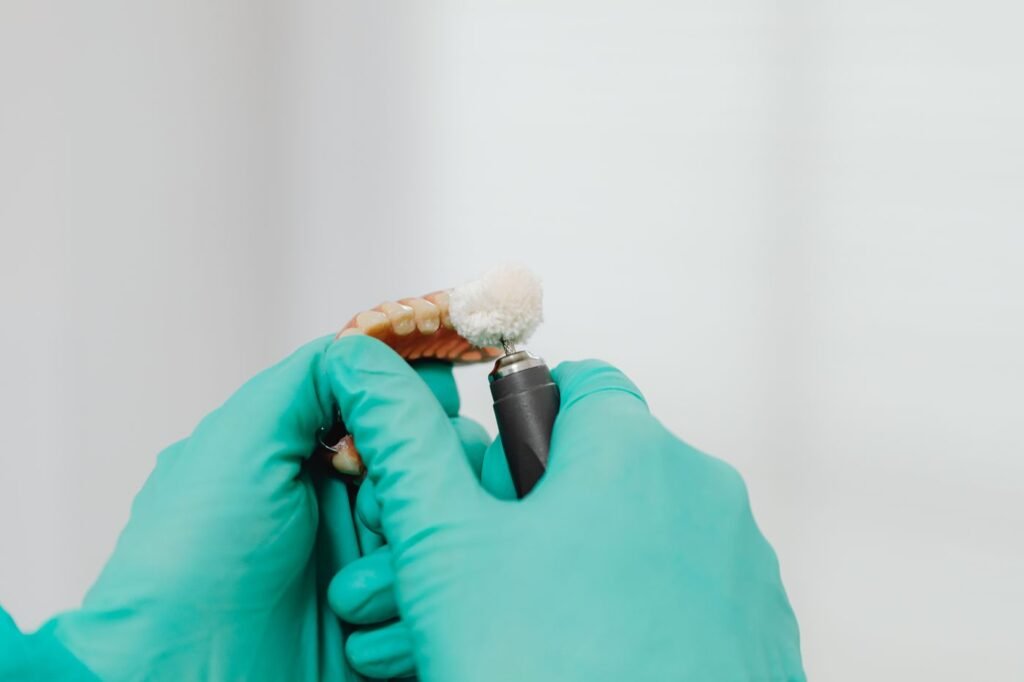
Removing Adhesive From Your Denture
- Remove the denture over a towel or sink of water.
- Soak in warm water for a few minutes.
- Wipe off soft adhesive with a paper towel.
- Brush gently with a denture brush and mild soap.
- Soak in a denture cleanser overnight.
- Rinse well before wearing.
Removing Adhesive From Your Gums
- Rinse with warm salt water
- Wipe gently with a damp washcloth
- Use a soft toothbrush on gums and palate
- Hold warm water in your mouth for a minute to soften residue
| Method | Best for | Tip |
|---|---|---|
| Warm water soak | Denture | Never use boiling water |
| Denture brush | Denture | Soft bristles only |
| Salt water rinse | Gums | Swish for 30 seconds |
| Washcloth wipe | Gums and palate | Use gentle pressure |
| Oil-based rinse | Stubborn residue | A small amount of oil can help loosen it |
Dental Services That Help
Signs You Are Using Too Much Adhesive
- Adhesive oozes out at the edges
- You reapply during the day
- The denture still moves
- Residue is very hard to remove

Invisalign vs Braces: No Adhesive Needed
| Point | Invisalign | Braces |
|---|---|---|
| Adhesive used | No | Bonding only, done by dentist |
| Removable | Yes | No |
Choosing a Clinic
Choose a dentist in Woodbridge licensed by the Royal College of Dental Surgeons of Ontario (RCDSO) who offers relines and implant options in one place.
Patient Scenarios
Daily adhesive buildup
After a reline, a senior needed only a pea-sized amount.
Tired of adhesive
Two implants allowed him to stop using adhesive completely.
Common Mistakes
- Using hot water
- Scraping with sharp tools
- Applying adhesive to a dirty denture
- Using too much
Some older adhesives contained zinc, which can cause health problems with heavy long-term use. Use zinc-free adhesive sparingly and ask your dentist if you need large amounts.
Myths About Sedation and Kids’ Dentistry
Prevention Tips
- Apply small dots, not strips
- Clean dentures daily
- Get yearly fit checks
Removing Adhesive Without Damaging Your Denture or Gums
General dentist registered with the Royal College of Dental Surgeons of Ontario (RCDSO), practising at Peridot Dental Care in Woodbridge. Last reviewed November 2026. This guide is general information and does not replace an exam with your own dentist.
Adhesive residue is one of the most common daily frustrations for denture wearers. Left behind, it traps bacteria, causes odour and can irritate the gums. Scraped off too hard, it scratches acrylic. These answers explain the gentlest methods and what to do when adhesive becomes a bigger problem.
What is the easiest way to remove adhesive from a denture?
Take the denture out and soak it in lukewarm water for a few minutes to soften the adhesive. Then brush the fitting surface with a soft denture brush and a non-abrasive cleanser, working from the edges inward. For stubborn residue, an overnight soak in a denture cleanser loosens it so it brushes away easily the next morning.
How do I get adhesive off my gums and palate?
Rinse with warm water, then gently wipe the gums and palate with a soft, damp washcloth or an extra-soft toothbrush. Swishing warm water helps soften the remaining film. Avoid scrubbing hard, because the tissue under a denture can be tender.
What should I never use to remove adhesive?
Avoid knives, toothpicks, scouring pads, abrasive toothpaste, bleach and very hot or boiling water. Sharp tools scratch acrylic, abrasive products dull the surface, bleach can weaken and discolour the base, and hot water can warp the denture so it no longer fits.
How much adhesive should I use?
Less than most people think. Three or four small dots or thin strips on a clean, dry denture are usually enough. Large amounts ooze out, are harder to remove and can make a denture sit in the wrong position.
Why does adhesive build up so quickly?
If you need a lot of adhesive to keep the denture in, there is probably a gap between the denture and your gums. Gums and bone shrink after tooth loss, so even a well-made denture loosens over time. A reline is often the real fix.
Is zinc in adhesive a concern?
Some older adhesives contained zinc, and very heavy long-term use was linked to health concerns. Many products are now zinc-free. Using small amounts, and fixing the fit rather than adding more adhesive, avoids the issue.
A Simple Nightly Routine
- Remove the denture over a folded towel or a sink of water
- Soak it in lukewarm water for a few minutes
- Brush all surfaces with a soft denture brush and non-abrasive cleanser
- Wipe your gums, tongue and palate with a soft damp cloth
- Soak the denture overnight in water or a denture solution
- Rinse well before putting it back in the morning
Adhesive Types and Clean-Up
| Adhesive type | Hold | Ease of removal |
|---|---|---|
| Cream | Strong | Can ooze, needs careful cleaning |
| Powder | Moderate | Easiest to remove |
| Strips or pads | Moderate | Peel off in one piece |
| Thermoplastic cushion | Strong, lasts days | Needs softening in warm water |
Stop and book a check if adhesive causes burning, sores or swelling, or if you are using more every week. Covering a poor fit can hide problems that need attention.
Fixing the Cause: Relines and Implants
A reline reshapes the fitting surface so the denture hugs your gums again, often reducing or removing the need for adhesive. If a lower denture will not stay down even after relining, implant-retained options can provide a secure hold without adhesive. Learn more about dentures in Woodbridge.
Coverage and the Canadian Dental Care Plan
For eligible patients, the Canadian Dental Care Plan (CDCP) can cover denture relines, rebases and repairs within plan limits. Adhesives and home products are not covered.
Denture Care at Peridot Dental Care
Peridot Dental Care is at 6175 Highway 7 West, Unit 7, Woodbridge, and sees patients from Woodbridge, Vaughan, Kleinburg and Maple. Every plan starts with an exam, a clear explanation of your options and a written estimate before treatment begins. You can learn more about our team and read patient reviews on our about page.
Call 647-313-4164 or book an appointment online to talk through your situation with our dentist.
Choosing an Adhesive That Is Easier to Clean
If you use adhesive regularly, the type you choose affects how much clean-up you face each night. Powders spread thinly and rinse away most easily. Strips and pads peel off in one piece. Creams hold strongly but tend to ooze and leave more residue, so use only small dots placed away from the edges. Whatever you use, apply it to a clean, dry denture and never add a fresh layer on top of old adhesive. If you find yourself needing more product every week, book a fit check, because a reline often removes the need for adhesive altogether and makes daily cleaning much simpler.
Partial dentures are designed to be held by clasps and rests, so adhesive is rarely needed. If a partial feels loose, the clasps may need tightening or the base may need a reline rather than adhesive.
Frequently Asked Questions
How do I get denture adhesive off my gums?
Rinse with warm salt water and wipe gently with a washcloth.
Can I use hot water?
No, it can warp the denture.
Is adhesive safe?
Yes, in small amounts; choose zinc-free products.
Why am I using more adhesive?
Your gums may have changed and the denture may need a reline.
Can implants replace adhesive?
Yes, implant-supported dentures usually need none.
Can I use mouthwash to remove denture adhesive?
A warm water rinse works better. Alcohol-based mouthwashes can sting tender gums and do not dissolve adhesive well.
Why does my denture smell even after removing adhesive?
Odour often comes from bacteria in scratches or residue on the fitting surface. Soaking overnight and a professional clean usually help.
Conclusion
Warm water, a soft brush, and gentle rinsing remove adhesive easily.
Needing more adhesive is a sign to check your denture fit.
Peridot Dental Care helps reduce adhesive use with relines and implant options.