

Full mouth extraction with immediate dentures means all remaining teeth are removed and a pre-made denture is placed the same day, so you never leave the clinic without teeth. Pictures of this process usually show swelling and bruising in the first week, which is normal and temporary, followed by gradual shrinking of the gums over months. Our Woodbridge dental team walks you through what each healing stage should look like before surgery.
People facing full extraction often feel scared and embarrassed, and they worry about choosing the wrong clinic for such a big decision. A trusted family clinic plans carefully, explains sedation options, and stays with you through every adjustment. The surgical side is handled through our oral surgery services.
Immediate dentures are only the first set. Long-term options are covered on our Woodbridge dentures page.
Patients who want more stability later often add dental implants to hold the denture in place.
Peridot Dental Care at 6175 Highway 7 West, Unit 7, Woodbridge, Ontario, holds a 4.9 Google rating from 165+ reviews, accepts CDCP and new patients, and offers a 20% discount for seniors 65+. Special promotions apply to implant consultations, and evening and weekend appointments are available. Call +1 647-313-4164 or email info@peridotdentalcare.com.
What Is an Immediate Denture?
An immediate denture is made from impressions taken before your teeth are removed. It is placed right after extractions and acts as a bandage, a smile, and a chewing aid while the gums heal.
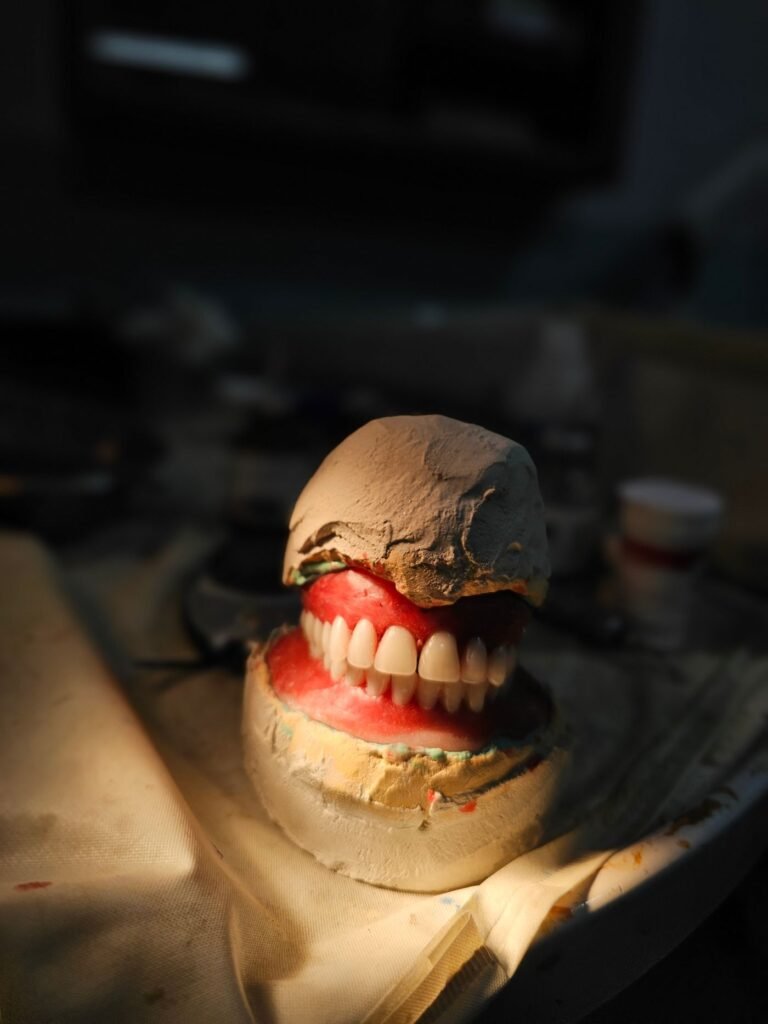
What the Pictures Usually Show
| Stage | What you may see | Is it normal? |
|---|---|---|
| Day 1 | Denture in place, some bleeding, numb lips | Yes |
| Days 2 to 4 | Peak swelling, bruising on cheeks or chin | Yes |
| Week 1 | Swelling fading, sore spots on gums | Yes |
| Weeks 2 to 6 | Gums shrinking, denture feels looser | Yes, relines help |
| Months 3 to 6 | Gums stable, final denture or reline | Yes |
Treatments Involved in Full Mouth Care
Step-by-Step Process
- Consultation, X-rays, and medical review.
- Impressions and tooth shade selection.
- Lab creates the immediate denture.
- Extraction day with anesthetic or sedation.
- Denture placed immediately after extractions.
- Next-day check, then regular adjustments and relines.
Signs Full Extraction May Be Recommended
- Many teeth loose from advanced gum disease
- Widespread decay that cannot be restored
- Repeated infections and pain
- Failing bridges and crowns throughout the mouth

Invisalign vs Braces: Not Usually Part of This Plan
| Point | Invisalign | Braces |
|---|---|---|
| Used when teeth are kept | Yes | Yes |
| Used before full extraction | No | No |
For family members keeping their teeth, the clinic is well regarded for Invisalign and braces.
Choosing a Clinic for Full Extraction
Choose an emergency dental clinic in Woodbridge that also does planned surgery, with dentists licensed by the Royal College of Dental Surgeons of Ontario (RCDSO), clear sedation protocols, and included adjustment visits.
Patient Scenarios
A man with advanced gum disease
He left with teeth the same day. By month four, a reline made his denture snug again.
A senior worried about appearance
She saw photos of healing stages beforehand, which made the swelling far less frightening.
Common Mistakes
- Removing the denture on the first night against instructions
- Skipping the 24-hour check
- Eating hard food in week one
- Expecting the first denture to fit perfectly forever
Heavy bleeding that soaks gauze for more than an hour, fever, or swelling that increases after day three needs prompt attention.
Myths About Sedation and Children’s Dentistry
Healing and Maintenance Tips
- Eat soft, cool foods for the first week
- Rinse gently with salt water after 24 hours
- Clean the denture daily
- Plan for a reline around three to six months
Reading Full Mouth Extraction Pictures the Right Way
General dentist registered with the Royal College of Dental Surgeons of Ontario (RCDSO), practising at Peridot Dental Care in Woodbridge. Last reviewed November 2026. This guide is general information and does not replace an exam with your own dentist.
Photos of full mouth extraction with immediate dentures can be reassuring or alarming depending on when they were taken. A picture from the evening of surgery looks very different from one taken three months later, even though both show a normal recovery. These are the questions our Woodbridge patients ask most when they are looking at pictures and planning their own treatment.
What should the mouth look like on the day of surgery?
On surgery day the denture is in place and the lips are usually still numb, so the smile can look slightly stiff. Some puffiness around the cheeks is common, and a little pink saliva is expected. The denture acts as a bandage over the sockets, which is why it normally stays in for the first 24 hours unless your dentist tells you otherwise.
Why do pictures from days two to four look worse?
Swelling and bruising usually peak between 48 and 72 hours after extractions. Faces can look fuller on one side, and yellow or purple bruising may appear along the jaw or neck, particularly in older patients or those taking blood thinners. This is part of the normal inflammatory response and fades steadily over the following week.
When do the pictures start to look natural?
Most patients look like themselves again within two to three weeks, once swelling has settled and sore spots have been adjusted. Speech is clearer by then and the smile relaxes as you get used to the new teeth. The look continues to improve as the denture is relined to follow your healing gums.
Why do some after photos look so much better than others?
The final result depends on how the denture was designed, how much bone remains, and whether the photo was taken before or after the permanent reline or replacement denture. Pictures of fixed implant teeth are often mixed in with denture photos online, which can set unrealistic expectations for a removable denture.
How long until the final result?
The gums and bone remodel for three to six months after extractions. Once they stabilize, your dentist completes a permanent hard reline or makes a new denture. That is when the fit and appearance you will live with day to day are reached.
What Changes Between Photos: A Quick Guide
| Stage | What pictures usually show | What is happening underneath |
|---|---|---|
| Day 1 | Denture in place, mild swelling | Blood clots forming in the sockets |
| Days 2 to 4 | Peak swelling and bruising | Inflammation at its highest, then easing |
| Weeks 1 to 3 | Face settling, natural smile returning | Gums closing over the sockets |
| Weeks 4 to 12 | Denture may look slightly lower | Ridges shrinking, soft reline used |
| Months 3 to 6 | Final look and fit | Permanent reline or new denture |
Taking Your Own Progress Photos
Many patients find it encouraging to document their own recovery. Take pictures in natural daylight from a window, at the same distance each time, with your lips relaxed, smiling and from the side. Repeat on day one, at one week, one month and after your reline. These photos also help your dentist judge lip support and tooth display when finalizing the denture.
Call us if bleeding does not stop with firm pressure, swelling keeps increasing after day three, you develop a fever or foul taste, or pain gets worse instead of better. These need a check regardless of how things look.
Coverage and the Canadian Dental Care Plan
For eligible patients, the Canadian Dental Care Plan (CDCP) can cover extractions, complete immediate dentures and later relines within plan limits. Implant-supported options are excluded. Private dental plans often contribute to extractions and dentures too, and we can send a predetermination before treatment.
Full Mouth Extractions and Immediate Dentures at Peridot Dental Care
Peridot Dental Care is at 6175 Highway 7 West, Unit 7, Woodbridge, and sees patients from Woodbridge, Vaughan, Kleinburg and Maple. Every plan starts with an exam, a clear explanation of your options and a written estimate before treatment begins. You can learn more about our team and read patient reviews on our about page.
Call 647-313-4164 or book an appointment online to talk through your situation with our dentist.
Frequently Asked Questions
Does it hurt to get all teeth pulled at once?
You are numbed or sedated during surgery. Soreness afterward is managed with medication.
How long until I look normal?
Most swelling fades in one to two weeks.
Will my immediate denture need a reline?
Yes, gums shrink as they heal, so relines are expected.
Can I get implants later?
Yes, implants can often be added after healing.
Does CDCP cover full extractions?
CDCP may cover extractions and dentures for eligible patients.
Is bruising normal after full mouth extraction?
Yes. Bruising on the cheeks, jaw or neck is common after several extractions and usually fades within one to two weeks.
Why does my immediate denture look lower after a month?
As the gums and bone shrink during healing, the denture can sit slightly lower. A soft liner and later a permanent reline restore the fit and position.
Conclusion
Immediate dentures mean you never go without teeth during full mouth extraction.
Swelling and gum changes in the pictures are normal parts of healing.
Peridot Dental Care guides you through every stage with careful follow-up.