
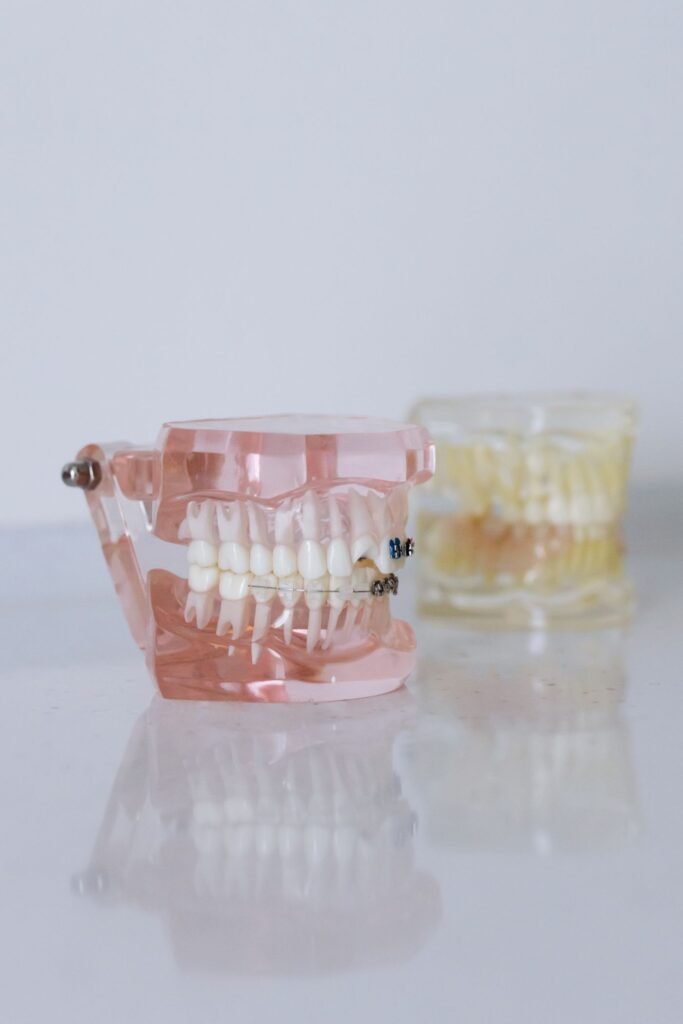
Partial dentures for back teeth replace missing molars and premolars so you can chew evenly on both sides, usually with a strong cast metal or flexible framework that clips onto nearby teeth. Losing back teeth is very common and not an emergency, but over time it can overload front teeth, change your bite, and cause jaw discomfort. Patients at our Woodbridge dental clinic get a partial designed around their bite and chewing habits.
Back teeth are out of sight, so people often ignore the gap, or they worry a new clinic will recommend more work than needed. A family clinic you trust explains why replacing back teeth protects the rest of your smile. You can learn about removable options on our dentures page.
When only one molar is missing and the teeth beside it are healthy, a single implant for a back tooth may be the longer-lasting choice.
If the neighbouring teeth already have large fillings, a fixed bridge could protect them and fill the space.
Peridot Dental Care at 6175 Highway 7 West, Unit 7, Woodbridge, Ontario, is rated 4.9 on Google from 165+ reviews. The clinic welcomes new and CDCP patients, offers seniors 65+ a 20% discount, and has evening and weekend appointments. Call +1 647-313-4164 or email info@peridotdentalcare.com.
What Is a Back Tooth Partial Denture?
It is a removable appliance that holds artificial molars or premolars on a framework resting on the gums. Clasps or attachments grip natural teeth to keep it steady when chewing.

Best Partial Types for Back Teeth
| Type | Chewing strength | Comfort | Lifespan |
|---|---|---|---|
| Cast metal (chrome cobalt) | Very high | Thin palate or lingual bar | Long |
| Flexible nylon | Moderate | Very light | Medium |
| Acrylic | Moderate | Thicker | Shorter |
| Implant-assisted partial | Very high | Stable | Long |
Dental Services Under One Roof
Your Visit, Step by Step
- Exam, bite analysis, and X-rays.
- Treatment of any decay on support teeth.
- Impressions or digital scan.
- Framework try-in to check fit.
- Teeth set-up try-in for bite.
- Final delivery and follow-up adjustments.
Signs You Need Back Tooth Replacement
- Chewing only on one side
- Front teeth chipping from overload
- Upper teeth dropping into a lower gap
- Food packing between teeth
- Jaw tiredness after meals

Invisalign vs Braces for Tipped Back Teeth
| Factor | Invisalign | Braces |
|---|---|---|
| Uprighting molars | Possible in mild cases | Effective in most cases |
| Visibility | Clear | Visible |
| Removable | Yes | No |
Choosing a Clinic
Look for a dentist in Woodbridge licensed with the Royal College of Dental Surgeons of Ontario (RCDSO), who checks your bite carefully and includes adjustment visits.
Patient Scenarios
Missing lower molars on both sides
A cast metal partial restored balanced chewing and stopped front tooth wear.
One missing upper molar
An implant was chosen instead, avoiding clasps altogether.
Common Mistakes
- Waiting years until teeth drift
- Chewing hard foods on day one
- Ignoring sore spots
- Not cleaning under clasps
A partial that rocks while chewing can damage support teeth. Book an adjustment rather than living with it.
Myths About Sedation and Pediatric Care
Care and Prevention Tips
- Clean the partial after meals
- Soak overnight
- Floss clasp teeth daily
- Keep regular checkups
Replacing Back Teeth: What Woodbridge Patients Want to Know
General dentist registered with the Royal College of Dental Surgeons of Ontario (RCDSO), practising at Peridot Dental Care in Woodbridge. Last reviewed November 2026. This guide is general information and does not replace an exam with your own dentist.
Missing back teeth are easy to ignore because they rarely show in photos. You feel the gap every meal, though, and over time the rest of the mouth starts to compensate. A well-designed partial denture is one of the simplest ways to restore chewing on both sides without surgery. These answers cover the questions we hear most.
Why replace back teeth that nobody can see?
Molars and premolars do most of the grinding. Without them, you tend to chew on one side, front teeth take loads they were not built for, and neighbouring teeth tip into the space. The opposing teeth can also drift toward the gap. These changes make future treatment harder, so replacing back teeth early protects the teeth you still have.
Which partial works best for back teeth?
Cast metal partials are usually the first choice for long-term back tooth replacement. The framework rests on the natural teeth so chewing forces travel down their roots instead of pressing the partial into the gums. Acrylic partials are a good short-term option, and flexible partials suit some smaller gaps but can move more under heavy chewing.
What if there is no tooth behind the gap?
This is called a free-end gap, and it is common when the last molars are missing. The back of the partial rests only on gum, which compresses slightly when you bite. Careful design, a broad base and regular relines keep it stable. In some lower cases, a single implant under the back of the partial adds a lot of support.
Will a back teeth partial feel bulky?
It may at first. Lower partials use a thin bar behind the front teeth, while upper partials usually cross the palate with a narrow strap. Most people stop noticing the partial within two to four weeks as the tongue adapts.
How long does a back teeth partial last?
A cast metal partial can last many years with relines as the gums change. Acrylic partials typically need replacing sooner. The biggest factor is the health of the teeth holding the clasps, so daily cleaning and regular checkups matter.
Can I get a partial on both sides at once?
Yes. A single partial with a connector can replace back teeth on both sides of the same jaw. This is more stable than two small separate pieces, which can loosen and are easier to lose or swallow.
Upper vs Lower Back Teeth Partials
| Feature | Upper partial | Lower partial |
|---|---|---|
| Connector | Strap or plate across the palate | Bar behind the lower front teeth |
| Stability | Usually higher | Relies more on rests and clasps |
| Common comfort issue | Palate coverage, gag reflex | Tongue space, sore spots on the ridge |
| Helpful upgrade | Thin metal strap | Implant support under the back saddle |
Getting Used to Your Partial
- Start with soft foods cut into small pieces
- Chew on both sides at once to keep the partial level
- Read aloud for a few minutes daily to help speech adapt
- Take the partial out at night unless advised otherwise
- Book an adjustment if a sore spot lasts more than a day or two
Plaque collects where clasps touch the teeth. Brush and floss these teeth twice a day with fluoride toothpaste to keep them healthy.
Partial, Bridge or Implant?
A bridge needs a healthy tooth on each side of the gap, so it is not possible with free-end gaps. Implants replace back teeth without relying on other teeth but need enough bone and a healing period. Many patients start with a partial and add implants later. See dental implants in Woodbridge for more on that option.
Coverage and the Canadian Dental Care Plan
For eligible patients, the Canadian Dental Care Plan (CDCP) can cover removable partial dentures, generally with preauthorization for a first partial, plus relines and repairs. Implants and fixed bridges are excluded.
Partial Dentures for Back Teeth at Peridot Dental Care
Peridot Dental Care is at 6175 Highway 7 West, Unit 7, Woodbridge, and sees patients from Woodbridge, Vaughan, Kleinburg and Maple. Every plan starts with an exam, a clear explanation of your options and a written estimate before treatment begins. You can learn more about our team and read patient reviews on our about page.
Call 647-313-4164 or book an appointment online to talk through your situation with our dentist.
Eating Well With a Back Teeth Partial
Once you have adapted, most foods are back on the menu. Cut firm foods such as meat, raw carrots and apples into smaller pieces, chew slowly on both sides, and be careful with very sticky sweets that pull on clasps. Rinse the partial after meals so food does not collect under the saddles. If certain foods still feel difficult after a month, a small bite adjustment or reline usually helps.
Frequently Asked Questions
Are back tooth partials uncomfortable?
There is an adjustment period of a few weeks, then most people feel comfortable.
Which partial is strongest for chewing?
Cast metal frameworks are usually strongest.
Can I replace one back tooth with a partial?
Yes, though an implant or bridge may suit better.
How often should a partial be relined?
Usually every few years or as gums change.
Is a back tooth partial covered by CDCP?
CDCP may cover partial dentures for eligible patients.
Can a partial denture replace just one back tooth?
It can, but a very small partial for one molar may be unstable. A design that crosses to the other side, a bridge or an implant is often a better choice.
Do back teeth partials show when I smile?
Usually not. Clasps on back teeth are hidden, and tooth-coloured or flexible clasps can be used where a clasp would show.
Conclusion
Back tooth partials restore balanced chewing and protect your remaining teeth.
Cast metal and implant-assisted designs offer the strongest results.
Peridot Dental Care builds each partial around your bite for lasting comfort.