
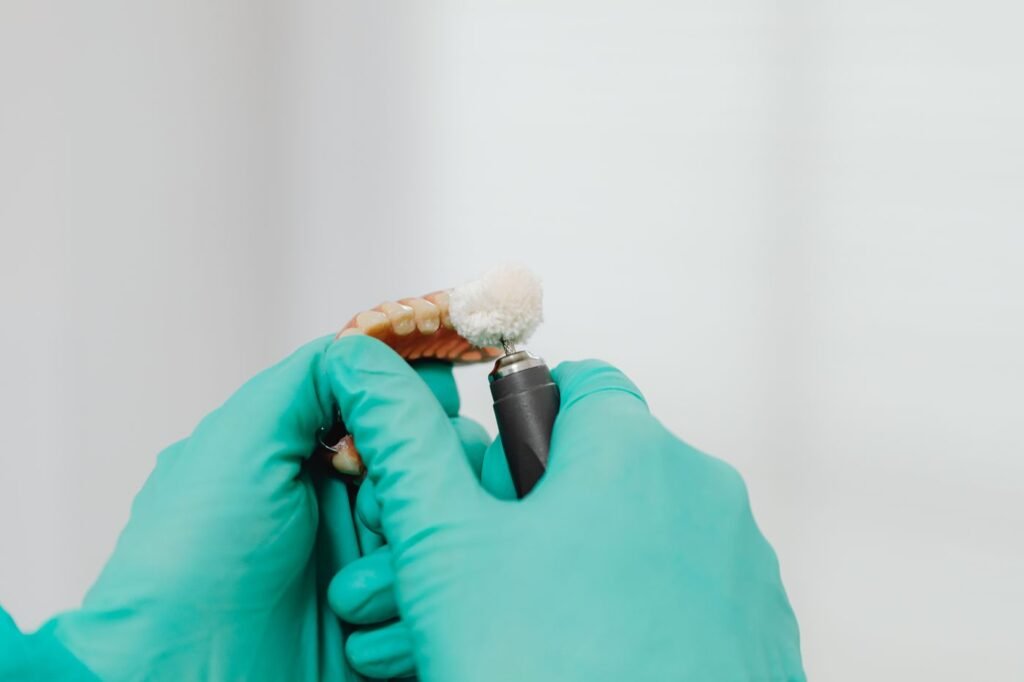
An ultrasonic denture cleaner uses high-frequency sound waves in a water or solution bath to loosen plaque, stains, and food debris from dentures, aligners, and retainers, and it works best alongside daily brushing. Using one is safe for most dentures, but a cleaner alone will not remove hard tartar or fix a poor fit, which still need professional care. Our Woodbridge dental team can professionally clean and polish your denture if home cleaning is not enough.
Denture wearers often worry about bad odours or stains and feel embarrassed to mention them. Parents ask whether these devices are safe for retainers or kids’ appliances too. A trusted family clinic answers these practical questions without judgment. Learn more about denture care on our dentures page.
Ultrasonic cleaners are also popular with patients wearing clear aligners from our Invisalign in Woodbridge program.
Patients with snap-in dentures on implants can use them for the denture, but the attachments still need brushing.
Peridot Dental Care, 6175 Highway 7 West, Unit 7, Woodbridge, Ontario, holds a 4.9 Google rating from 165+ reviews. New and CDCP patients are welcome, seniors 65+ receive 20% off, and evening and weekend visits are available. Call +1 647-313-4164 or email info@peridotdentalcare.com.
How Does an Ultrasonic Cleaner Work?
The device sends sound waves through liquid, creating tiny bubbles that collapse against the denture surface. This action, called cavitation, lifts debris from small crevices a brush may miss.
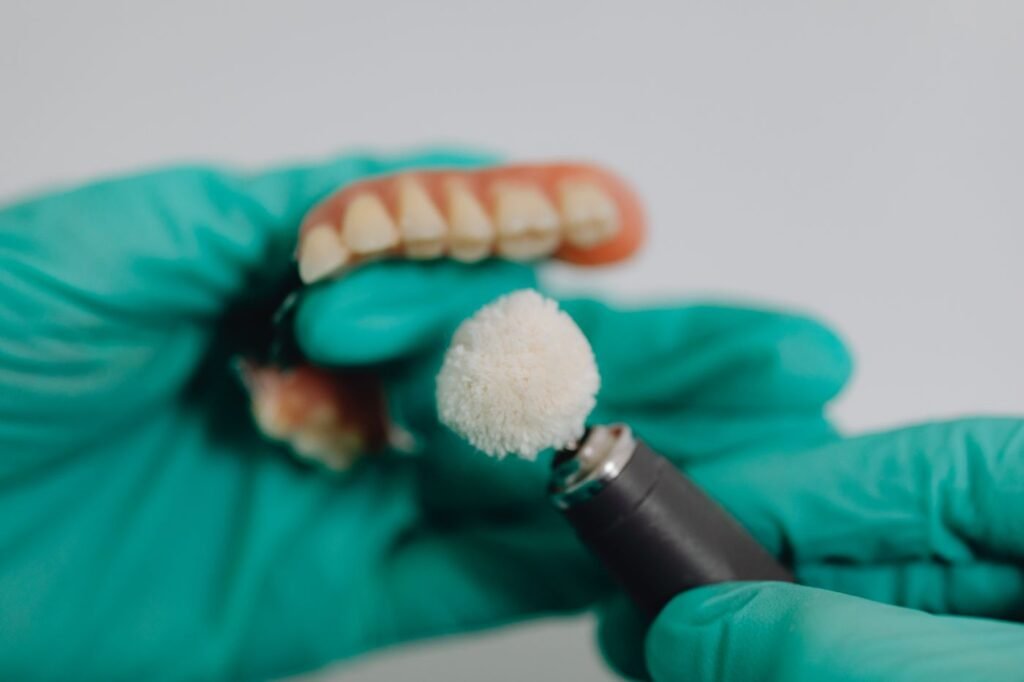
Ultrasonic vs Other Cleaning Methods
| Method | Removes plaque | Removes stains | Removes tartar | Notes |
|---|---|---|---|---|
| Brushing with denture paste | Good | Mild | No | Daily essential |
| Soaking tablets | Moderate | Moderate | No | Easy overnight |
| Ultrasonic cleaner | Very good | Good | Limited | Great add-on |
| Professional cleaning | Excellent | Excellent | Yes | Every 6 to 12 months |
Who Benefits Most?
- Full and partial denture wearers
- Invisalign and retainer users
- Night guard and sports guard users
- Seniors with limited hand strength
Dental Services That Help
How to Use an Ultrasonic Denture Cleaner
- Rinse the denture under cool water.
- Fill the tank with water and a denture-safe solution.
- Place the denture fully under the liquid.
- Run a 5 to 10 minute cycle.
- Brush gently with a denture brush.
- Rinse well before wearing.
Signs You Need a Professional Clean
- Hard white or yellow buildup
- Persistent odour
- Dark stains from coffee or tobacco
- Rough patches on the acrylic

Invisalign vs Braces: Cleaning Differences
| Point | Invisalign | Braces |
|---|---|---|
| Ultrasonic cleaning | Great for trays | Not applicable |
| Daily care | Brush and rinse trays | Brush around brackets |
Choosing a Clinic for Denture Care
Choose a dental office in Woodbridge with dentists licensed by the Royal College of Dental Surgeons of Ontario (RCDSO) that offers professional denture cleaning and fit checks.
Patient Scenarios
A senior with arthritis
An ultrasonic cleaner made daily cleaning easier on her hands.
A teen with Invisalign
Daily ultrasonic cycles kept trays clear and fresh.
Common Mistakes
- Using hot water, which can warp acrylic
- Adding bleach to the tank
- Skipping brushing completely
- Cleaning metal partials with harsh solutions
Never use bleach or very hot water with dentures. Check the manufacturer’s guidance for soft liners and metal parts.
Myths About Sedation and Kids’ Dentistry
Prevention Tips
- Clean dentures daily
- Soak overnight
- Brush gums and tongue
- Get yearly checks
Using an Ultrasonic Cleaner at Home: Step by Step
General dentist registered with the Royal College of Dental Surgeons of Ontario (RCDSO), practising at Peridot Dental Care in Woodbridge. Last reviewed November 2026. This guide is general information and does not replace an exam with your own dentist.
An ultrasonic cleaner uses high-frequency sound waves in water to create tiny bubbles that loosen debris from every surface of a denture, including grooves a brush can miss. Used correctly, it is a helpful addition to daily care. Used incorrectly, it can damage liners or leave dentures less clean than you think. These answers come from questions our Woodbridge patients ask.
What should I look for when buying one?
Choose a unit large enough to fully submerge a full denture or partial, with a simple timer of a few minutes and a removable basket. A stainless steel tank is easy to clean. Extra features like heating are not necessary and warm water is safer than hot.
Which liquid should I use in the tank?
Use lukewarm water with a denture cleaning tablet or a solution made for dentures. Avoid bleach, vinegar mixtures, dish detergent and very hot water. Bleach weakens acrylic and can corrode metal clasps, and heat can warp the denture.
How long should each cycle run?
Most dentures only need one cycle of three to five minutes. Longer runs do not add much benefit. For heavy stains or tartar, a professional clean works better than repeated home cycles.
Is it safe for partial dentures with metal clasps?
Yes, with a denture-specific solution. Check clasps afterwards and rinse well. Avoid letting metal partials sit in strong cleaning solutions for long periods.
What about soft liners?
Ask your dentist before using ultrasonic cleaning on a soft liner. Some liners tolerate it, but repeated cycles with the wrong solution can make them stiffen, peel or discolour sooner.
Do I still need to brush?
Yes. Ultrasonic cleaning loosens debris but does not fully remove the sticky plaque film. A quick brush with a soft denture brush and non-abrasive cleanser, then an ultrasonic cycle and a rinse, gives the best result.
A Simple Routine With an Ultrasonic Cleaner
- Rinse the denture under lukewarm water to remove loose food
- Brush all surfaces gently with a soft denture brush
- Fill the tank with lukewarm water and add a denture tablet or solution
- Place the denture in the basket so it is fully covered
- Run one cycle of three to five minutes
- Rinse thoroughly and inspect for remaining spots
- Empty, rinse and air-dry the tank every day
Home Ultrasonic vs Professional Cleaning
| Feature | Home unit | Professional clean |
|---|---|---|
| Frequency | Daily or several times a week | Once or twice a year |
| Removes | Food debris, light stains, fresh plaque | Hard tartar, set-in stains |
| Polishing | No | Yes, restores a smooth surface |
| Fit and gum check | No | Yes, at the same visit |
Bacteria can grow in water left in the tank. Empty it after each use and let it dry with the lid open.
Signs Your Routine Is Not Enough
If your denture looks cloudy, smells after cleaning or builds hard deposits, book a professional clean. Your dentist can also check whether scratches in old acrylic are holding stains and whether polishing or a reline would help. Our page on oral hygiene care in Woodbridge explains hygiene visits.
Coverage and the Canadian Dental Care Plan
Home cleaning devices are not covered by the Canadian Dental Care Plan (CDCP). Eligible patients can use the CDCP for exams and some denture services such as relines and repairs.
Denture Care at Peridot Dental Care
Peridot Dental Care is at 6175 Highway 7 West, Unit 7, Woodbridge, and sees patients from Woodbridge, Vaughan, Kleinburg and Maple. Every plan starts with an exam, a clear explanation of your options and a written estimate before treatment begins. You can learn more about our team and read patient reviews on our about page.
Call 647-313-4164 or book an appointment online to talk through your situation with our dentist.
Common Mistakes With Ultrasonic Cleaners
- Using hot water to speed things up, which can warp acrylic
- Adding bleach or household cleaners to the tank
- Skipping brushing because the machine seems to do it all
- Leaving dentures sitting in the tank water for hours
- Forgetting to empty and dry the tank, letting bacteria grow
- Running long cycles on soft liners without checking with your dentist
Avoiding these keeps both the denture and the device in good condition. If your denture still looks cloudy or smells after a few weeks of careful use, a professional clean and polish usually restores it.
How Often Should Dentures Be Professionally Cleaned?
Even with a good home ultrasonic routine, a professional clean once or twice a year is worthwhile. In the office, stronger equipment removes hardened tartar, the surface is polished smooth so stains have fewer places to settle, and your dentist checks the fit, the condition of clasps and liners, and the health of your gums. Many patients are surprised how much brighter and fresher their denture feels after a professional polish.
Frequently Asked Questions
Are ultrasonic cleaners safe for dentures?
Yes, when used with water or a denture-safe solution.
Can I clean Invisalign trays in one?
Yes, many patients do.
Do they remove tartar?
They help with soft buildup but not hard tartar.
How often should I use it?
Daily or a few times a week.
Should I still brush my dentures?
Yes, brushing remains essential.
Can I put my denture in an ultrasonic jewellery cleaner?
Only with a denture-safe solution and lukewarm water, and the tank must be cleaned well first. A unit made for dentures is the safer choice.
How often should I use an ultrasonic denture cleaner?
Many people use one daily or several times a week alongside brushing. Daily brushing remains the most important step.
Conclusion
Ultrasonic cleaners help keep dentures fresh and stain free.
They work best alongside brushing and professional cleaning.
Peridot Dental Care keeps your denture comfortable and clean for the long term.