
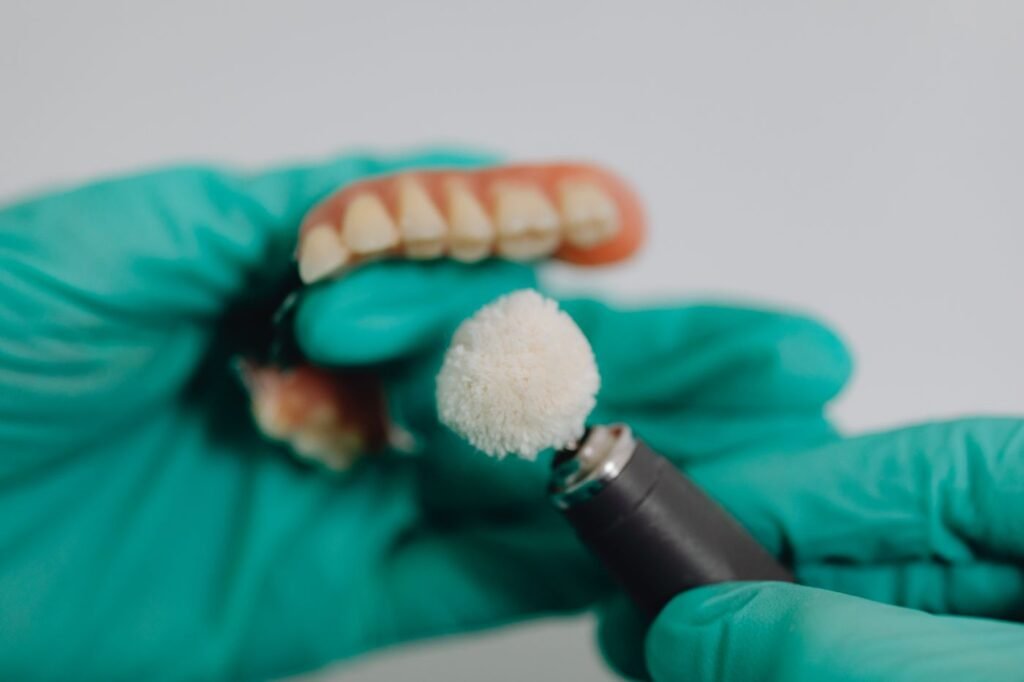
An ultrasonic denture cleaner is a small home device that uses sound-wave vibrations in liquid to clean dentures, partials, retainers, and night guards, and the best ones have a stainless steel tank, a 5 to 10 minute timer, and enough room to fully submerge the appliance. These cleaners are safe for most appliances and a helpful addition to daily brushing, but they do not replace professional cleaning for hard tartar. Our Woodbridge dental clinic can advise whether a device suits your denture type.
Shoppers often feel overwhelmed by choices and worry about buying something that damages their denture. Others wonder whether their dentist will think it is a waste of money. A family clinic gives honest, practical advice. More on denture care is on our dentures in Woodbridge page.
Patients with clear aligners from our Invisalign program also find these devices useful.
Children with retainers after braces in Woodbridge can use them too, with parent supervision.
Peridot Dental Care, 6175 Highway 7 West, Unit 7, Woodbridge, Ontario, holds a 4.9 Google rating from 165+ reviews. New and CDCP patients are welcome, seniors 65+ get 20% off, and evening and weekend visits are available. Call +1 647-313-4164 or email info@peridotdentalcare.com.
How to Choose an Ultrasonic Denture Cleaner
| Feature | What to look for | Why it matters |
|---|---|---|
| Tank material | Stainless steel | Durable and hygienic |
| Tank size | Fits full denture flat | Complete cleaning |
| Timer | 5 to 10 minute cycles | Prevents overuse |
| Frequency | Around 40 kHz is common | Effective cleaning action |
| Ease of use | One button, easy drain | Helpful for seniors |
| Safety | Auto shut-off | Peace of mind |
Who Should Use One?
- Full and partial denture wearers
- Invisalign and retainer users
- Night guard and sports guard users
- People with limited hand dexterity
Dental Services That Complement Home Cleaning
How to Use It, Step by Step
- Rinse the appliance.
- Fill the tank with cool or lukewarm water.
- Add a denture-safe cleaning tablet if desired.
- Submerge the appliance completely.
- Run one cycle.
- Brush gently and rinse.
Signs You Need a Professional Clean
- Hard deposits that will not come off
- Yellow or brown stains
- Persistent odour
Invisalign vs Braces: Appliance Cleaning
| Point | Invisalign | Braces |
|---|---|---|
| Ultrasonic cleaning | Yes for trays | Retainers after treatment |
| Look | Clear | Visible |
Choosing a Dentist
Choose a dentist in Woodbridge licensed by the Royal College of Dental Surgeons of Ontario (RCDSO) who checks appliance hygiene at each visit.
Patient Scenarios
A senior with stained dentures
Daily ultrasonic cleaning plus a professional polish kept them bright.
A teen with a retainer
Weekly cycles removed cloudy buildup.
Common Mistakes
- Using hot water
- Adding bleach or vinegar
- Running cycles too long
- Skipping brushing
Check whether your soft liner or metal partial is safe for ultrasonic cleaning. Some soft materials can degrade.
Myths About Sedation and Kids’ Dentistry
Prevention Tips
- Clean appliances daily
- Store them in a clean case
- See your dentist regularly
What Ultrasonic Cleaners Can and Cannot Do
General dentist registered with the Royal College of Dental Surgeons of Ontario (RCDSO), practising at Peridot Dental Care in Woodbridge. Last reviewed November 2026. This guide is general information and does not replace an exam with your own dentist.
Ultrasonic denture cleaners are popular because they seem effortless: drop the denture in, press a button and wait a few minutes. They do work, within limits. Knowing what they remove and what they miss helps you decide whether one is worth adding to your routine. For step-by-step use, see our guide to using an ultrasonic cleaner.
How do ultrasonic cleaners clean dentures?
Sound waves create millions of tiny bubbles in the water that collapse against the denture surface, a process called cavitation. This shakes loose food particles and soft debris from grooves and around clasps.
What do they remove well?
Loose food, light surface stains and soft deposits, especially in hard-to-reach areas like the inside of clasps and the edges of the fitting surface.
What do they not remove?
Hardened tartar and set-in stains need professional cleaning. The sticky plaque film is loosened but not always fully removed, which is why brushing is still important.
Are they better than soaking tablets?
They complement each other. Using a denture tablet in the ultrasonic tank combines the chemical cleaning of the tablet with the mechanical action of the bubbles.
Can they damage dentures?
Used with lukewarm water and denture-safe solutions, they are generally safe for acrylic. Hot water, bleach or harsh chemicals can damage acrylic, metal clasps and soft liners.
Are they worth buying?
They are helpful for people who struggle to brush thoroughly, such as those with arthritis, and for partials with many clasps. They are a convenience, not a replacement for brushing and professional care.
Cleaning Methods Compared
| Method | Removes plaque film | Removes tartar | Reaches clasps | Daily use |
|---|---|---|---|---|
| Brushing with soft brush | Yes | No | With care | Yes |
| Soaking tablets | Partly | No | Yes | Yes |
| Home ultrasonic | Partly | No | Yes | Yes |
| Professional ultrasonic and polish | Yes | Yes | Yes | Once or twice a year |
Best Results Routine
- Rinse after meals
- Brush daily with a soft denture brush and non-abrasive cleanser
- Run an ultrasonic cycle with a denture tablet
- Soak overnight or store in water
- Book a professional clean and fit check yearly
If your denture smells, looks cloudy or builds hard deposits despite good home care, a professional clean and polish usually restores it.
Coverage and the Canadian Dental Care Plan
Home cleaning devices are not covered by the Canadian Dental Care Plan (CDCP). Eligible patients can use it for exams and some denture services, such as relines and repairs.
Denture Care at Peridot Dental Care
Peridot Dental Care is at 6175 Highway 7 West, Unit 7, Woodbridge, and sees patients from Woodbridge, Vaughan, Kleinburg and Maple. Every plan starts with an exam, a clear explanation of your options and a written estimate before treatment begins. You can learn more about our team and read patient reviews on our about page.
Call 647-313-4164 or book an appointment online to talk through your situation with our dentist.
Who Benefits Most From an Ultrasonic Cleaner?
Some denture wearers get more value from an ultrasonic cleaner than others.
People with arthritis or limited grip
Brushing every surface of a denture can be painful with stiff hands. An ultrasonic cycle loosens debris so a brief, gentle brush is enough.
Partial denture wearers
Clasps and rests have small crevices where food collects. The bubbles reach places that are hard to brush.
People who travel
Compact units are easy to pack and help keep a cleaning routine on the road.
Heavy coffee or tea drinkers
Regular cycles with a denture tablet can slow down the build-up of surface stains between professional cleans.
When to Choose a Professional Clean Instead
Home units cannot remove hardened tartar or deep stains, and they cannot check the fit of your denture or the health of your gums. A yearly professional visit includes ultrasonic cleaning with stronger equipment, polishing to restore a smooth surface, a fit check and an oral cancer screening. If your denture looks cloudy, smells or feels rough despite good home care, book a professional clean rather than running extra home cycles.
Caring for the Cleaner Itself
- Empty the tank after every use and rinse it with clean water
- Leave the lid open so it dries completely
- Wipe the tank weekly with a soft cloth and mild soap
- Replace the basket if it cracks, since sharp edges can scratch acrylic
A clean tank keeps bacteria from being transferred back onto your denture.
Choosing a Cleaning Routine That Fits Your Life
There is no single right routine, as long as the basics are covered. Some people brush and soak every night and use an ultrasonic cleaner a few times a week. Others prefer a quick brush followed by an ultrasonic cycle with a tablet each evening. What matters is that every surface is brushed daily, the denture is soaked or stored in water overnight, and it is checked professionally at least once a year. If you have arthritis, a partial with many clasps or a busy schedule, an ultrasonic cleaner can make that routine easier to keep up. If your denture still smells, looks cloudy or builds tartar despite a good routine, a professional clean and fit check is the next step.
Use only solutions labelled safe for dentures. Jewellery and household cleaners can contain chemicals that discolour acrylic or corrode metal clasps.
If your partial or denture has a soft liner, ask before using ultrasonic cleaning regularly. Some liners last longer with gentle brushing only.
Frequently Asked Questions
Do ultrasonic cleaners really work?
Yes, they remove soft plaque and debris well.
Can I use tap water?
Yes, cool or lukewarm water is fine.
Are they safe for metal partials?
Usually yes, but avoid harsh solutions.
How often should I use one?
Daily or several times a week.
Do I still need to brush my denture?
Yes, brushing is still important.
Can an ultrasonic cleaner remove tartar from dentures?
Home units rarely remove hardened tartar. A professional clean is needed for that.
Is ultrasonic cleaning safe for flexible partials?
Usually yes with lukewarm water and a suitable solution. Check with your dentist about your specific material.
Conclusion
A good ultrasonic cleaner has a steel tank, a timer, and room for your appliance.
Use it alongside brushing and professional cleaning.
Peridot Dental Care helps keep every dental appliance fresh and healthy.