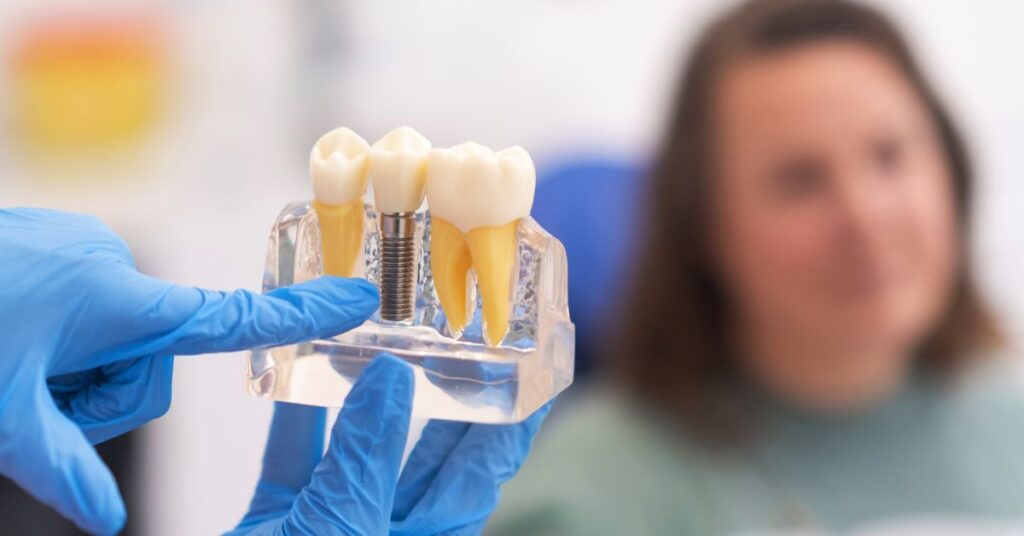
Yes, a dental implant includes a crown. A dental implant is a surgical implant that replaces a missing tooth and has a crown placed on top to look and function like a regular tooth.
Missing teeth can be a source of embarrassment for many people and negatively affect oral health. Dental implants and crowns are a popular solution for replacing missing teeth and restoring the look and function of the mouth. A dental implant involves a surgical procedure that places a metal post into the jawbone, which acts as an anchor for the crown.
The crown itself is custom-made to match the color and shape of the surrounding teeth, ensuring a natural look. Dental implants and crowns offer many advantages over other tooth replacement options, including improved appearance, comfort, and durability.
Understanding Dental Implant And Crown
A dental implant is a surgical procedure that replaces a missing tooth, while a crown is a cap that looks like a tooth and is placed over an existing tooth. A dental implant often includes a crown to look and function like a regular tooth.
Learn more about dental implants and crowns to decide if it’s the right solution.
A dental implant is a surgical procedure used to replace a missing tooth. It involves the placement of a titanium screw in the jawbone to act as the root of the tooth. A dental crown is a prosthetic device that covers and protects a damaged or discolored tooth. It can be placed over an existing tooth or a dental implant. The main difference between a dental implant and a dental crown is that a dental implant involves a surgical procedure to replace the tooth root. In contrast, a dental crown is a non-surgical procedure that covers and protects an existing tooth. Both options have advantages and disadvantages, and the decision to opt for one over the other will depend on the patient’s needs and preferences.
Pros And Cons Of Dental Implant And Crown
Dental implants and crowns have pros and cons. While they offer a natural look and function like your real teeth, they can be costly and time-consuming. Additionally, not everyone is a candidate for the procedure. It’s best to discuss with your dentist which option is best for you based on your specific needs and budget.
Advantages of Dental Implant and Crown
– Dental implants are a long-term solution for missing teeth. With proper care, they can last a lifetime.
– Dental crowns can restore a damaged tooth’s natural look and function.
– Dental implants and crowns can improve your appearance, speech, and oral health.
– Dental implants and crowns are stable and secure, so you can eat and drink whatever you want.
– Dental implants and crowns do not affect the surrounding teeth, unlike other dental procedures.
Disadvantages of Dental Implant and Crown
– Dental implants and crowns can be more expensive than other dental procedures.
– Some people may experience discomfort or pain during the healing process after the procedure.
– Dental implants and crowns may not be suitable for people with certain medical conditions or habits such as smoking.
Before getting a dental implant and crown, discussing the pros and cons with your dentist is essential. While dental implants and crowns offer several benefits, there are also some drawbacks. The advantages of dental implants and crowns include:
- Long-term solution.
- Natural look and function.
- Improved appearance.
- Speech.
- Overall oral health.
- Stability and security.
- Minimal impact on surrounding teeth.
However, some possible disadvantages include high cost, discomfort or pain during the healing process, and unsuitability for individuals with certain medical conditions or habits.
When To Consider Dental Implant And Crown
A dental implant and crown might be the right solution if you have a missing or severely damaged tooth. A dental implant is a surgical procedure that replaces a missing tooth with an implant and a crown to restore its appearance and function, making it a popular choice among patients.
Dental implants and crowns are generally considered when you experience loss of teeth due to injury or decay, grinding or clenching of teeth, or if you need a dental restoration. A dental implant is a surgical procedure that replaces a missing tooth with titanium to support a crown placed on top to look and function like a regular tooth. Conversely, a crown is a cap placed on top of an existing tooth to repair a broken tooth. If you need both an implant and crown, you have two options: traditional crown placement or CEREC. Your dentist will help you determine if you can benefit from CEREC. If the procedure is correct, you can get your implant and crown on the same day.
Dental Implant And Crown Procedure
Knowing what to expect during the process is essential if you are considering a dental implant and crown procedure. The first step is preparation and examination, where your dentist will evaluate your oral health and suitability for the procedure. Next is implant placement, where a titanium post is surgically placed in your jawbone to act as the root of your new tooth. After a healing period, crown placement can occur, which involves attaching the artificial tooth to the implant. A dental implant and crown can provide a reliable, long-lasting solution to replace missing or damaged teeth.
Aftercare Of Dental Implant And Crown
Dental Implants and Crowns require proper aftercare to ensure their longevity. Dental hygiene is extremely crucial when it comes to dental implants and crowns. Always brush your teeth twice daily and floss at least once daily. Avoid sugary and starchy foods as they can lead to dental decay and weaken the implant. After the procedure, you may need to follow certain dietary restrictions for a few weeks. Regular checkups are necessary to ensure the implant and crown function properly. Depending on your oral health, the dentist may suggest follow-up visits every 3-6 months. Remember to take good care of your teeth to enjoy a healthy and beautiful smile!
Costs Of Dental Implant And Crown
Dental implant and crown costs may vary depending on the location, dental center, type of implant, and crown material. Some dental clinics offer flexible payment options and promotions for single-tooth implants. It is essential to consult a dental professional to determine if a dental implant and crown is the right option for your situation.
Costs of Dental Implant and Crown The cost of a dental implant and crown varies based on several factors, such as the quality of the implant and the materials used for the crown. Factors that affect the cost of dental implants and crowns include:
- The complexity of the procedure.
- The number of teeth to be replaced.
- The region in which the procedure will be performed.
Dental implants and crowns may be more expensive than other options like dentures and bridges, but they offer superior comfort, function, and durability. They also look and feel more natural and require less maintenance over time. It is important to note that dental implant and crown costs may not be covered by dental insurance, and financing options may be available to help patients manage the costs. Overall, the cost of dental implants and crowns is an investment in your teeth’ long-term health and appearance.
Finding The Right Dentist For Dental Implant And Crown
It is finding the right dentist to perform a dental implant and crown procedure. Before committing to a specific dentist, please research to ensure they are experienced, licensed, and have positive reviews from previous patients. This can help ensure a successful and comfortable procedure.
Finding the right dentist is crucial to ensure a successful and comfortable experience if you are considering getting a dental implant and crown. One critical factor to consider is the dentist’s experience and qualifications in performing dental implants and crown procedures. It is also helpful to read patient reviews and testimonials to understand the dentist’s reputation and the quality of care they provide. Additionally, it is essential to consider the facilities and equipment used in the dental practice to ensure they are up to date and meet high standards of cleanliness and safety. By carefully researching and selecting the right dentist; you can provide a positive experience and successful results from your dental implant and crown procedure.
Choosing the Crown That Goes on Your Implant
General dentist registered with the Royal College of Dental Surgeons of Ontario (RCDSO), practising at Peridot Dental Care in Woodbridge. Last reviewed November 2026. This guide is general information and does not replace an exam with your own dentist.
Once an implant has fused with the bone, the next decisions are about the parts you will see and chew with: the abutment and the crown. These choices affect appearance, strength and how easily the crown can be repaired years from now.
Should the crown be screw-retained or cemented?
A screw-retained crown is fixed to the implant with a small screw through the top of the crown, sealed with a tooth-coloured filling. It can be removed by the dentist for cleaning or repair without damaging it, and there is no risk of leftover cement under the gum. A cemented crown is glued onto the abutment, which can look slightly better in some front tooth positions but makes removal harder and requires careful cement clean-up, since excess cement under the gum can inflame the tissue around the implant.
Which crown material is best?
Zirconia is very strong and suits back teeth and people who grind. Lithium disilicate and layered porcelain give excellent translucency for front teeth. Porcelain fused to metal is a long-standing option that is strong but can show a grey line if the gum thins. Your dentist will match the material to the tooth position, your bite and how visible the tooth is.
Do I need a custom abutment?
A stock abutment is a ready-made connector that works well in many back tooth cases. A custom abutment is designed for your gum shape and implant angle, which helps the crown emerge naturally from the gum. Custom abutments are common for front teeth and for implants placed at an angle.
| Choice | Option A | Option B | Usually suits |
|---|---|---|---|
| Retention | Screw-retained: removable for repairs | Cemented: smooth surface, cement risk | Screw for most back teeth; either for front |
| Crown material | Zirconia: strongest | Porcelain or lithium disilicate: most lifelike | Zirconia back, porcelain front |
| Abutment | Stock: simpler | Custom: better gum contour | Custom for front teeth or angled implants |
Before the crown is made, ask whether it is screw-retained and what happens if it chips or loosens. Repairable designs save time and cost later.
Coverage and the Canadian Dental Care Plan
The Canadian Dental Care Plan (CDCP) excludes implants and all implant-related procedures, including implant crowns and abutments. Some private plans cover the crown on an implant even when the implant itself is excluded, so ask for a predetermination with each procedure code. Dental treatment that is not purely cosmetic may count toward the federal medical expense tax credit.
Implant Crowns at Peridot Dental Care
Peridot Dental Care is at 6175 Highway 7 West, Unit 7, Woodbridge, and sees patients from Woodbridge, Vaughan, Kleinburg and Maple. Every plan starts with an exam, a clear explanation of your options and a written estimate before treatment begins. You can learn more about our team and read patient reviews on our about page.
Call 647-313-4164 or book an appointment online to talk through your situation with our dentist.
Learn more about dental implants in Woodbridge and dental crowns, see the dental implant healing stages, or compare a dental cap and a dental crown.
Frequently Asked Questions For Dental Implant And Crown
How long after implant surgery is the crown placed?
Usually after three to six months of healing, once the implant has fused with the bone. Some front teeth receive a temporary crown sooner.
Is a screw-retained implant crown better than a cemented one?
Screw-retained crowns are easier to remove for repairs and avoid cement under the gum. Cemented crowns can suit some front tooth positions.
Can an implant crown get a cavity?
The crown itself cannot decay, but the gum and bone around the implant can become inflamed if plaque builds up, so daily cleaning is still essential.
How long does an implant crown last?
Many last a decade or longer. The crown may eventually be replaced due to wear or chipping, while the implant usually stays in place.
Can an implant crown be whitened?
No. Crowns do not respond to whitening. If you plan to whiten, do it before the crown shade is chosen.
Does insurance cover the crown on an implant?
Some private plans cover the crown even when the implant is excluded. The CDCP excludes implant crowns.
What if my implant crown feels loose?
Call us. A loose screw can usually be tightened, but chewing on a loose crown can damage the screw or implant.
Does A Dental Implant Include A Crown?
Yes, a dental implant includes a crown. A dental implant is a surgical implant that replaces a missing tooth and has a crown placed on top to look and function like a regular tooth. So, both are included in this procedure.
Can You Get An Implant And Crown At The Same Time?
Yes, it’s possible to get an implant and crown simultaneously. There are two options: traditional crown placement or CEREC. Your dentist will help determine if CEREC is right for you, and if so, you can receive your implant and crown on the same day.
Which Is Better, a Dental Implant Or a Crown?
A permanent crown is usually better if the existing tooth root is intact, as it is less invasive and expensive. However, a dental implant is the best choice to replace the entire tooth and root system if the root is damaged or cannot be saved.
Both options have pros and cons; your dentist can help you determine the best solution.
Conclusion
We conclude dental implants and crowns are ideal for missing, cracked, or chipped teeth. They not only improve our appearance but also enhance our eating experience. Choosing a qualified dentist for the procedure is crucial for a successful outcome.
Additionally, proper dental hygiene practices, regular checkups, and maintenance will ensure a healthy, long-lasting implant and crown. Therefore, a dental implant and crown can provide a comfortable, natural-looking, and successful solution for a better smile with proper care.